
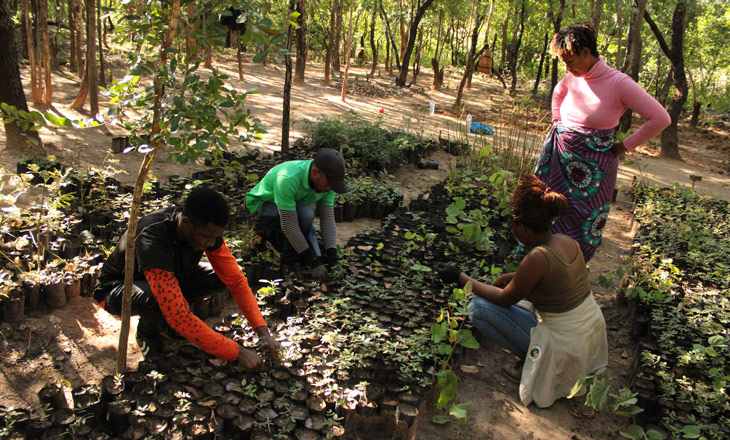
More than 25,100 seedlings of native species have been planted across approximately 14 hectares in Chimanimani National Park (PNC), as part of the pilot habitat improvement project. Key species planted for restoration include Brachystegia spp., Julbernadia globiflora, Erythrina lysistemon, Dichrostachys cinerea, among others.
Published at 02/05/2025
Chimanimani National Park and partners carry out native tree planting to restore degraded areas
-
© COMBO+
-
© COMBO+
-
© COMBO+
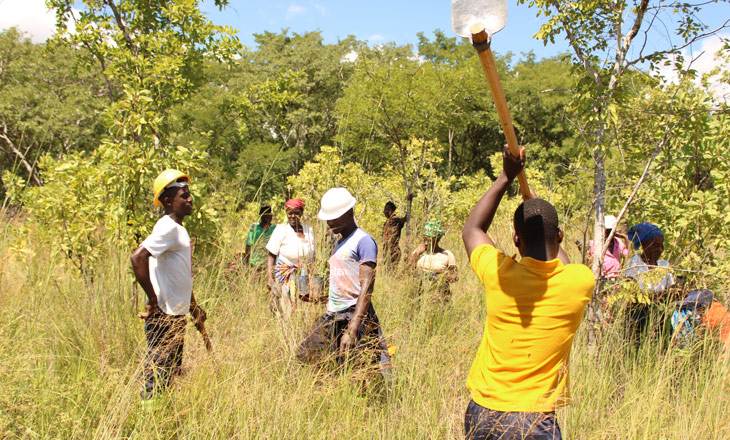
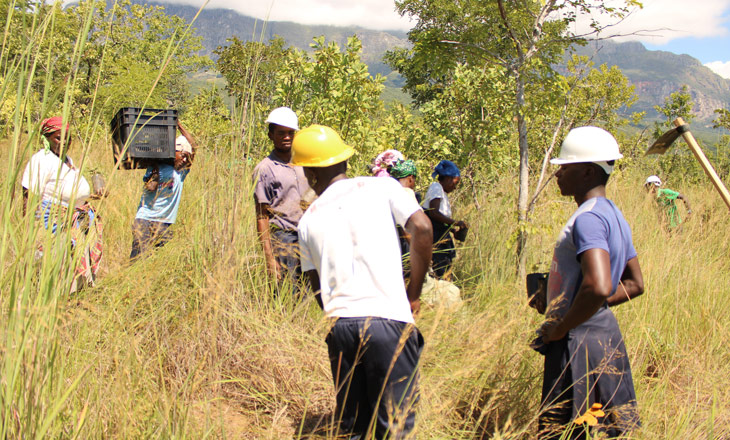
This marks the first phase of the global target to plant around 216,000 seedlings across 130 ha in the communities of Nhabawa and Chikuwa, located in the PNC’s Total Protection Zone. The planting for this first phase took place from 1 to 21 April 2025 in areas previously identified as degraded due to land clearing for cultivation and other anthropogenic activities. Implementation was carried out by local communities contracted by the park, with guidance, monitoring and supervision from a multisectoral team composed of PNC technicians, Eden Reforestation, and recent graduates from the Manica Polytechnic Institute (ISPM) and the Chimoio Agricultural Institute (IAC).
This activity is part of the pilot habitat improvement project implemented in the PNC in partnership with the Foundation for the Conservation of Biodiversity (BIOFUND) as a test of procedures and capacity-building for future biodiversity offsets in the park. The initiative is financially supported by the French Development Agency (AFD) and the French Global Environment Facility (FFEM) through the Biodiversity Conservation and Community Development (CBDC) project implemented in the Chimanimani landscape since 2021.