
-
Funds managed by BIOFUND
© Combo+
-
Funds managed by BIOFUND
© PROMOVE Biodiversidade
-

Funds managed by BIOFUND
© Phytotrade
Updated at 19/05/2026
The Foundation for the Conservation of Biodiversity (BIOFUND) has, over the years, consolidated its position as one of the main sustainable financing mechanisms for biodiversity conservation in Mozambique.
BIOFUND mobilises and manages three distinct types of funds, namely: Endowment Funds, Pass-through Funds, and Direct Project Management Funds.
- Endowment Funds – long-term invested funds, where only the investment returns may be utilized, while the capital itself remains intact;
- Pass-through Funds – third-party funds allocated to BIOFUND for specific projects, with the Foundation serving as the disbursement mechanism and financial manager;
- Direct Project Management Funds – funds related to projects that are directly managed and implemented by BIOFUND.
Creation and Growth of the Endowment
The effort to mobilise investment funds began even before the formal establishment of BIOFUND, during the Founders’ Committee period. However, it was only after the structuring of the Foundation that the conditions were created to begin the negotiation phase with partners. This process required BIOFUND to establish operational routines aligned with the standards required by the regulations of major donors.
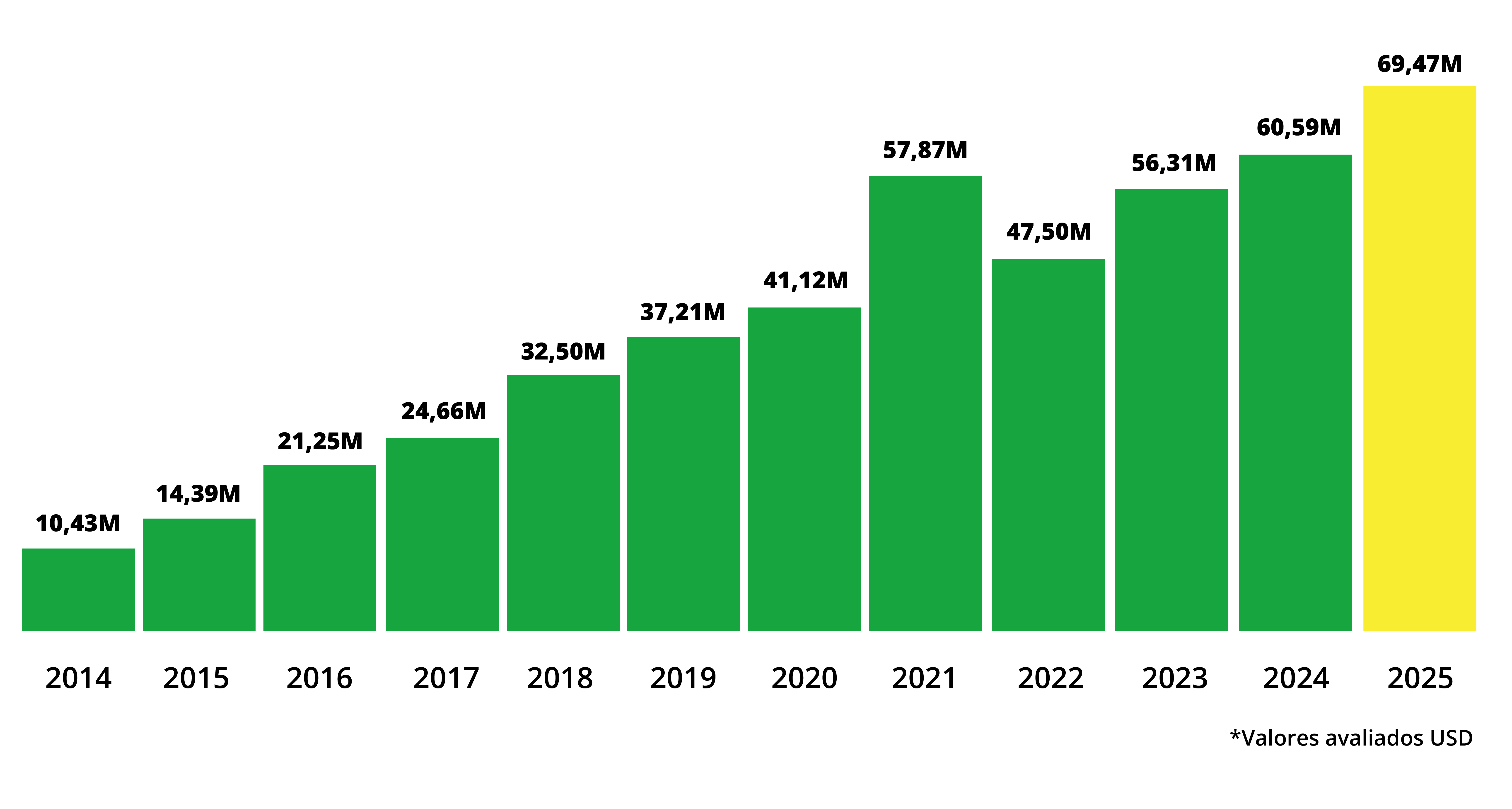
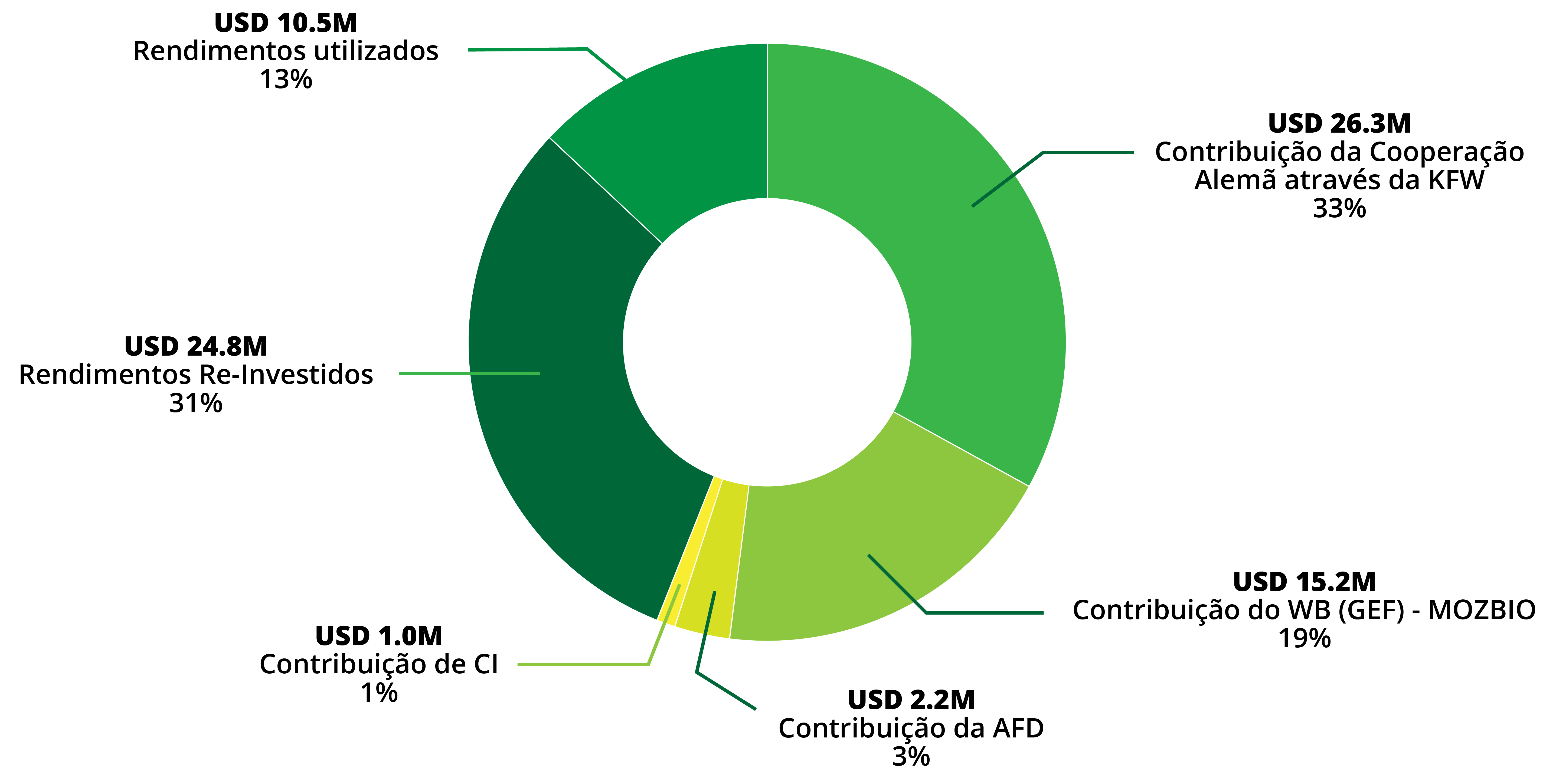
The positive evaluation of BIOFUND’s consolidation process in 2014 was fundamental for the decision of several partners to contribute to the establishment of our Endowment, which reached, by the end of 2025, a total of USD 69.47 million. This amount includes contributions from German Cooperation through KfW (33%), the World Bank/GEF (19%), AFD (3%), and Conservation International (1%), as well as reinvested returns (31%) and returns already utilised (13%).
Evolution of Endowment in Millions of USD
Endowment Composition
Pass-through Funds
With BIOFUND’s growing reputation as an independent entity with sound management, the institution has also been successful in mobilising pass-through funds for conservation beneficiaries.
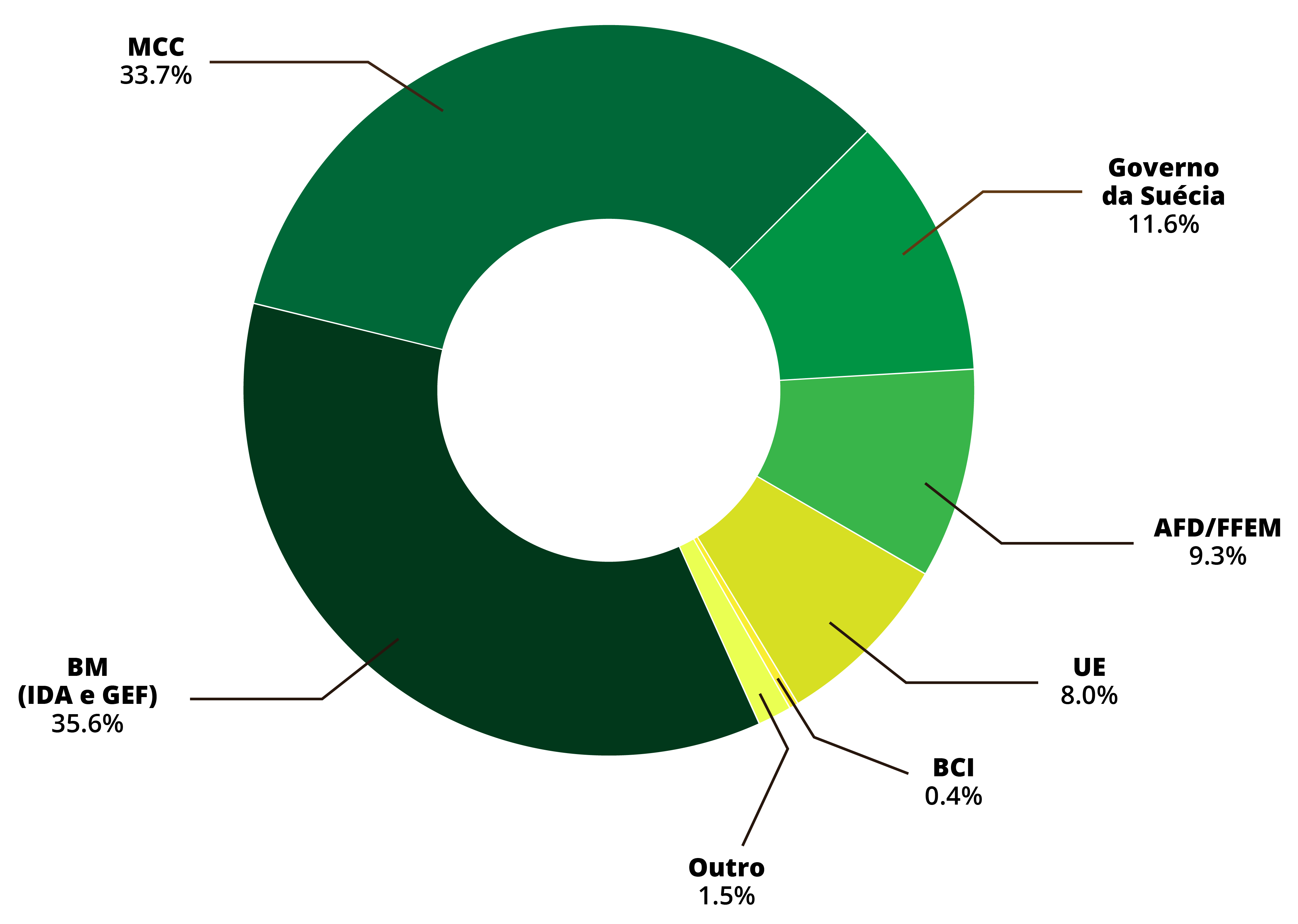
Third-party funds channelled to beneficiaries mainly come from the World Bank (MozNorte and MozRural), the United States Government through the MCC (Coastal Livelihoods and Resource Capitalisation Project: CLCR), the Government of Sweden, AFD/FFEM, and the European Union. This mechanism was operationalised in 2017, when BIOFUND assumed the role of fiduciary agent, initially without responsibilities in project design. Subsequently, in 2022, it expanded its role by also taking on project design and fiduciary management.
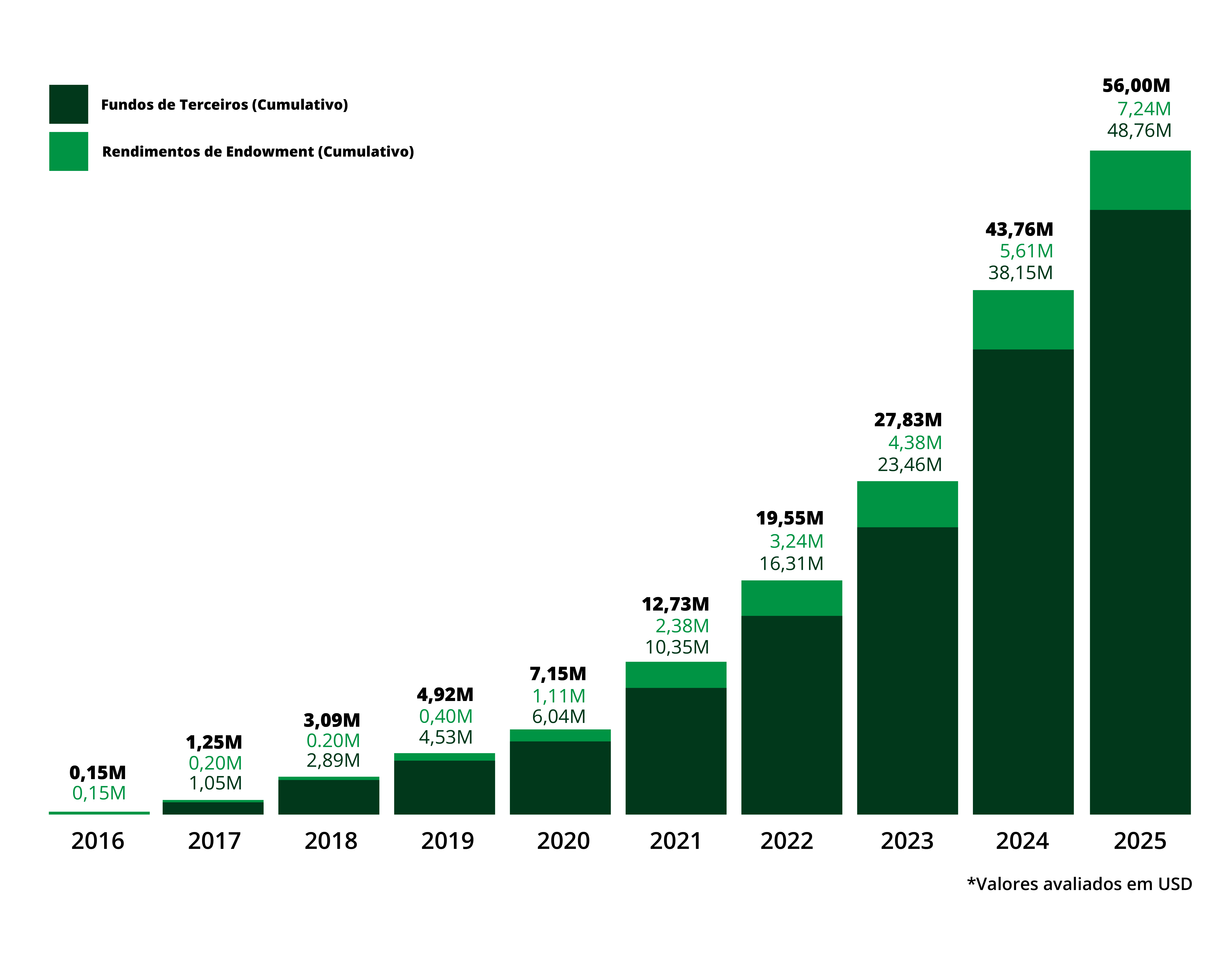
By the end of 2025, more than USD 144 million had been mobilised, of which approximately USD 56 million had already been disbursed to beneficiaries (USD 7.24M from Endowment returns) cumulatively since 2016, with around USD 12.23 million disbursed in 2025 (more than USD 1.6M from Endowment returns).
Evolution of funding to beneficiaries (in millions of dollars)
Contributions to pass-through projects up to 2025
Direct Project Management Funds
These projects are designed, managed, and implemented by BIOFUND, ensuring a technical and operational approach aligned with national priorities and the standards required by cooperation partners.
The direct management project portfolio amounts to approximately USD 9.7 million mobilised. Notable initiatives include:
Bio Card: This is a fully operational mechanism that raises more than USD 100 thousand annually through the use of the Bio Card, a partnership between BIOFUND and BCI. It currently has more than 42,300 users and has already raised a cumulative amount of approximately USD 500 thousand.
BIO-CERP: The Climate Emergency Response Program (BIO-CERP), created through a contribution from the French Development Agency (AFD), amounting to EUR 2 million to BIOFUND’s endowment. This fund generates approximately USD 65 thousand annually, used to support Conservation Areas in situations of crisis or climate-related disasters.
Mozambique Conservation Leadership Programme (PLCM) – aims to create and/or strengthen technical capacity and foster an enabling environment within the SNAC through three pillars: (i) enhancing technical capacity and skills of professionals in the National Conservation Areas System (SNAC); (ii) attracting and motivating qualified youth to join the conservation system; and (iii) raising awareness and engaging the general public, with a particular focus on youth;
The Biodiversity Offsets Programme – still in the establishment phase, aims to create an enabling environment in the legal, technical, and financial domains to support the implementation of the mitigation hierarchy in Mozambique;
Impact Investment – This is an impact investment mechanism linked to the wildlife economy, aiming to generate positive economic, social, and environmental benefits. It is financed directly through endowment returns and is currently in a pilot phase, with some investments already made, although returns have not yet been generated.
Blue Future – a programme focused on marine and coastal biodiversity conservation, as well as reducing the impacts of climate change along the Mozambican coastline. The component under BIOFUND’s management consists of the annual organisation of the Marine Biodiversity Conference (CBM), a platform for reflection and sharing scientific knowledge on the country’s marine ecosystems;
Rangers Support Fund – an initiative aimed at recognising and valuing the bravery and dedication of rangers in protecting and conserving marine and terrestrial biodiversity in Mozambique.