
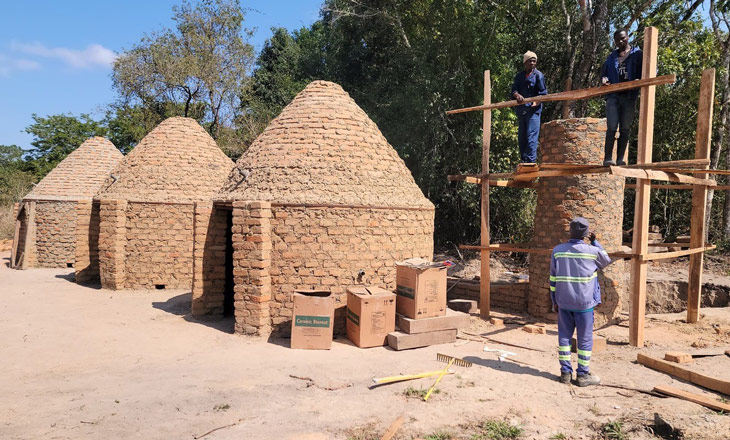
In Cheringoma and Muanza, in Sofala Province, forest and sawmill residues are gaining a new use: the production of certified charcoal, with controlled origin and no intentional tree cutting. The initiative, certified by the Forest Stewardship Council (FSC) and biochar, implemented by LevasFlor, presents itself as a more responsible alternative to the informal charcoal that dominates the national market.
Published at 28/04/2026
Bio Card boosts production of certified charcoal from forest residues in Sofala
-
© Levasflor
-
© Levasflor
-
© Levasflor
Certification indicates that the raw material used comes from responsible forest management, with environmental, social and economic criteria recognized internationally. In a market often marked by informality, this certification helps to build greater consumer confidence and to differentiate products with controlled origin.
Funded through Bio Card funds, the initiative, implemented between April and October 2024, focuses on the valorisation of forest and sawmill residues for the production of high-quality charcoal certified by the FSC, while simultaneously contributing to forest conservation and local economic development.
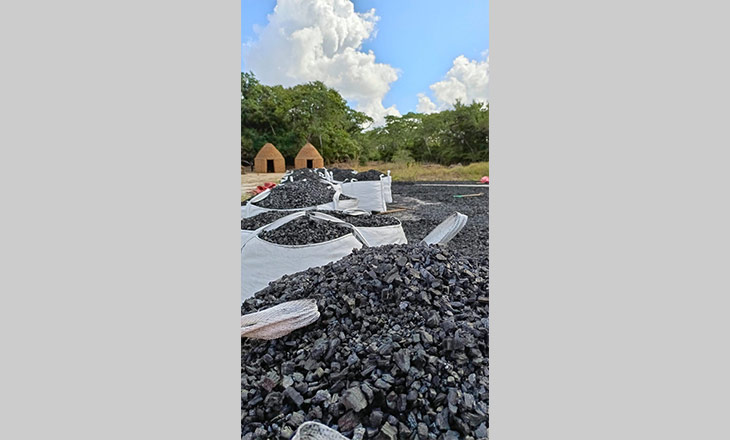
Currently, production is at an advanced operational stage, with encouraging results. Output has reached around 11.9 tonnes of charcoal from residual biomass, in a process that avoids intentional tree cutting and promotes a circular economy approach.
The raw material used comes mainly from residues of the timber industry, such as offcuts, branches and rejected wood, with emphasis on the species messassa (Brachystegia spiciformis), typical of miombo woodlands, recognized for its high density and energy efficiency. This model helps reduce pressure on forest resources.
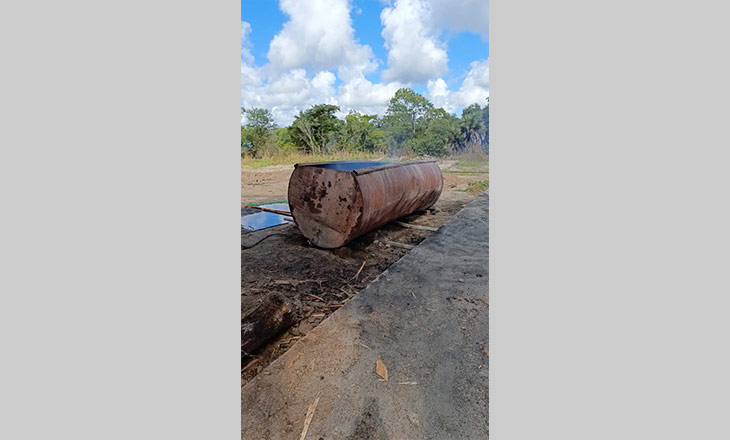
In addition to charcoal, the project also includes the production of biochar, a product used in agriculture to improve soil quality. When applied correctly, it helps the soil retain more water and nutrients, contributing to more resilient agricultural practices among local communities.
In a context where the national charcoal market is largely dominated by informal chains, with inconsistent quality and lack of environmental control, the introduction of certified charcoal represents a strategic opportunity. There is growing demand for more consistent products, especially in urban centres and in the restaurant sector, where quality, burn durability and sustainable origin are becoming increasingly important.
The initiative also includes the development of packaging adapted to the formal market, in different formats, as well as the establishment of partnerships for distribution through structured channels, contributing to the organization of a more transparent and efficient value chain.
With a forest concession of 46,240 hectares of miombo woodland under responsible management, LevasFlor reinforces, through this project, its commitment to biodiversity conservation, carbon retention and the promotion of sustainable livelihoods.