
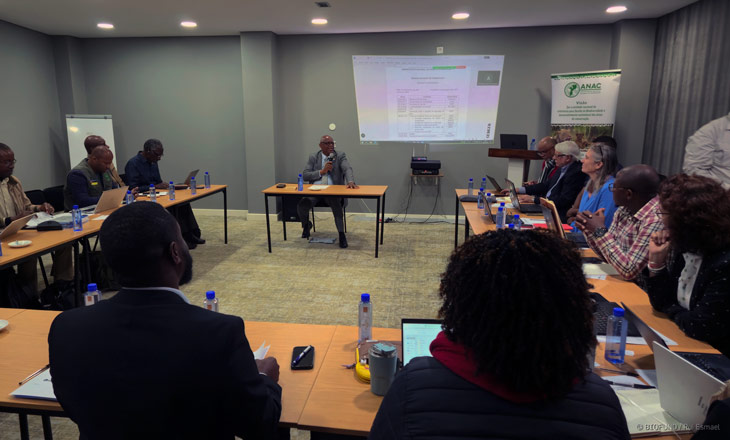
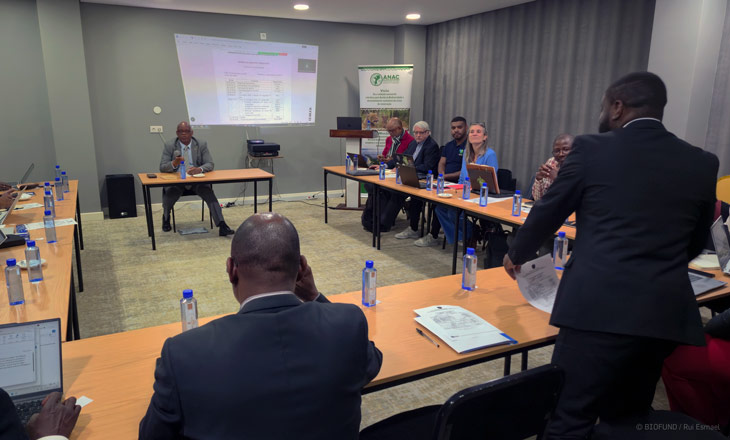
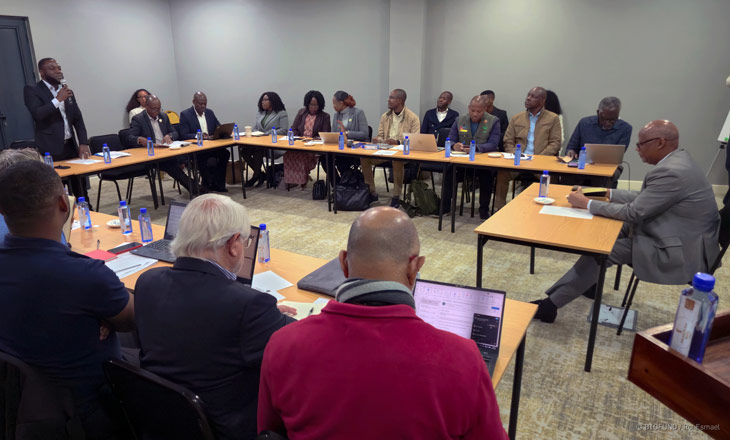
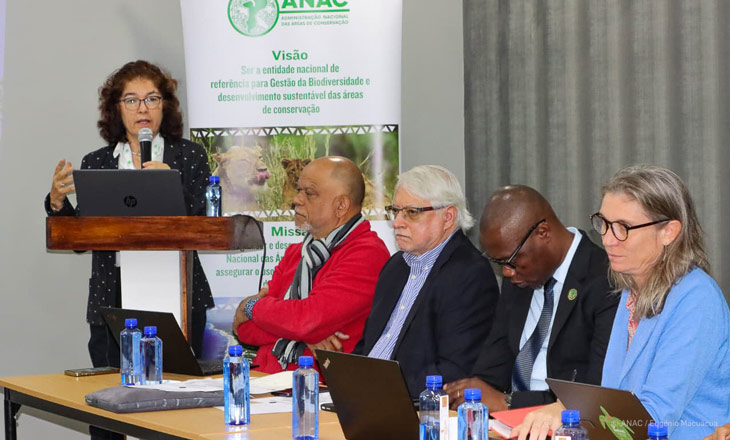
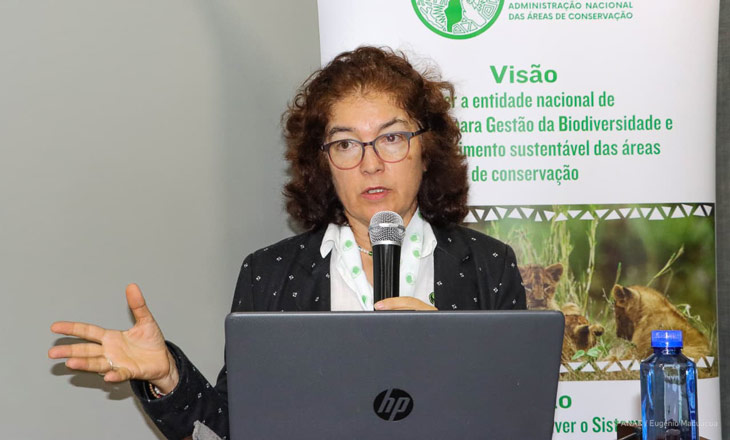
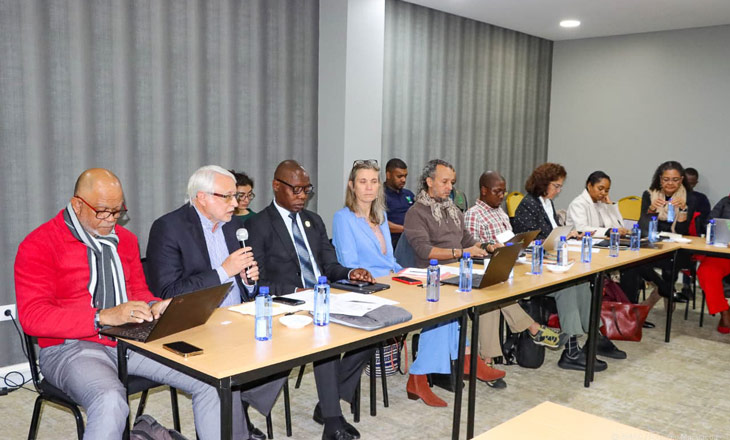
Representatives of the Government, the National Administration of Conservation Areas (ANAC), cooperation partners, conservation organisations and other sector stakeholders met in Maputo to assess the main challenges facing conservation areas and discuss the outlook for 2027. Chaired by the Secretary of State for Land and Environment at the Ministry of Agriculture, Environment and Fisheries, Gustavo Sobrinho Djedje, with the support of ANAC Director-General Pejul Calanga and ANAC Deputy Director-General Joaquim Fernando, the meeting highlighted the need to strengthen institutional coordination and long-term financing mechanisms for conservation.
Published at 01/10/2026
Conservation Group strengthens coordination and places financial sustainability at the heart of the future of conservation areas
The discussions showed that the sustainability of conservation in Mozambique increasingly depends on the ability to bring together institutions, financial resources, the private sector and communities, at a time when several externally funded projects are approaching their end.
BIOFUND participated in the meeting, where it presented its investment portfolio and highlighted the role of environmental funds in mobilising and channelling resources to conservation areas.
A forum focused on solutions
One of the main topics of the meeting was the role of the Conservation Group itself, whose revitalisation was considered important for improving information exchange and coordination among the various stakeholders in the sector.
Participants called for greater clarity regarding the Group’s functioning, composition, meeting frequency and mechanisms for following up on recommendations.
In his intervention, Pejul Calanga, Director-General of ANAC, stressed that the Group should move beyond an approach focused solely on accountability and become a more active space for discussion and the joint development of solutions.
“We believe that this forum is much more than that. It is precisely a space for sharing, but also for discussing issues brought forward by other members of the Conservation Group.”
The expectation was summed up in a direct message:
“More than receiving questions, we want to receive proposals.”
Financial sustainability becomes a priority
Among the priorities presented for 2027, financial sustainability emerged as one of the sector’s main challenges.
The alternatives discussed included diversifying revenue sources, operationalising tourism concessions, reviewing fees, expanding collaborative management partnerships and mobilising private investment.
In this context, BIOFUND presented how its Endowment works: a capital fund invested for the long term, in which the principal is preserved and the returns are used to support conservation.
“We have two main sources of funding. One is our Endowment, which is a capital fund invested for the long term. The capital is not used or touched; we only use the annual returns generated by that capital, which we channel every year to conservation areas,” emphasised Alexandra Jorge, BIOFUND’s Director of Programmes.
This model makes it possible to finance certain needs beyond the implementation period of individual projects, providing a more continuous source of funding.
Strengthening BIOFUND to strengthen the system
The discussion became particularly relevant in light of the declining availability of external funding.
Over the past few years, various projects channelled or managed through BIOFUND have directly supported conservation areas and also contributed to ANAC activities. As several of these projects come to an end or are scaled down, gaps may emerge in areas that were previously supported through these resources.
“Many of these projects, over the past few years, provided significant direct support to ANAC. Much of this support has stopped, or is stopping abruptly,” highlighted Alexandra Jorge.
This situation reinforces the importance of consolidating national financing mechanisms capable of complementing time-bound projects, mobilising new partners and responding to the sector’s priority needs.
ANAC’s presentation also showcased a portfolio that combines community conservation, climate resilience, sustainable production, ecosystem protection and the reduction of pressure on natural resources through initiatives such as Transform, GBFF, MozRural, FCDO and NaturAfrica.
Communities and results at the centre
The outlook for 2027 also highlighted the need to increase the benefits of conservation for communities living within and around protected areas, through value chains, community enterprises and other income-generating activities.
The meeting ended with a call for the Conservation Group to move from discussion to implementation. Among the proposals was the development of a recommendation-tracking matrix, which would make it possible to assess, at subsequent meetings, the actions undertaken and the results achieved.
The message running through the discussions was clear: more resilient conservation requires institutions that work in a coordinated manner, but also financial mechanisms capable of ensuring continuity beyond project cycles.