
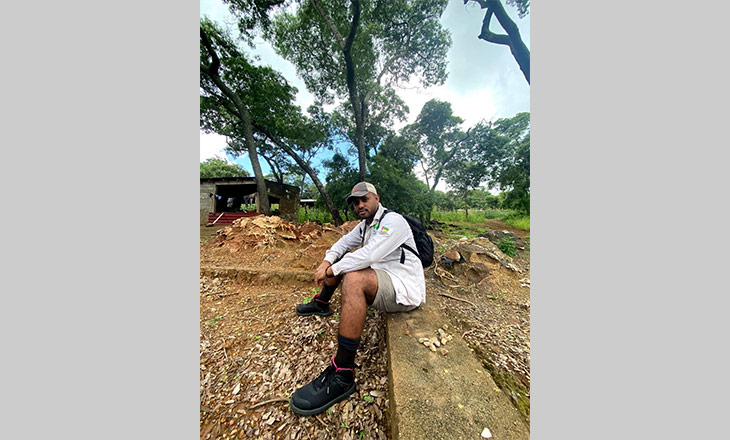
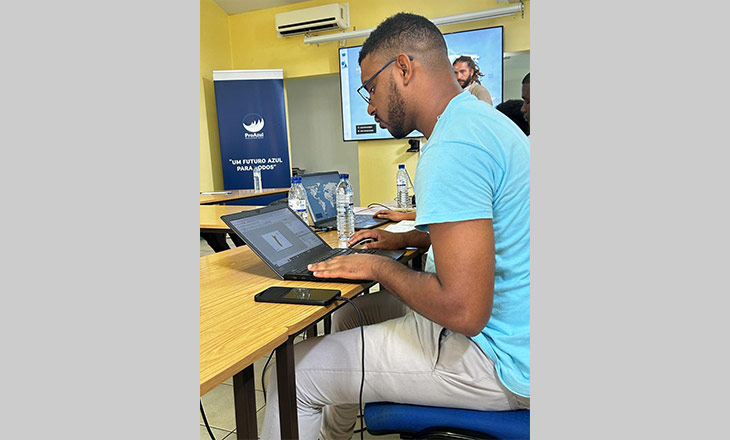
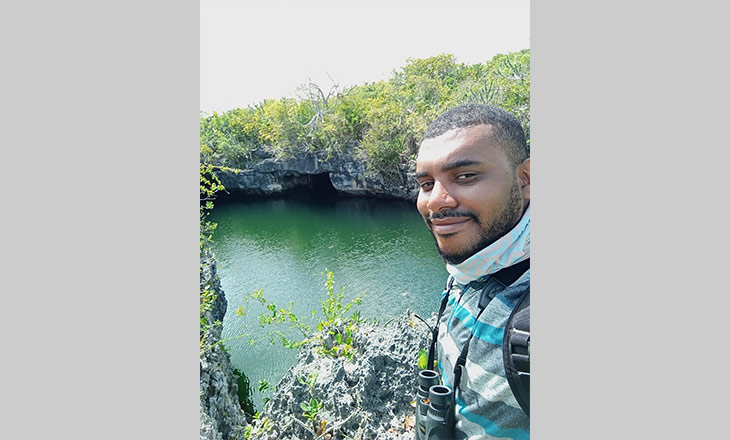
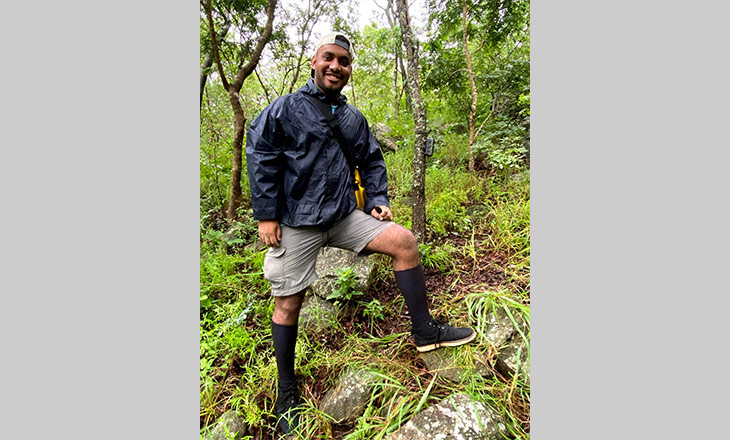

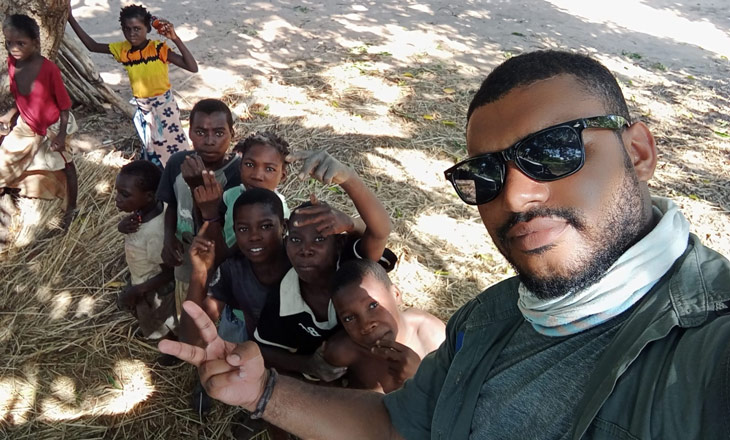
Acácio Chechene was an intern in the 3rd edition of the Internship Program of the Leadership Program for Conservation of Mozambique (PLCM), implemented by the Foundation for the Conservation of Biodiversity (BIOFUND) in collaboration with the National Administration of Conservation Areas (ANAC), and funded by the Embassy of Sweden and the World Bank.
Published at 12/12/2025
Acácio Chechene: From Internship to Regional Action in Biodiversity Conservation
During the internship, Acácio joined the COMBO+ program, an initiative implemented by BIOFUND in partnership with the Wildlife Conservation Society (WCS), focused on applying biodiversity offsets in Mozambique.
Throughout the internship, Acácio had the opportunity to apply the mitigation hierarchy directive in a practical and structured way, which allowed him to better understand the real challenges of conservation on the ground. More than just a technical experience, the internship represented a true immersion into the professional world, where he faced challenges that required communication skills, self-confidence, critical thinking, and adaptability to the program’s dynamic activities.
With a Master degree in Biology of conservation, Acácio already had a solid knowledge, but it was in the field that he consolidated his knowledge. Thanks to his outstanding performance, BIOFUND had plans to integrate him into the team, but his talent caught the attention of WCS, which hired him for a major international project. Currently, Acácio is involved in the project “Building Biodiversity Knowledge for Action in Southern Africa: Assessment, Prioritization and Spatial Planning of Biodiversity in South Africa, Malawi, Mozambique and Namibia” (SBAPP), led by WCS. This project aims to monitor threats and protection levels of ecosystems and species, identifying priority areas for biodiversity conservation.
The internship experience further strengthened his passion for conservation, reinforced by his background as a marine biologist and conservation biologist. He aspires to actively contribute to Mozambique’s sustainable development, promoting alignment between biodiversity conservation and economic growth.
As a message to young people, Acácio leaves an inspiring appeal:
“See biodiversity as an integral part of ourselves, because it is essential for our future. If ecosystems collapse and species go extinct, we and future generations could face severe consequences.”
