
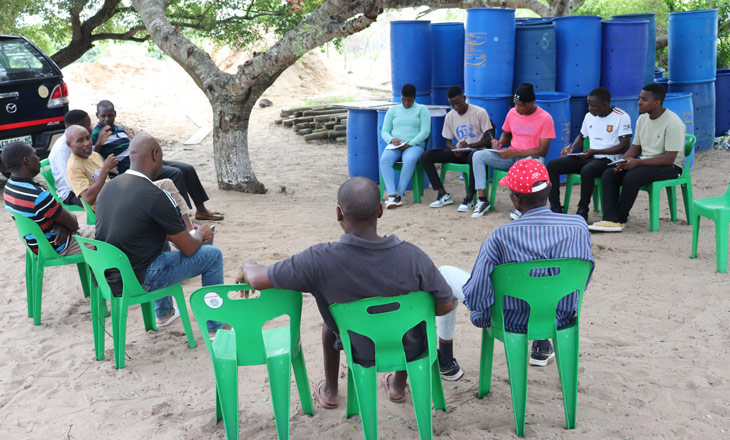
The Marine Biodiversity Conference (CBM), led by the Foundation for the Conservation of Biodiversity (BIOFUND), has established itself as a platform for promoting scientific research and youth participation in the conservation of marine resources. One inspiring example of this impact is the story of Tomás Tito, a student of Agroeconomics and Rural Extension at Eduardo Mondlane University, who transformed a simple classroom idea into internationally recognized research.
Published at 05/12/2025
From the Marine Biodiversity Conference to International Stages: The Scientific Journey of Tomás Tito
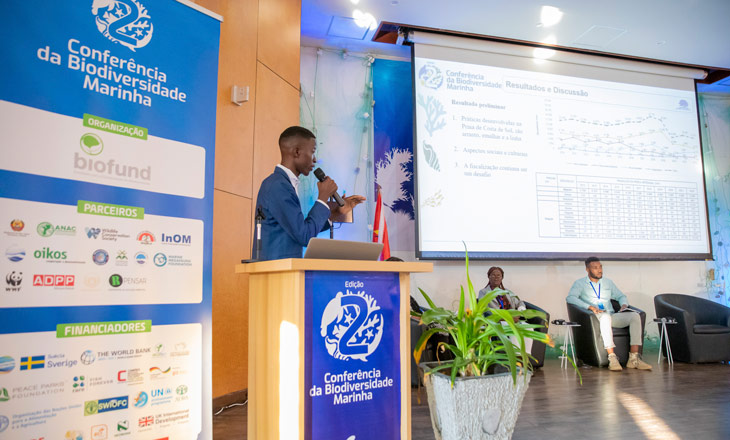
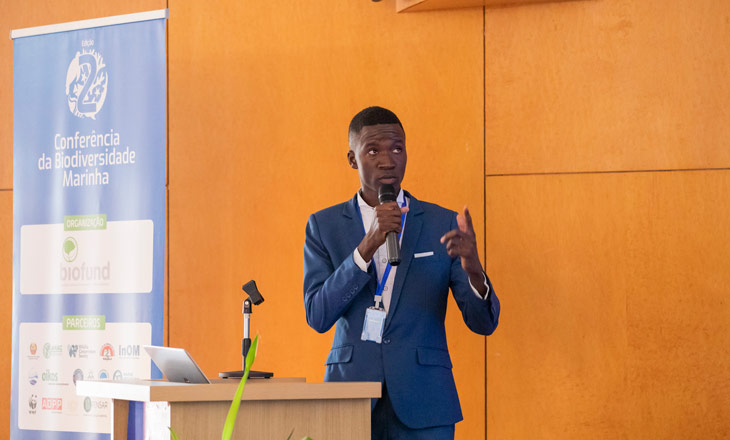
His journey began at the 2nd edition of the CBM, organized by BIOFUND in collaboration with several partners, where he presented a study on “Environmental Education in Marine Ecosystems: Artisanal Fishing.” The research, still in its early stages, analyzed fishing practices in Costa do Sol Bay, Maputo, and revealed that artisanal fishing grew until 2018, followed by a sharp decline and moderate recovery up to 2022. Despite these fluctuations, there was a continuous increase in catch volumes for most species, with emphasis on more sustainable methods such as gillnets and handlines.
The presentation attracted the interest of the Museum of the Sea and the National Fisheries Administration, which promptly offered technical and logistical support to continue and deepen the research. With this collaboration, Tomás restructured the study and submitted a new version to the 3rd edition of the Marine Biodiversity Conference held in Beira City in September 2025, this time focusing on the fishing centers of Costa do Sol (Maputo) and Macaneta (Marracuene). The work was once again approved and presented, now with more robust results and concrete data on the influence of environmental education on the adoption of sustainable practices.
The research revealed that the most commonly used fishing gears in both centers are trawl nets and gillnets. Regarding fishers’ perception of sustainable practices, 25% identified the use of appropriate mesh sizes as a positive measure, while 17% pointed to reducing the frequency of fishing trips and 11% highlighted compliance with closed seasons. Information sharing within fishing communities proved to be predominantly horizontal, with the president of the Fisheries Co-management Committee (CCP) being the main source of information for fishers, followed by fellow fishers (13%) and the maritime administration (10%). Statistical analysis indicated that fishing experience and active participation in CCPs significantly influence the adoption of sustainable practices.
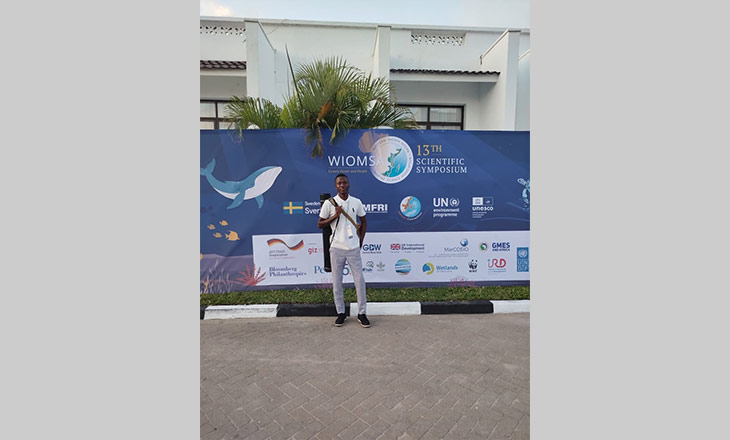
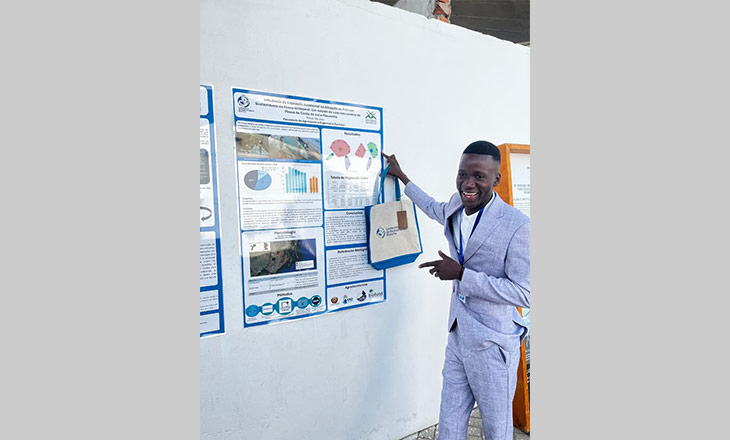
Recognition of Tomás’s work crossed borders. His research was selected for the WIOMSA Symposium, the largest marine science forum in Western Indian Ocean Africa, held in Mombasa, Kenya. There, the young researcher presented his study in the poster session, gaining international visibility and establishing connections with specialists from across the region.
This is an inspiring story that demonstrates how the Marine Biodiversity Conference stands as a true launchpad for young researchers, connecting local ideas to global opportunities. Tomás Tito’s journey is a testament to the transformative power of youth and science in building a more sustainable future for our oceans.
