
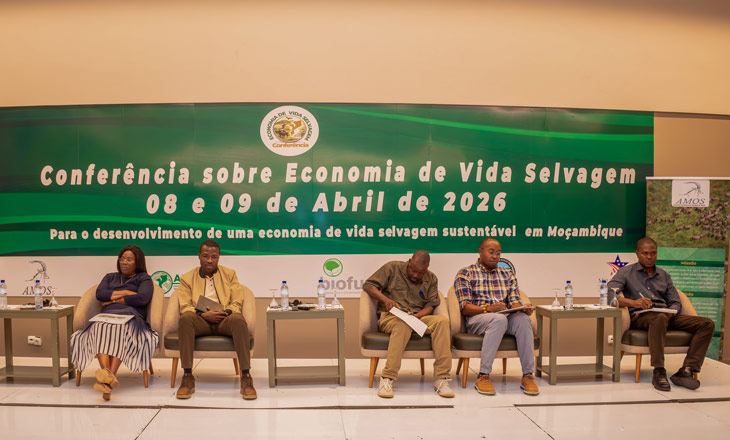
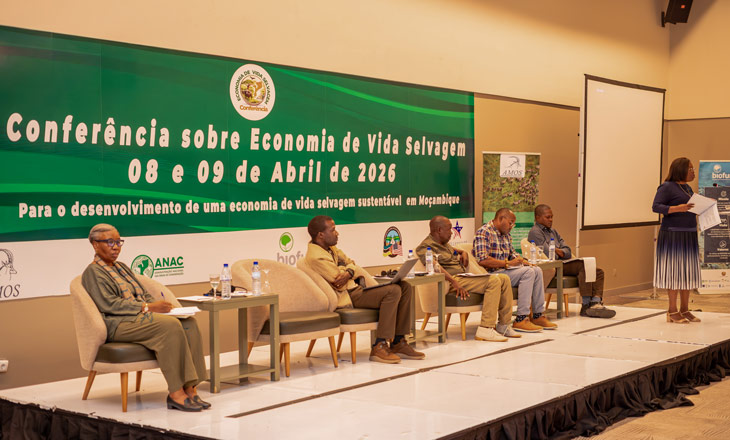
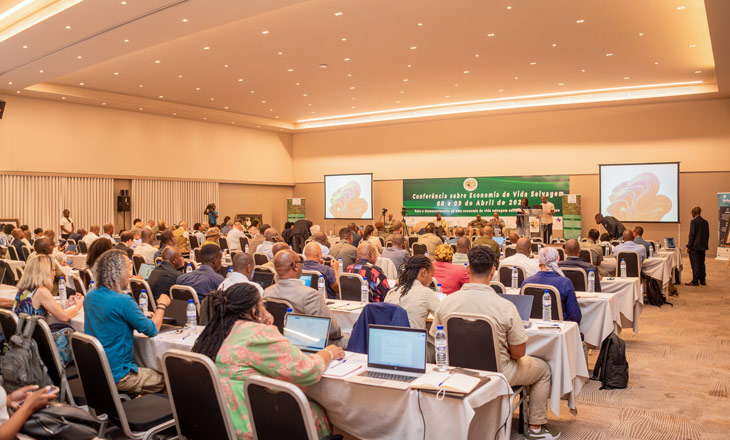
The Wildlife Economy Conference, held on 8–9 April in the city of Maputo, established itself as an important milestone for convergence between biodiversity conservation, economic development, and collective responsibility.
Published at 10/04/2026
Minister of Agriculture, Environment and Fisheries Reaffirms Government Commitment to the Wildlife Economy
-
© AMOS
-
© AMOS
-
© AMOS
-
© AMOS
-
© AMOS
-
© AMOS
-
© AMOS
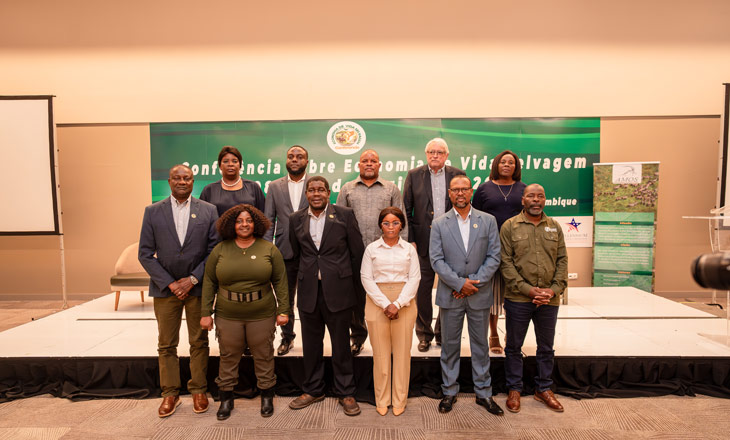
Under the theme “For the development of a sustainable wildlife economy in Mozambique,” the event was organized by the Mozambican Safari Operators Association (AMOS), in coordination with the National Administration of Conservation Areas (ANAC) and the Foundation for the Conservation of Biodiversity (BIOFUND), with funding from the Millennium Challenge Corporation (MCC) through the CLCR programme.
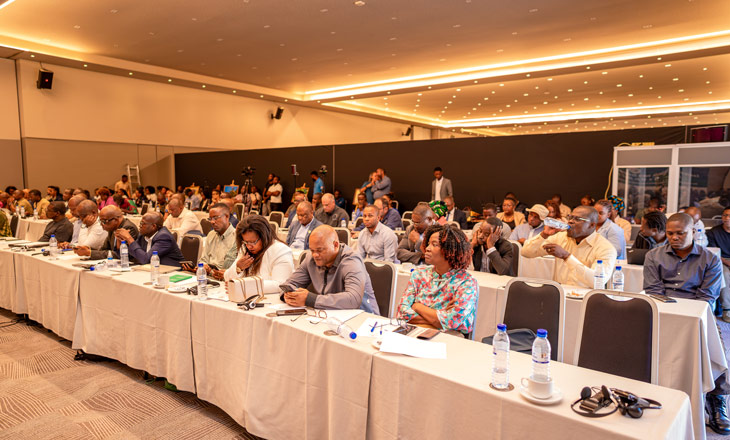
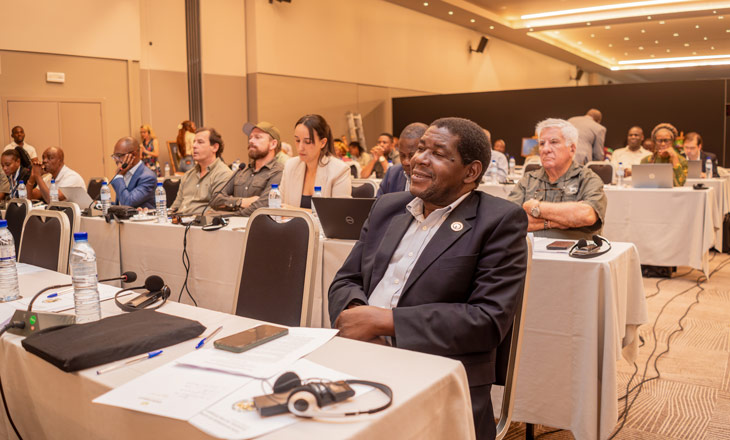
The conference brought together approximately 170 participants, including representatives of hunting concessions, safari operators, academia, ANAC, BIOFUND, local communities from different provinces of the country, and civil society organizations, providing an inclusive platform for dialogue and the exchange of experiences.
During the first day, discussions focused on valuing natural capital, equitable benefit-sharing with local communities, data-driven decision-making, access to financing, and the importance of a solid and functional legal framework to drive the wildlife economy in Mozambique.
Experiences from the Southern African region were also shared, with particular emphasis on Namibia, Zimbabwe, and South Africa, as well as good practices from national hunting concessions. These contributions highlighted different wildlife economy models, their challenges, and approaches to managing human–wildlife conflict.
Another key point raised was the need for sustainable financing mechanisms to enable the growth and consolidation of the wildlife economy as a strategic sector for the country.
At the closing of the conference, the Declaration on the Wildlife Economy in Mozambique was presented. In this declaration, participants reaffirmed their commitment to recognizing the wildlife economy as an essential component of the country’s natural capital, advocating for its integration into national public policies and territorial planning instruments, as a driving force for conservation, economic prosperity, and community well-being, while safeguarding present and future generations.
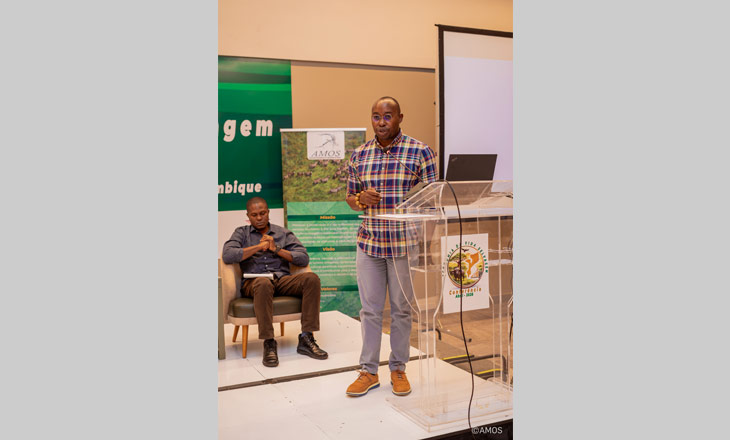
Speaking at the closing session, His Excellency Roberto Mito Albino, Minister of Agriculture, Environment and Fisheries, reaffirmed the Government’s commitment to implementing the declaration, assuring that “the Ministry will do everything within its reach to fulfill the responsibilities entrusted to it under this declaration, counting on the support and engagement of all stakeholders.”
Reinforcing this position, the Minister further emphasized:
“We reaffirm our full commitment to the wildlife economy, ensuring the strengthening of conservation policies, the creation of a conducive environment for investment, and the recognition of the role of the private sector and communities, so that this sector can effectively contribute to the country’s sustainable development.”
The Wildlife Economy Conference concluded with the conviction that Mozambique has unique conditions to position wildlife as a strategic pillar of sustainable development, reconciling biodiversity conservation, economic growth, and tangible benefits for local communities. The commitment assumed by the Government, combined with collaboration between the public sector, private sector, communities, academia, and civil society, reinforces the vision of a robust, inclusive, and future-oriented wildlife economy capable of contributing sustainably to the country’s prosperity.
