
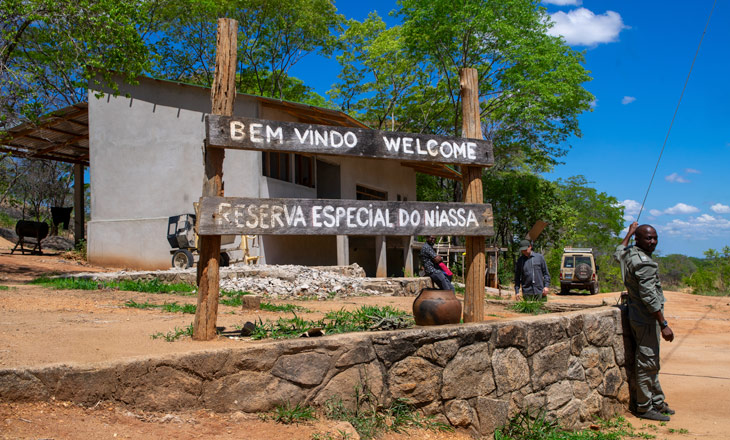
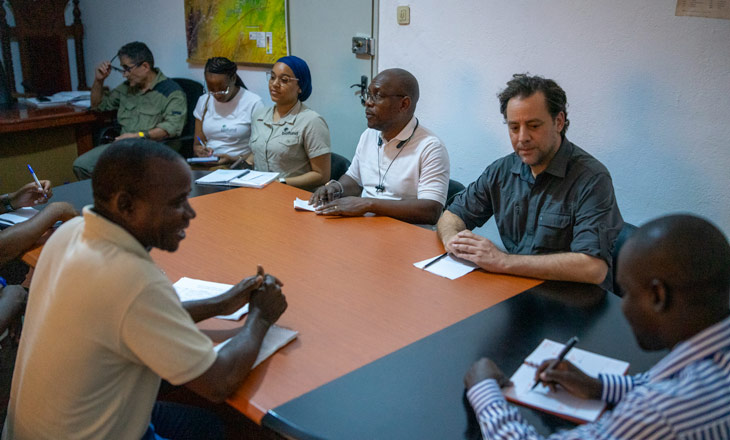
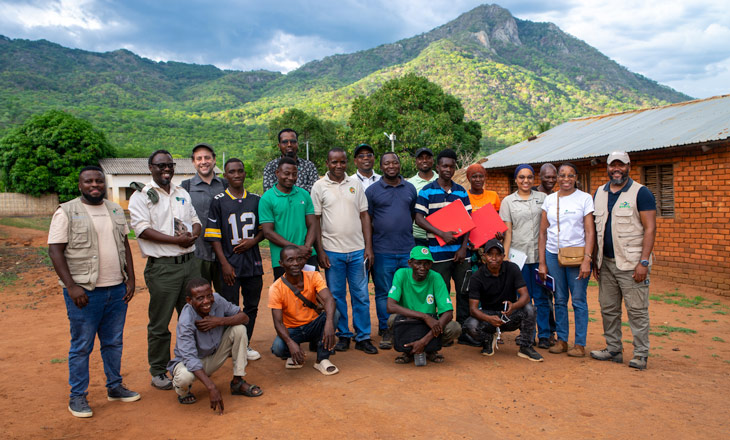
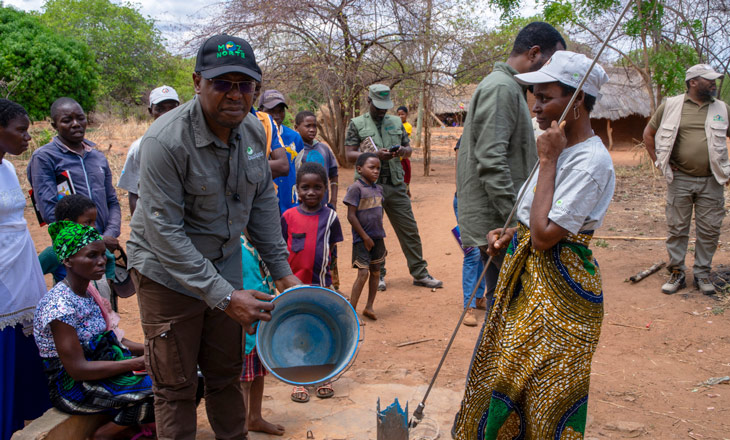
Between 25 and 30 November 2025, a technical team comprising representatives from BIOFUND, ANAC (National Administration of Conservation Areas), and WCS (Wildlife Conservation Society) travelled to the Niassa Special Reserve to conduct a monitoring mission within the framework of the MozNorte Project – the Rural Resilience Project for Northern Mozambique, financed by the World Bank.
Published at 16/12/2025
MozNorte Project Monitoring Mission to Niassa Special Reserve Reinforces Commitment to Local Communities
The visit enabled verification in the field of significant advances in biodiversity conservation activities and community development implemented in Block L4 East, an area encompassing 11 communities in Mecula district, in Niassa province.
Strategic Partnership for Sustainable Development
BIOFUND works in close coordination with ANAC and WCS to ensure that resources reach the populations living within and around the reserve, integrating biodiversity conservation with the wellbeing of local communities.
During the courtesy meeting, José Sulmide – Administrator of Mecula District – expressed the importance of working hand in hand with communities, stating he is “always on the side of the population” in decisions affecting the territory.
Governance Unit: Communities at the Centre of Natural Resource Management
One of the programme’s main outcomes is the establishment of the Governance Unit of Block L4 East, a community structure composed of 22 members (including 4 women) representing the 11 communities in the area. This unit was established from the Natural Resource Management Committees previously constituted in each community, paving the way for local populations to participate actively in the sustainable management of their territory.
Neto Agostinho, member of the General Assembly of the Management Unit, explained the importance of this structure:
“The unit serves so that we can conserve the biodiversity of Block L4-East. It is important for our nature conservation and humanity in general. Our work is to raise awareness in the communities that we must conserve our biodiversity and prevent uncontrolled wildfires.“
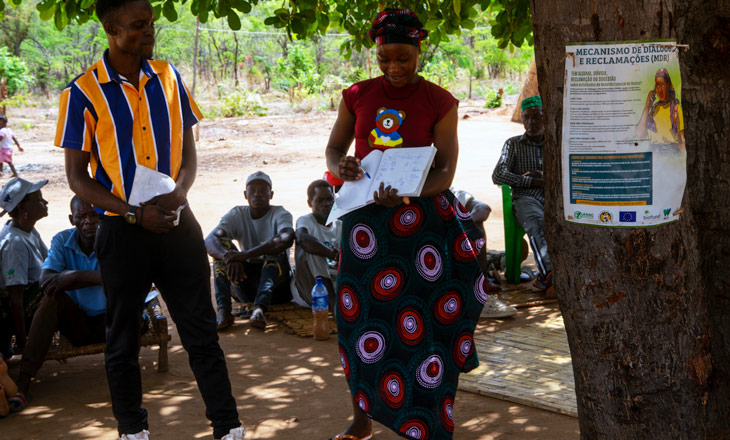
The mission visited the communities of Cuchiranga and Lisongole, where meetings were held with members of management committees, focal points of the Dialogue and Complaint Mechanism (DCM), and beneficiaries of training in GALS (Gender Action Learning System).
Community Health: Technicians Serving the Most Remote Populations
One of the most significant impacts of the programme is in the health sector. Under a memorandum signed between the Niassa Special Reserve and District Health Services, MozNorte financed the recruitment of five health technicians who are providing essential services at an equal number of health facilities.
Eugénio Carlos Fazenda, Director of Health Services for Mecula District, expressed gratitude for the support:
“We received this support with great satisfaction, because the technicians end up fulfilling what are the demands and needs of activities at the peripheral health facilities. We had a shortage of human resources and with this support we have improved the provision of services to the general population.“
The Director further highlighted the importance of the ambulance acquired by the programme, which facilitates the transfer of patients with complications to the reference health facility in Marrupa, preventing potential complications that could occur in the district.
Ângela João András, Maternal and Child Health nurse placed at Ntimbo 1 Health Centre through the programme, reported on the impact of her work: “The community did not know about family planning, did not know that children have to be monitored monthly. Having a hospital and nurses here, I think they feel better.“
Since the five health professionals started working in May at four health facilities, they have already provided services related to malaria for more than 1,050 patients, diarrhoea for more than 115 patients, dysentery for more than 20 patients, over 3,860 outpatient consultations, over 80 institutional births, over 110 prenatal consultations, and over 80 postnatal consultations.
Human-Wildlife Conflict Mitigation: Protection for the Fields
Coexistence with wild fauna represents a constant challenge for communities living within the reserve. To respond to this reality, the programme acquired five mobile electric fencing kits that will protect the “machambas” (fields) against invasion by elephants, buffalo, and other animals during harvest seasons.
Gil da Vasco, member of the Cuchiranga community, explained how the system works:
“The solar panels function with solar energy to power the fencing. The fencing serves so that the machambas are not attacked by animals. If there is no fencing, we won’t gain anything. With the animals, if we just leave it without fencing they destroy everything. But with the fencing, animals like buffalo and elephants don’t enter.“
The programme has also trained Rapid Response Units to act in human-wildlife conflict situations, having acquired equipment such as flares and sound devices to chase animals away from inhabited areas.
Vocational Training: Young People Building Their Future
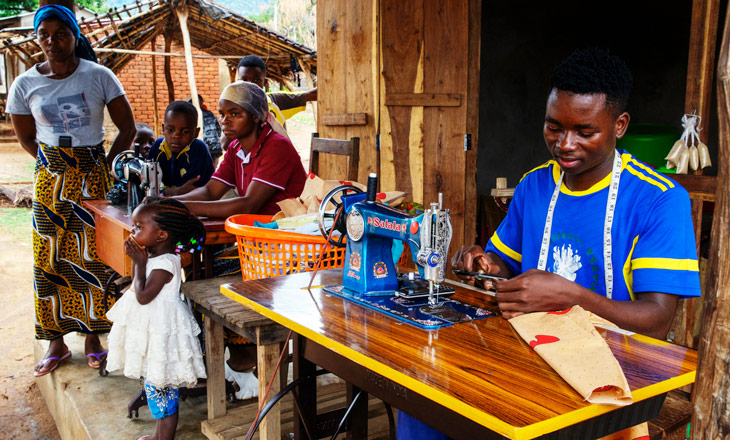
The MozNorte Project has invested in vocational training for young people from the communities, offering scholarships and self-employment kits so they can develop economic activities.
Sadamo Casembe, a young man from Mecula who received tailoring training through the programme, shared his experience: “The Niassa Special Reserve announced openings and we competed and passed. The course changed my life – I can already buy goods for my house and my food. Now I depend on myself.“
Sadamo received a complete kit with a sewing machine and materials as part of the training, and today he serves clients daily doing sewing and tailoring work at the Mecula district seat.
Dialogue and Complaint Mechanism: Voice to Communities
To ensure that community concerns are heard and addressed, the programme established a Dialogue and Complaint Mechanism (DCM) in all communities of Block L4 East. Focal points were trained, received phones and dissemination materials, and in each community complaint boxes were installed where members can deposit their concerns.
The DCM allows community members to report emergency situations, such as wild animal attacks, and receive timely support from the reserve.
Investments in Infrastructure and Equipment
The mission verified a series of equipment and infrastructure acquired with MozNorte funds to support both conservation and community development:
- Vehicles: 5 Land Cruisers, 1 John Deere tractor, 1 TLB machine, 1 Isuzu tipper truck
- Community transport means: 2 motorcycles and 25 bicycles
- Health equipment: 1 ambulance for Mecula district
- Water infrastructure: rehabilitation in process of 3 boreholes (Guebuza, Ntimbo 2, and Cuchiranga) and construction of 1 new borehole in Mucória
Looking to the Future: Consolidation and Sustainability
The MozNorte project represents an example of how biodiversity conservation and community development can walk side by side, demonstrating that it is possible to protect the natural resources of the Niassa Special Reserve while improving the quality of life of populations who for generations have coexisted with the rich fauna and flora of this unique area of Mozambique.
The Niassa Special Reserve, with more than 42,000 km, is one of Africa’s largest conservation areas and represents an invaluable natural heritage for Mozambique and the world. The MozNorte project, through the partnership between ANAC, BIOFUND, WCS, the Mecula District Government, and local communities, is building a future in which people and nature thrive together.
