
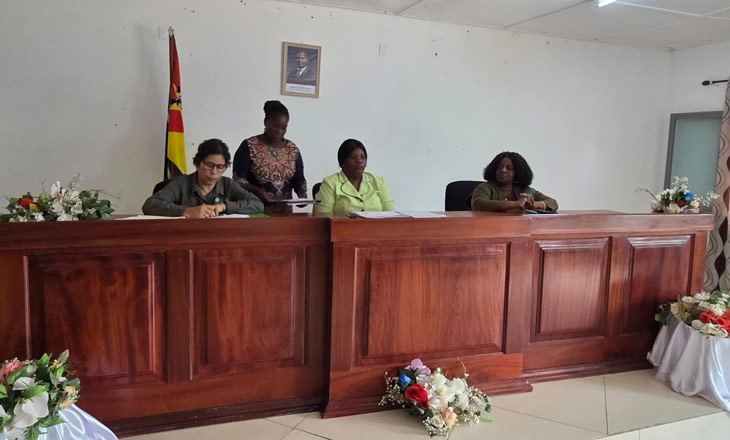
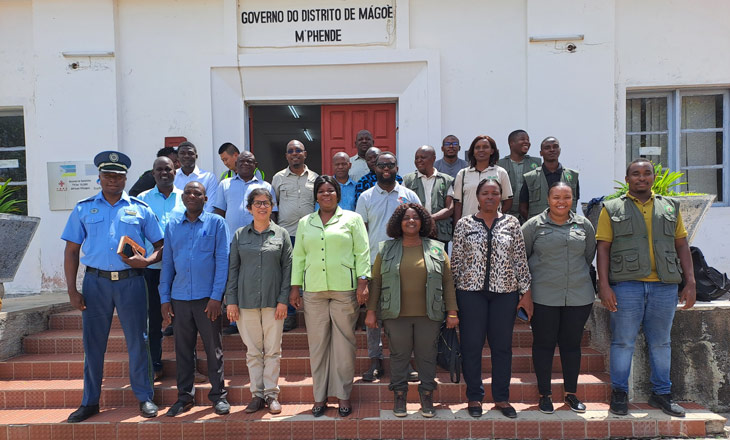
In the first week of April, the commissioning ceremony for the construction of water boreholes took place in the Mágoè National Park, in Tete Province. This initiative is being implemented under the MozRural Programme, with the aim of improving the living conditions of local communities and strengthening the management of the Conservation Area.
Published at 10/04/2026
MozRural promotes access to water through borehole commissioning in Mágoè and Cahora Bassa
The intervention is part of a set of ongoing actions in Mágoè National Park and its buffer zone, aimed at promoting sustainable livelihoods, with emphasis on expanding access to safe drinking water. A total of 16 boreholes will be constructed, of which 13 will serve communities in the districts of Mágoè and Cahora Bassa, and 3 will strengthen surveillance posts within Mágoè National Park. This action will benefit more than 5,000 people, contributing significantly to improved living conditions and the well-being of local populations.
The ceremony was attended by the Administrator of Mágoè District, Marlene Sande de Sousa; a representative of the National Administration of Conservation Areas (ANAC), Rezia Cumbi; the Administrator of Mágoè National Park, Juliana Mwitu; the Director of Administration and Finance of the Foundation for the Conservation of Biodiversity (BIOFUND), Celeste Chitara; the MozRural Programme Coordinator, Alexandre Milice; and other partners.
During her intervention, the Administrator of Mágoè National Park highlighted that the provision of water infrastructure in different park posts will have a significant impact on the operational efficiency of the Conservation Area. According to the administrator, local access to water will reduce the need for frequent travel to fetch water, allowing technicians and rangers to focus on essential activities such as patrols and law enforcement. She further noted that the new boreholes will improve sanitation conditions, enabling the full use of existing infrastructure such as bathrooms, and contributing to better hygiene and well-being of park staff.
For her part, the Administrator of Mágoè District emphasized the social impact of the initiative, noting that easier access to drinking water will reduce the long distances communities currently travel to obtain it, promoting greater dignity and quality of life. She also highlighted that the project will contribute to reducing waterborne diseases, improving public health, increasing agricultural and livestock productivity, and boosting local economic development. The official further stressed that the initiative is aligned with district government priorities, as it responds to a basic community need and contributes to poverty reduction efforts.
With this initiative, the MozRural Programme reaffirms its commitment to the integrated development of communities living around Conservation Areas, promoting solutions that combine improved living conditions with biodiversity conservation.
