
By Jorge Ferrão
Published at 07/07/2025
Roberto Zolho, the Miombo Diplomat
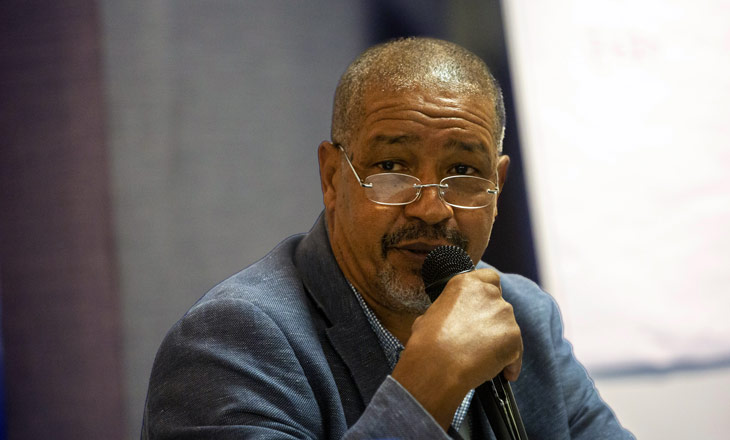
When my friend Baldeu Chande joined eternity, it was tormenting to write a message of praise or even a farewell. The pain spoke louder than any word, and whatever the message was, it would certainly never echo in any sensible and moved heart. Dealing with farewell is one of the most difficult experiences in life. The emotions involved, at that immediate moment, can be overwhelming, and often it is challenging to find the words that express the feelings of loss and longing. One does not only lose a friend and colleague, but a source of life experiences, knowledge, and so much that remained unshared.
Today, with the same heavy, torn, and still incredulous heart, I relive the emotions as I say goodbye to my companion and friend Roberto Zolho, this man of all physical builds, astute and insightful, but who, even in the silence of the bush and savannas, spoke more with his actions than many of us manage to speak through words and suggestions. Nature is not built with campaigns, meetings, and promises. Those who live within it know its commandments well.
Roberto was born in the heart of Sofala, where the waters of the Pungué spread over the plains and the land teaches us to respect the rhythm of the rain, the wind, and the giant creatures of all sizes. He grew up and became a man of the world in a place where the life of humans and the life of animals intertwine, and perhaps for this reason, inspired by his upbringing, he always cared more for wildlife and flora—far more and better than he cared for himself. I imagine he gave names to hundreds of animals and trees. He knew the story of each one and mourned the sad end of every tree felled in the forest, every buffalo lost to poaching, and the inconsistencies in the administration of these ecosystems. He learned to understand their instincts and, from them, reproduced his own models of life and theories.
In December 1981, when the war reached Gorongosa National Park now privatised and publicised, with Western trophies and almost none from the surrounding communities the bullets desecrated that sanctuary. In that confrontation between brothers who disagreed for political motives, idiosyncrasies, thirst for power, and poisoned democracies, he was one of the first to rise in defence of those who lived there, deep inside Gorongosa, that final mountain of the Rift Valley, caring for men, women, elephants, lions, and centuries-old trees. With wisdom and mastery, he became a peacemaker, a diplomat of the forests, and someone who knew how to listen more than speak. Who knows if his stutter was a divine purpose.
Zolho grew in stature, and like Samson and Delilah merged into a single divine being, he recreated Noah’s Ark for modern times and, with little spirituality but with conviction and determination, carried the armistice to new levels of tranquillity, where animals and humans came to share the dream of the same peace, reconciliation, and a life of brotherhood, far from weapons. Something the conflict was never able to conquer. Weapons do not build friendship or generate prosperity. Embrace and honesty do.
He risked himself to protect others, as those who care for nature always do, learning from it the meaning of courage. And after that darkness, he continued to work for Mozambique, helping to rebuild not only the park but also hope the dream of Mondlane in his fight for Mozambique that continues to live on this idyllic side of the Indian Ocean.
He was awarded the Environmental Merit Medal, but the greatest tribute paid to him by the land lies in the shade of the acacias, in the beating wings of the birds that returned to Gorongosa, and in the gaze of the young rangers who still today follow his steps and examples. They hear his voice and command.
The proverbs of our land are rich and reveal much more than the Portuguese language offers. I now recall that “The tree does not eat its own fruits.” Profound and fitting to remember this friend and colleague of the bush and savannas. Roberto was like that: he provided shade, he gave fruit, he gave everything, but kept nothing just for himself.
May his soul find rest among the miombo and mopane woodlands he so loved and cared for. May the animals he protected become his eternal song. And may we, who remain here, learn from him to care for what truly matters: the land, life, and one another, reconciled and at peace with nature.
Roberto, your footprint will remain in the sand of our time and of the times to come. (X)
