
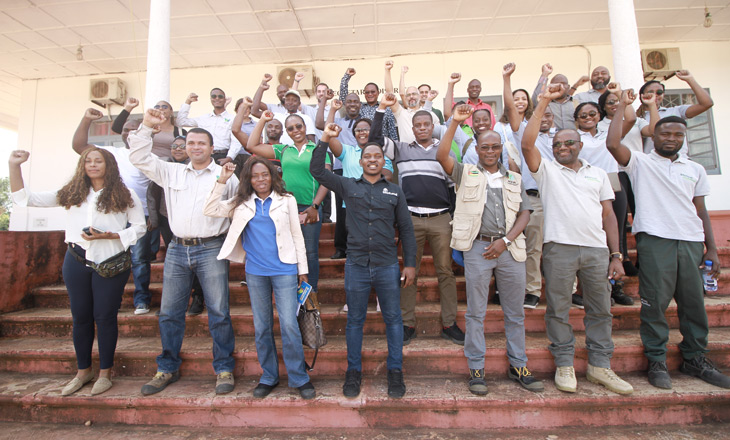
The partners of the COMBO+ programme, the Wildlife Conservation Society (WCS), the Foundation for the Conservation of Biodiversity (BIOFUND) and the National Directorate for the Environment (DINAB), in partnership with the company Portucel Mozambique, promoted an experience-sharing visit involving Government entities, academia, research institutions and civil society, with the main objective of providing technicians from all institutions involved with field-based experiences on the implementation of best practices for applying the Mitigation Hierarchy, in accordance with the procedures described in Ministerial Diploma No. 55/2022.
Published at 16/05/2023
COMBO+ Programme promotes an experience-sharing visit on best practices for implementing the Biodiversity Impact Mitigation Hierarchy between government authorities and Portucel-Mozambique in Zambézia
-
© BIOFUND
-
© BIOFUND
-
© BIOFUND
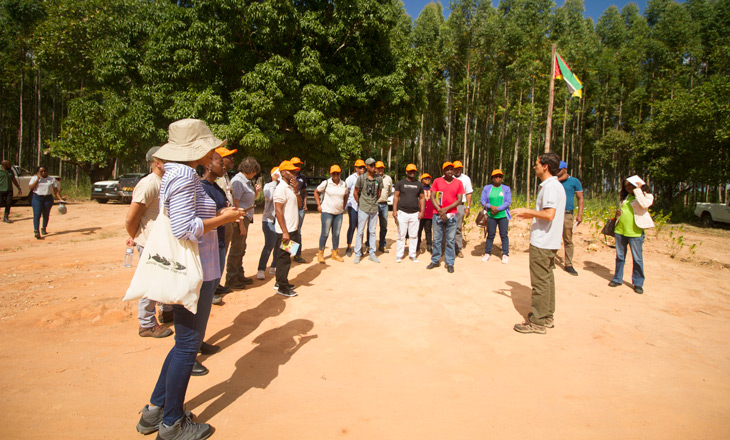
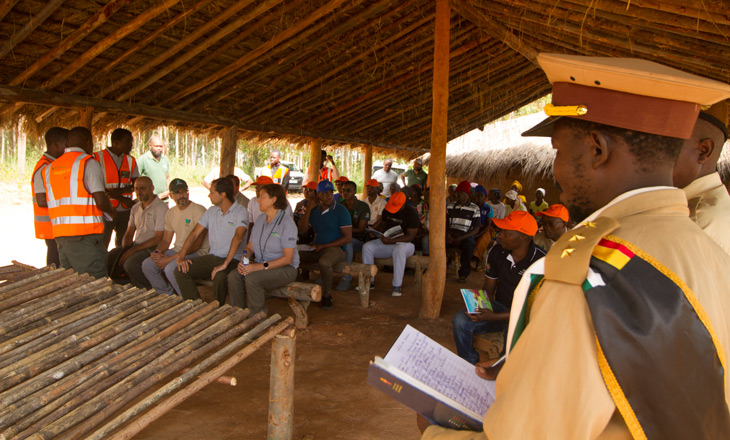
The experience-sharing mission took place in the operational areas of Portucel Mozambique, including its plant nursery, forest areas and communities within the project area, located in Ile district (Zambézia Province). It lasted five days (from 2 to 6 May) and involved around 45 participants.
Portucel Mozambique is one of the largest forestry and industrial investment projects in Mozambique, with plans to invest more than 2.3 billion US dollars and to build a pulp production factory. Collaboration between the COMBO+ programme and Portucel began in 2016 and has been carried out through a Memorandum of Understanding (MoU) established between the institutions to develop a case study in which the model for applying the mitigation hierarchy was analysed to improve and safeguard biodiversity-related aspects.
This experience-sharing visit is an integral part of the multisectoral training and capacity-building activities led by the COMBO+ Programme since 2016 and will continue to be promoted throughout the country with the primary objective of establishing communication mechanisms between proponents of economic development projects and the government, strengthening the technical capacity of government entities on the assessment, monitoring and supervision of the implementation of the mitigation hierarchy, and sharing knowledge with all parties involved.