
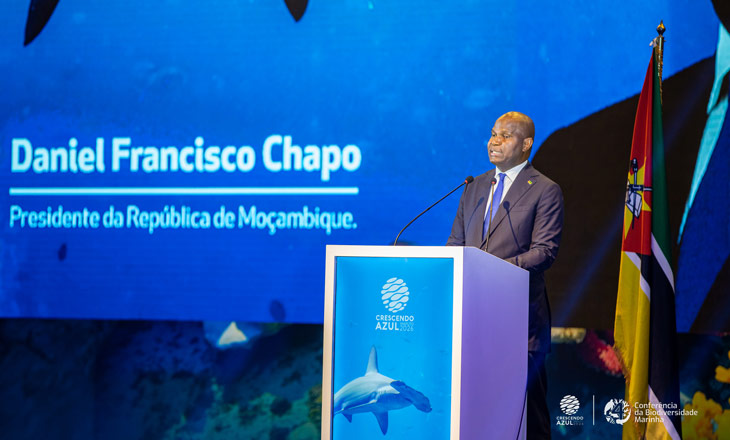
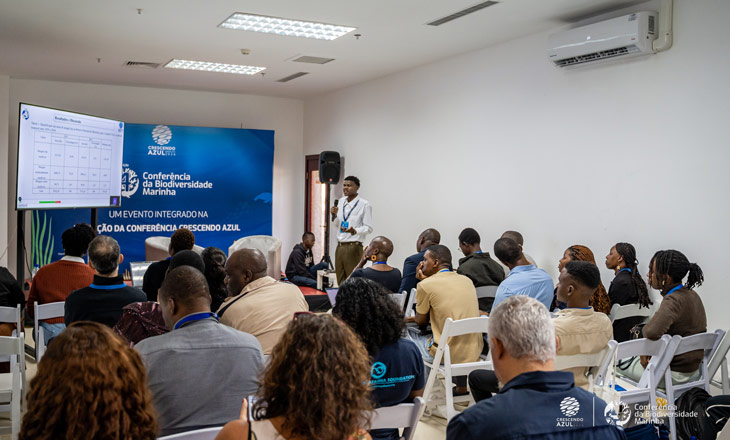
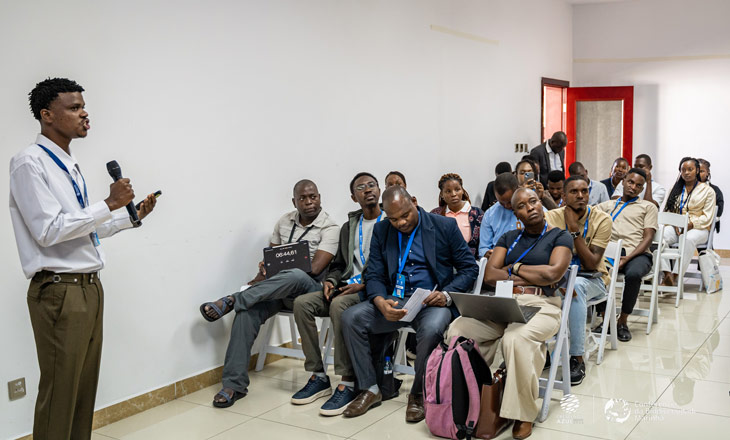
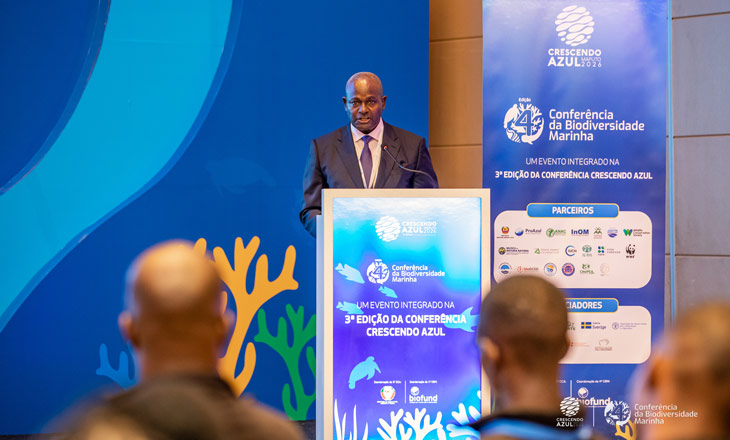
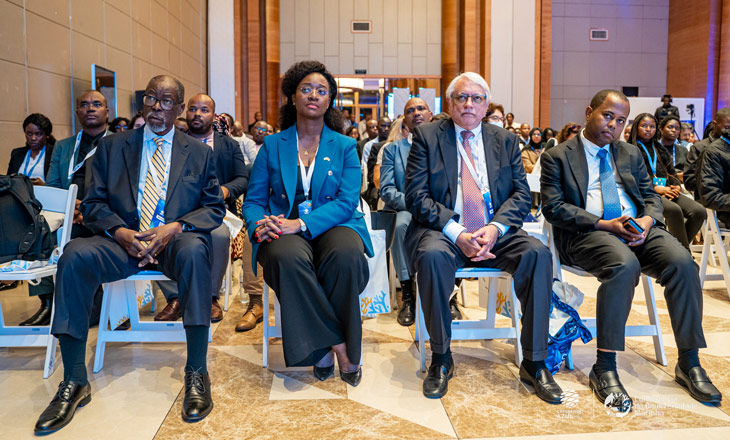
The city of Maputo hosted the 4th Marine Biodiversity Conference (MBC) on 11–12 June 2026, as part of the 3rd Growing Blue Conference. Held at Glória Hotel, the event brought together more than 762 in-person participants and over 2,350 online attendees, including representatives from government institutions, research organizations, civil society, academia, the private sector, coastal communities, and development partners. The conference served as a platform to discuss solutions that reconcile marine biodiversity conservation with the sustainable development of Mozambique’s Blue Economy.
Published at 17/06/2026
4th Marine Biodiversity Conference Strengthens Conservation Partnerships and Advances Commitments for the Future of Mozambique’s Oceans
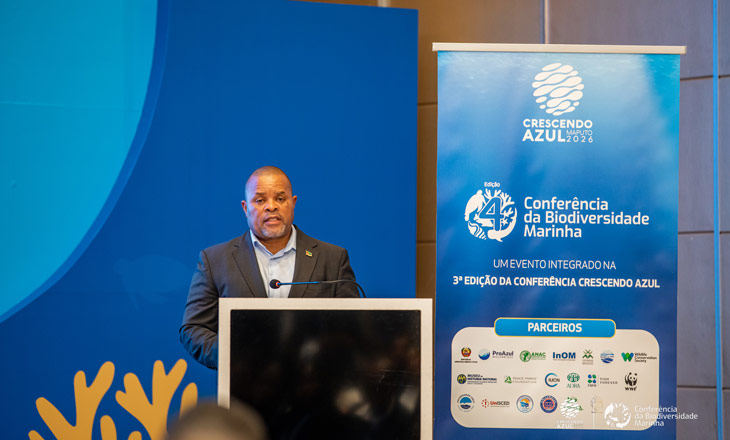
Throughout the two-day event, discussions converged around a central message: there can be no sustainable blue economy without healthy marine biodiversity. During the opening session, Carlos dos Santos, Chairman of BIOFUND, emphasized that “the conservation of marine resources is not only an environmental responsibility. It is also an economic, social, and moral responsibility.” He further stated that “Mozambique’s blue future will depend on our collective ability to transform knowledge into action, science into public policy, and conservation into opportunities for sustainable development.”
On the same occasion, Roberto Mito Albino, Minister of Agriculture, Environment and Fisheries, highlighted the unique importance of the Marine Biodiversity Conference by noting that:
“The Marine Biodiversity Conference brings to this discussion the essential foundation that supports any vision of blue development: ecosystems, species, habitats, marine conservation areas, scientific knowledge, coastal communities, and environmental education.”
Participants emphasized the need to strengthen cooperation among institutions, invest in the generation and application of scientific knowledge, enhance the participation of local communities, and mobilize innovative financing mechanisms to ensure the protection of the country’s marine and coastal ecosystems.
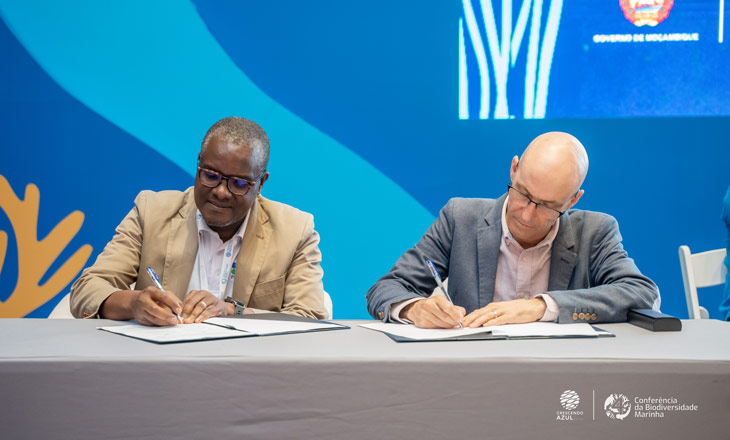
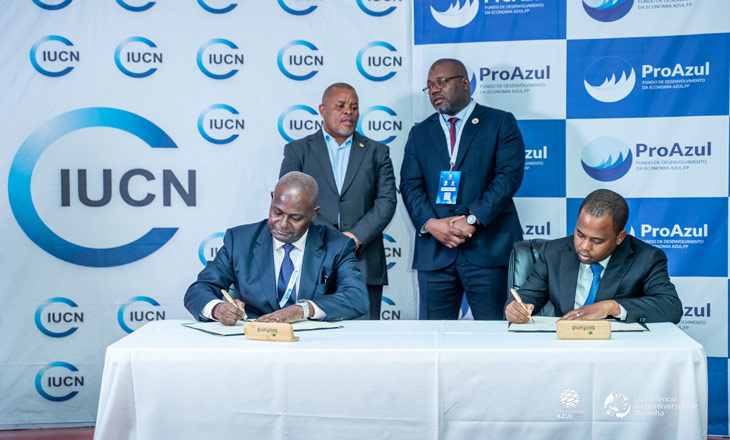
Among the conference’s major milestones were the signing of a Memorandum of Understanding between BIOFUND and PROAZUL, aimed at developing sustainable financing mechanisms, including resource mobilization for marine and coastal biodiversity conservation initiatives, and the signing of the Commitment Declaration for the implementation of the National Framework for Other Effective Area-Based Conservation Measures (OECMs), reinforcing Mozambique’s alignment with the Global 30×30 Target.
The Declaration was endorsed by a wide range of stakeholders, including government institutions, development partners, civil society organizations, and research entities, all of whom play a complementary role in the identification, recognition, and implementation of OECMs in Mozambique. This collective commitment seeks to consolidate an integrated approach to biodiversity conservation, ensuring that areas managed by different actors and sectors effectively contribute to national and global conservation targets.
The conference featured 44 oral presentations, 38 scientific posters, and parallel sessions covering marine protected area management, marine megafauna conservation, biodiversity, climate change, marine ecosystems and restoration, nature-based solutions, community governance, sustainable fisheries, aquaculture, and coastal habitat conservation. These sessions reinforced the importance of bridging the gap between research and decision-making and transforming scientific data into policies, programmes, and concrete actions on the ground.
The program also included an exhibition on marine ecosystems and conservation, held between 13 and 17 June at the Maritime Museums in Maputo. The exhibition brought together photographs, educational materials, and information on Mozambique’s marine and coastal species, providing a space for environmental awareness and education for different audiences. Over the five days, the exhibition received around 340 visitors, highlighting the growing interest in the conservation of the country’s marine ecosystems.
One of the conference’s highlights was its recognition of coastal communities, particularly through discussions on conservation with value, incentives, community governance, and Women Guardians of the Oceans. These sessions reinforced the understanding that conservation efforts can only be sustainable if they generate tangible benefits for those who depend daily on marine resources and actively participate in their management. Reflecting on her participation in the Women Guardians of the Oceans side event, held within the framework of the Marine Biodiversity Conference, participant and speaker Madalena Duarte summarized the educational dimension of the discussion by stating:
“Educating for the ocean also means nurturing more aware, committed, and prepared citizens capable of addressing the environmental challenges of both the present and the future.”
Across the various sessions, a common message emerged: marine biodiversity conservation cannot be achieved in isolation. Success will depend on strengthening partnerships, securing long-term financing, bringing science closer to decision-making processes, and creating tangible benefits for communities whose livelihoods depend on marine resources.
The conference was complemented by an exhibition on marine ecosystems and biodiversity conservation, hosted at the Museum of the Sea until 17 June and open to the public. The initiative offers an opportunity to explore the richness of Mozambique’s marine biodiversity, raise awareness about the importance of its conservation, and engage different audiences with the themes discussed during the conference.
The successful organization of the 4th Marine Biodiversity Conference was made possible through the joint efforts of several partner institutions, namely the Ministry of Agriculture, Environment and Fisheries, the Blue Economy Development Fund (PROAZUL), the National Administration for Conservation Areas (ANAC), the Oceanographic Institute of Mozambique, Eduardo Mondlane University, the Museums of the Sea and Natural History, the Wildlife Conservation Society (WCS), Peace Parks Foundation, the International Union for Conservation of Nature (IUCN), ADRA Mozambique, the Marine Megafauna Foundation, Rare, WWF, UniLúrio, UniISCED, the Higher Polytechnic Institute of Quissico, UniZambeze, Chepea Association, and the Luxury Networks Association.
The conference also benefited from the support of development partners and donors, including the Blue Action Fund, the World Bank through the MozNorte Project, the Government of Sweden through the Biodiversity Conservation Programme, FAO, GIZ through the Prosper Azul Project co-financed by BMZ and the European Union, and the Italian Agency for Development Cooperation (AICS), all of whom support marine biodiversity conservation initiatives in Mozambique.
During the closing session, the organization of the 5th Marine Biodiversity Conference in 2027 was announced, reaffirming the continuity of this platform for dialogue, cooperation, and knowledge sharing in support of ocean conservation and the sustainable development of Mozambique.
Relive the highlights of the 4th Marine Biodiversity Conference on BIOFUND’s Facebook page: https://www.facebook.com/BIOFUND.Mozambique