
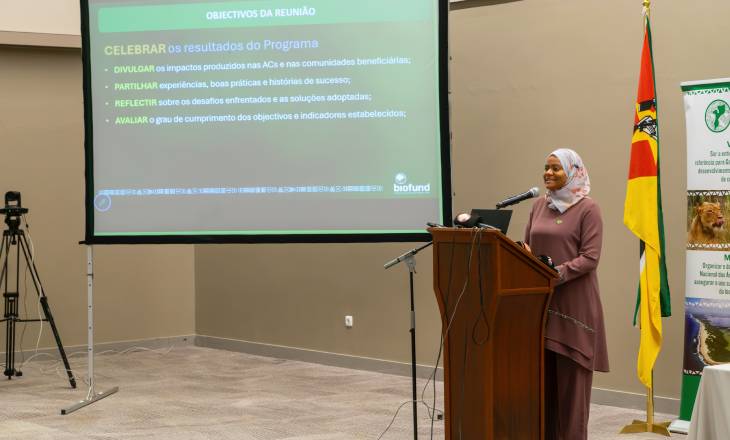
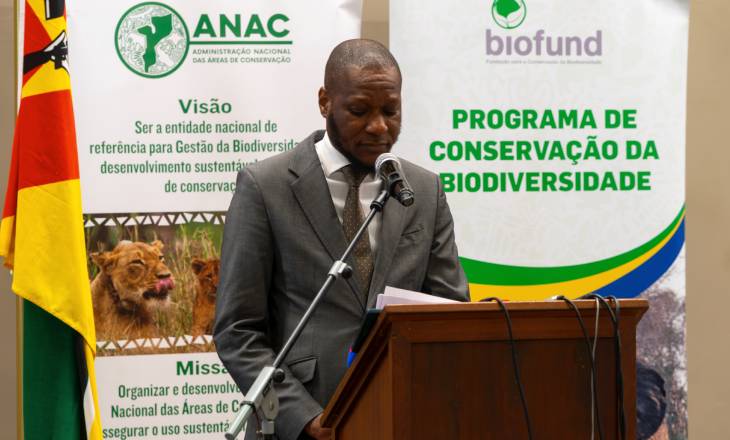
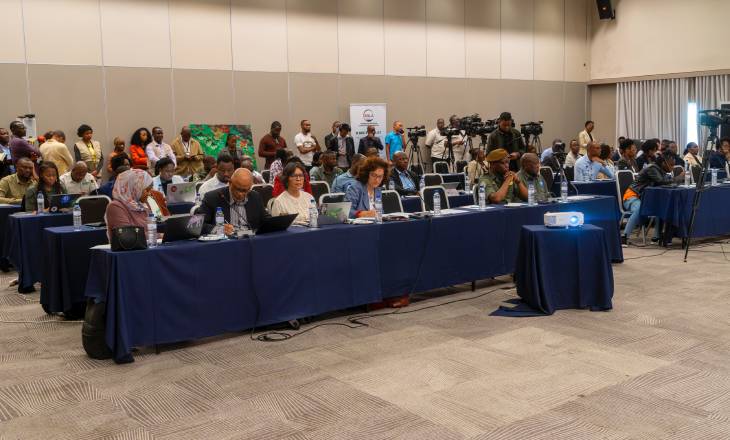
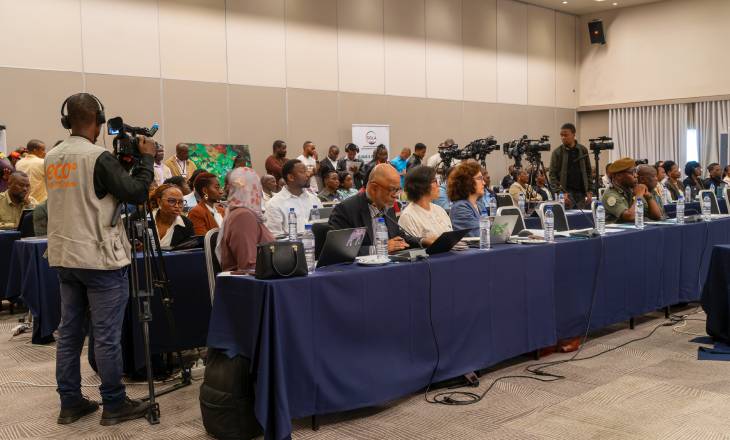
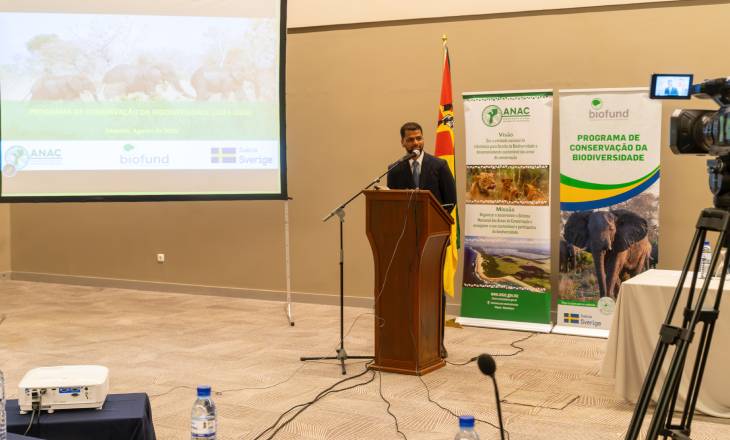
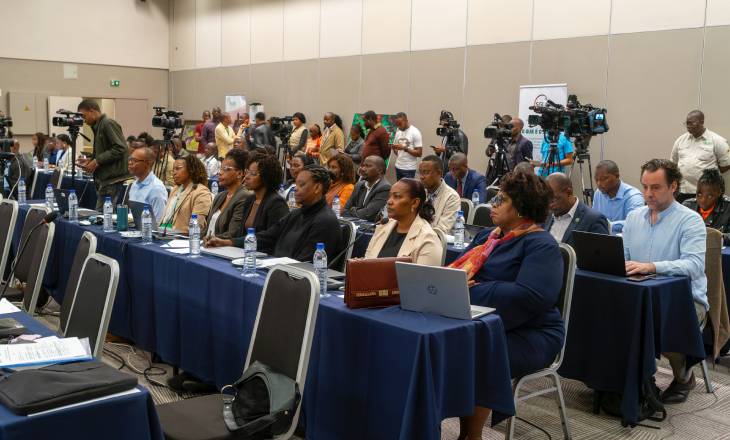
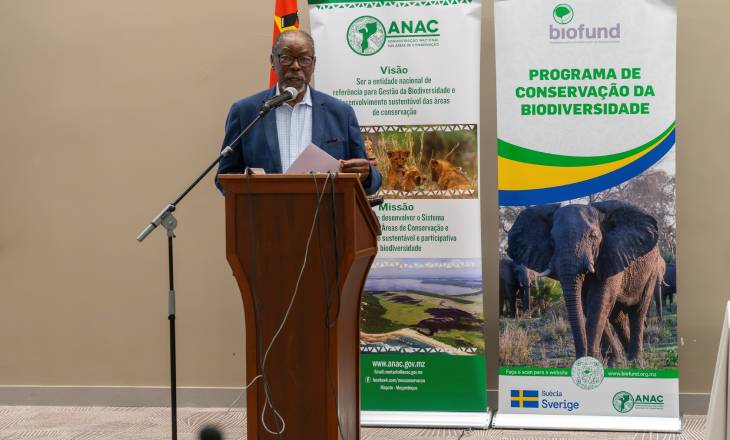
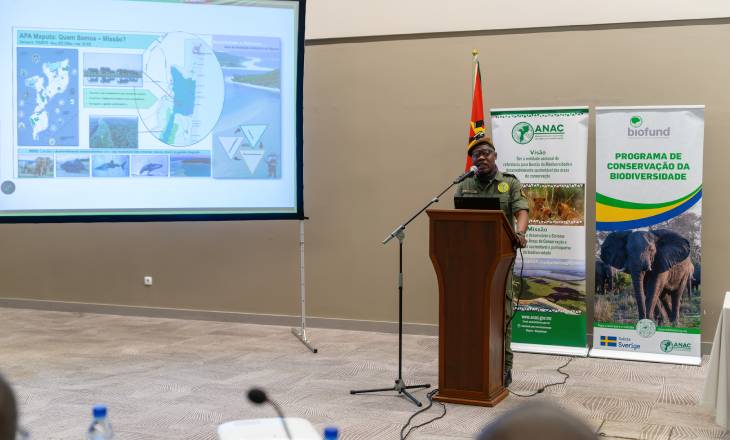
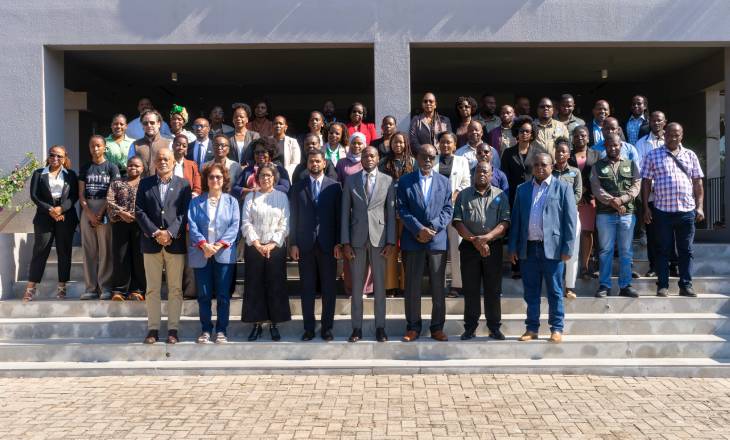
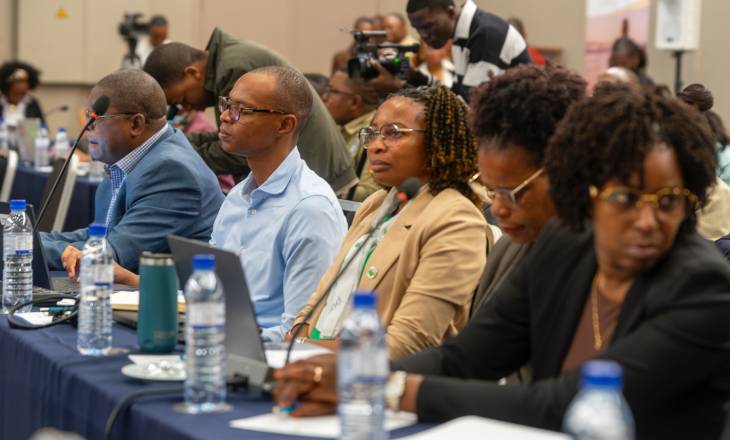
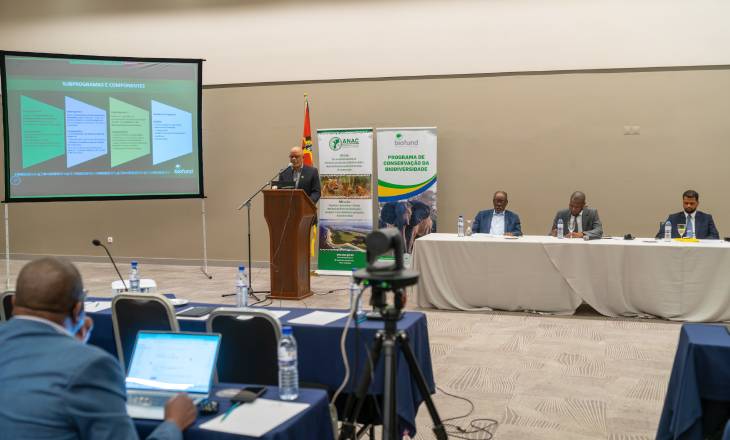
The Foundation for the Conservation of Biodiversity (BIOFUND), in coordination with the National Administration of Conservation Areas (ANAC), held the Final Meeting of the Biodiversity Conservation Programme in Mozambique in Maputo on 20 and 21 August. The programme was supported by the Government of Sweden through the Swedish International Development Cooperation Agency (SIDA).
Published at 21/08/2026
BIOFUND and ANAC present results of the Biodiversity Conservation Programme in Mozambique
The meeting marked the conclusion of a cooperation cycle between 2023 and 2026 and provided an opportunity to present results and impacts, share experiences and good practices, and reflect on challenges and lessons learned to inform future biodiversity conservation initiatives in the country.
Throughout its implementation, the programme supported five conservation areas and reached 25 communities, benefiting more than 11,000 people. Its interventions included community initiatives, scientific research, institutional strengthening, the development of policy instruments and innovative conservation financing mechanisms.
Results reaching conservation areas and communities
Among the main results presented was support for Pomene National Reserve, where infrastructure, equipment and operational resources were strengthened, together with the capacity of technical staff and 25 new rangers. Four water supply systems serving four communities were also installed, while community beekeeping initiatives were supported through the training of 32 beekeepers and the initial distribution of 32 beehives.
In the Maputo Environmental Protection Area, the programme helped improve operational conditions and supported environmental education, environmental clubs and community development initiatives.
In the community conservation initiative in Moai, Matutuíne, the installation of approximately 43 kilometres of electric fencing along the Futi Corridor helped reduce human-wildlife conflict, protect people and property, minimise crop losses and create more than 130 temporary employment opportunities for members of local communities.
Armando Tembe, a community representative involved in the Mwai initiative, summarised this change in perception: “Today, communities are already able to recognise the value of nature.”
The interventions also included strengthening local governance structures, supporting sustainable livelihoods and introducing benefit-sharing mechanisms, including examples presented for Niassa Special Reserve, which strengthened community involvement in conservation.
More knowledge and new conservation solutions
At the national level, the programme helped strengthen the biodiversity knowledge base and support evidence-based conservation decisions. Key milestones included the National Census of Elephants and Other Large Mammals, conducted in 2025, which estimated 22,718 elephants, compared with 9,114 in 2018, as well as ecological surveys in Techobanine.
The meeting also presented a marine monitoring initiative based on environmental DNA, which makes it possible to identify species from water samples without capturing them. This approach strengthens national scientific capacity and could help improve marine biodiversity monitoring.
The programme also supported the development and revision of strategic and regulatory instruments, including the Carbon Market Regulatory Framework, the Human-Wildlife Conflict Prevention and Mitigation Strategy and the National Biodiversity Action Plan (NBSAP). Nine legal and strategic instruments were supported, exceeding the original target of five.
In sustainable financing, innovative mechanisms were advanced, particularly biodiversity offsets and ecological restoration. Metrics were developed for seagrass and the African savanna elephant, three contracts were signed with the private sector, and community-led mangrove restoration initiatives were supported in Memba–Mossuril.
Investment in people was another important component. More than 300 interns received support through the Mozambique Conservation Leadership Programme (PLCM), which also assisted eight post-internship participants, contributing to the development of a new generation of conservation professionals and leaders. Among the group of 300 interns presented by PLCM officer Gildo Chivale, 51% were women.
One of the testimonies came from Clemência Maria Calisto, an administrative assistant at the Maputo Environmental Protection Area: “I think this programme was, for me, a gateway to the professional world.”
Results and lessons for the future
At the opening of the meeting, BIOFUND Executive Director Luís Bernardo Honwana highlighted its celebratory nature: “This meeting celebrates this programme in partnership with Sweden; we are pleased with the results achieved.”
Héric Manuel, a representative of the Embassy of Sweden, highlighted the importance of biodiversity conservation and the sustainable use of natural resources for sustainable development, climate resilience and community well-being. “Programmes have a beginning and an end, but their true value should not end when the funding ends,” he said.
Representing the Director-General of ANAC, Nilton Iombaiomba highlighted progress in conservation areas that had faced limited support, particularly Pomene National Reserve and the Maputo Environmental Protection Area, as well as investments in infrastructure, operational resources, communication and community support. “As we bring this programme to a close, we should look not only at what has been done, but above all at what we can do from here,” he said.
Over the two days, participants also shared experiences related to biodiversity offsets, ecological monitoring and research, and the overall performance of the programme, tracked through a monitoring dashboard developed by BIOFUND.
At the closing session, Anna Tuvesson, a representative of Swedish cooperation, emphasised that relations between Mozambique and Sweden will continue beyond this programme, including in areas related to the environment, climate and biodiversity.
The Final Meeting therefore represented more than the conclusion of a cooperation cycle. It provided an opportunity to celebrate and consolidate knowledge, experiences and partnerships, and to reaffirm the importance of evidence-based conservation, community participation, innovation and sustainable financing solutions.
The results provide a stronger foundation for biodiversity conservation in Mozambique and demonstrate the value of partnerships among national institutions, communities, the private sector, academia and development partners. As programme coordinator Samiro Magane stated, “Development and conservation must be reconciled.” At the closing session, Alexandra Jorge, BIOFUND Programme Director, summarised the message: “The programme ends, but conservation continues.”