
The new version of the platform strengthens the digitalisation, transparency and efficiency of environmental licensing processes in Mozambique
Published at 19/08/2026
The COMBO+ Programme supports the modernization of environmental licensing with the launch of SGLA 2.0
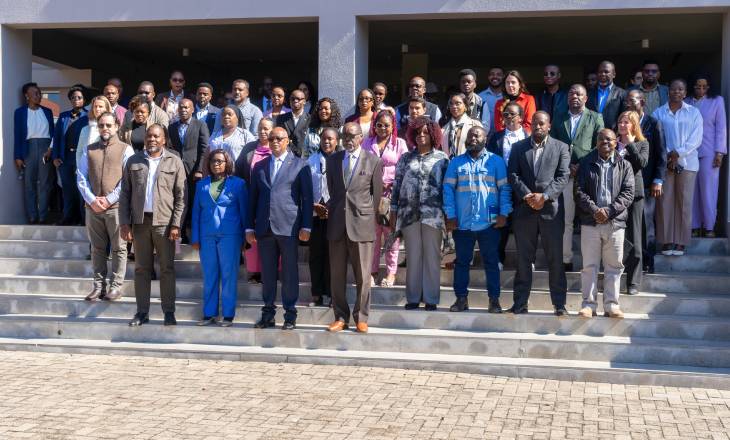
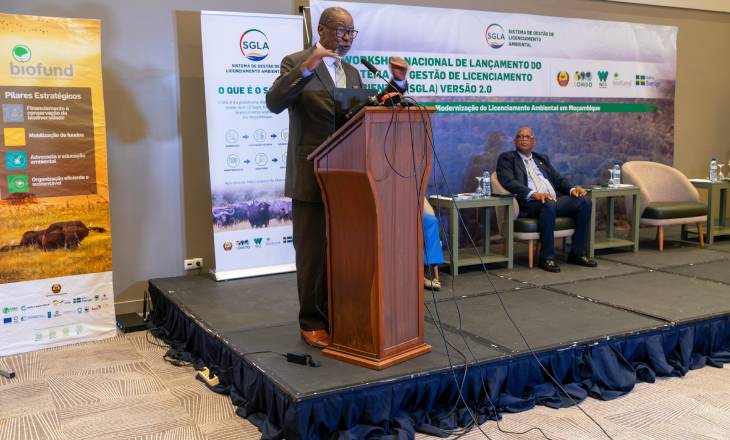
On 18 August, the Secretary of State for Land and Environment, Gustavo Sobrinho Djedje, launched version 2.0 of the Environmental Licensing Management System (SGLA) in Maputo City. The electronic platform marks a new step in the modernizations of environmental licensing in Mozambique.
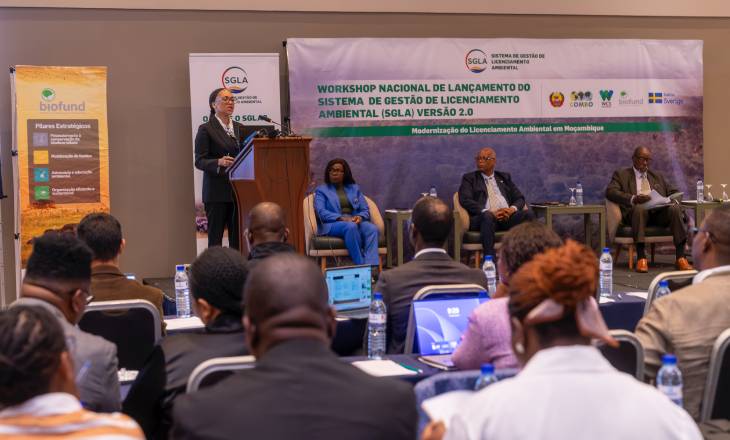
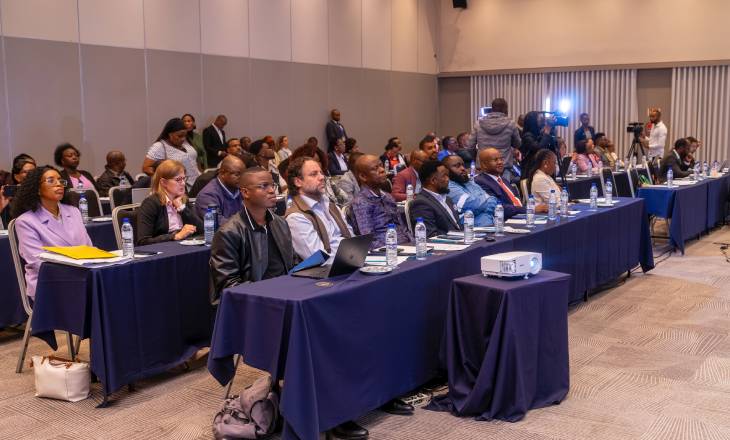
The launch took place during the National Workshop for the Launch of SGLA 2.0, under the theme “Modernization of Environmental Licensing in Mozambique”, which brought together representatives of public institutions, including the Ministry of Agriculture, Environment and Fisheries (MAAP) and the Ministry of Mineral Resources and Energy (MIREME), the private sector, environmental consultants and auditors, academia, civil society organisations and cooperation partners.
The new version of SGLA makes it possible to manage different stages of the environmental licensing process electronically, from application submission to the issuance of the environmental licence, including environmental monitoring, auditing and inspection. The platform also supports the registration and renewal of environmental consultants and auditors, reducing the need to circulate physical documents.
By centralizing information and enabling the different stages of each process to be monitored, the system strengthens coordination among the institutions involved, including the National Directorate of Environment and Climate Change (DINAMC), the National Directorate of Land and Territorial Development (DNATDT), the National Agency for Environmental Quality Control (AQUA, IP), local state bodies, environmental consultants and project proponents.
In the public area of the portal, users can consult projects, licences, legislation, public consultations, registered consultants and statistics. In the restricted area, technical staff review applications, monitor deadlines and communicate with proponents.
To support this transition, four user manuals have also been prepared for Proponents, Environmental Consultants, Environmental Auditors and Government Technical Staff. They will be made available electronically from the launch, with printed copies also planned. The manuals explain, step by step, how to use each of the system’s functionalities, responding in particular to the needs of those who will use SGLA.
A new step in modernizing environmental licensing
SGLA 2.0 is aligned with national priorities for modernizing public administration, administrative simplification and digital transformation, as set out in the National Development Strategy 2025–2044 and the Government’s Five-Year Programme (PQG) 2025–2029. At the launch, the Secretary of State for Land and Environment highlighted the platform’s importance in accelerating procedures and reducing the use of physical documents.
“With this system, we want to reduce document processing times. At present, an environmental licensing process takes between 100 and 120 days. In some cases, it takes even longer.”
The National Director of Environment and Climate Change, Sónia Muando, emphasized the preventive role of environmental licensing in managing the environmental and social impacts associated with development.
“Environmental licensing is an essential mechanism for ensuring that the country’s economic development is accompanied by adequate prevention and management of environmental and social impacts.”
Benefits and challenges identified by users
From the private sector’s perspective, environmental specialist Ernestina Zandamela highlighted the link between licensing timeframes and compliance with investment schedules.
“When we experience a delay, for example, in issuing a licence, this also delays the implementation of the projects under way.”
During the round table, participants identified the harmonization of procedures at central and provincial levels, clarification of institutional responsibilities, capacity building, data quality, the integration of social impacts and connectivity as priorities.
The next steps discussed included training in the provinces, future interoperability with other registries and the proposal to establish a multisectoral technical group to support the system’s continued improvement.
BIOFUND contributes to integrating conservation and development
SGLA was originally developed under the CONNECT Project and has since been strengthened and modernized by the National Directorate of Environment and Climate Change, with technical and financial assistance from the Foundation for the Conservation of Biodiversity (BIOFUND) and the Wildlife Conservation Society (WCS) Mozambique, under the COMBO+ Programme.
The partnership has supported platform maintenance and modernization, user capacity-building and preparations for version 2.0 to become operational.
The operational roll-out was preceded, on 6 and 7 July, by training for 27 participants from DINAMC, AQUA and DNATDT. The training received financial support from the Government of Sweden through the Biodiversity Conservation Programme.
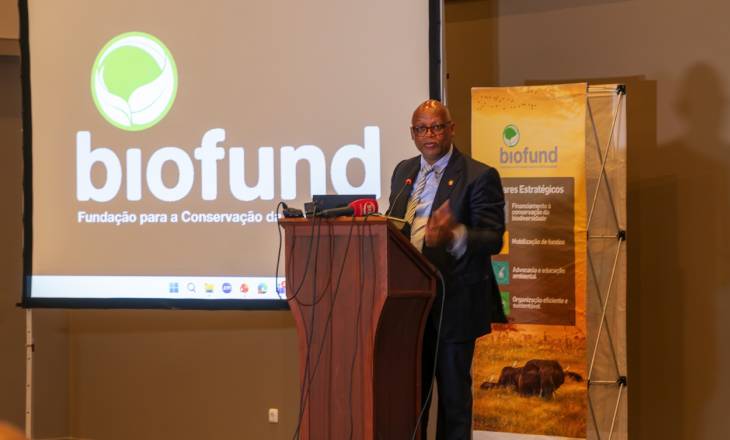
According to BIOFUND’s Executive Director, Luís Bernardo Honwana, the launch of the new version marks the culmination of a process developed over several years and provides an opportunity to strengthen the integration of biodiversity conservation into development processes.
“We were facing the challenges posed by the country’s rapid industrialization and believed it was important to ensure that biodiversity offsets were taken into account in everything that was done and throughout our legislation.”
The launch of SGLA 2.0 therefore represents progress in the digital transformation of environmental licensing in Mozambique, creating better conditions for more efficient, transparent and predictable process management.
For BIOFUND, strengthening this instrument contributes to an integrated approach to development and biodiversity conservation, supporting better-informed decisions and sustainable, resilient development in the country.