
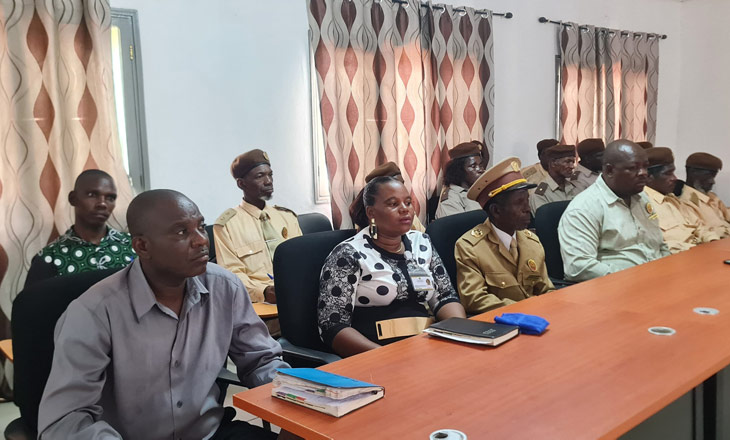
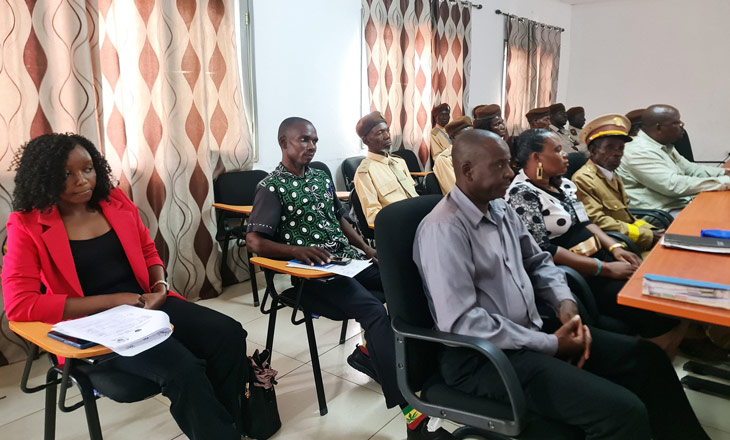
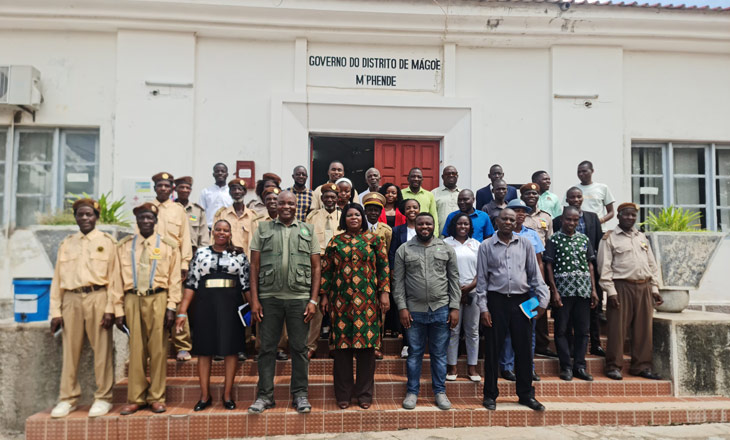
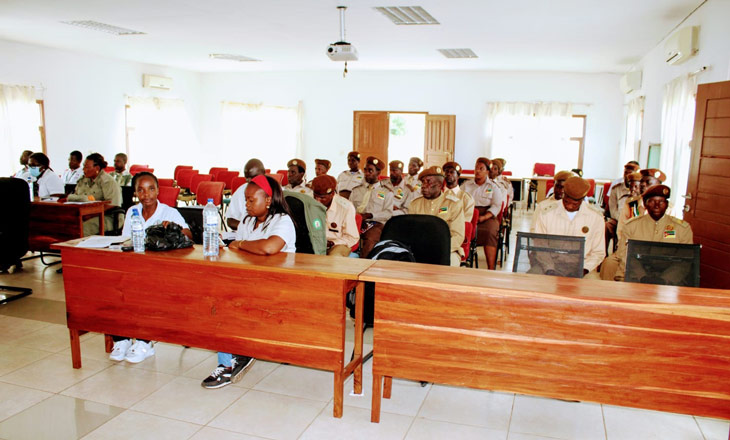
The districts of Mágoè and Chitima, in Tete Province, are hosting, from March 2 to 6, 2026, a training aimed at strengthening and operationalizing the District Multisectoral Mechanism for prevention, safe referral, and coordinated response to cases of Gender-Based Violence (GBV), Sexual Exploitation and Abuse (SEA/SH), and child protection.
Published at 06/03/2026
Mágoè and Chitima strengthen coordinated response to cases of Gender-Based Violence and child protection through revitalization of multisectoral mechanisms
The initiative reinforces coordination among services that operate in a complementary manner—health, social action, police, education, justice, and community organizations—addressing recurring challenges related to coordination, unclear referral pathways, and the absence of standardized procedures.
During the training, participants engage with participatory methodologies (including case studies, simulations, group work, institutional mapping, and participatory planning), focusing on a survivor-centered approach aligned with social safeguards, including World Bank requirements.
The program covered topics such as the legal framework and relevant national standards, including Law 19/2019 (Prevention and Combat of Premature Unions) and Law 29/2009 (Domestic Violence against Women), a survivor-centered approach, risk monitoring in the community and workplace, and procedures for incident reporting.
The opening session was attended by representatives of the District Government, the Mágoè National Park (PNM), in coordination with BIOFUND.
For Marcelino Marechal (head of culture, sports, and education of a team in Mágoè), the initiative helps make processes clearer for victims:
“People, in this case the victims, already know what the procedures are and how their case will proceed. They know where to start, where the process will take place, after the process, where it will be judged, and what follow-up will be provided.”
Domingos Batista, a participant in the training, also highlighted the importance of involving local leadership:
“It was very good, we are truly grateful… This meeting, this training, because we used to have conflicts with the leaders. The leaders were not aware that what they were doing was not in line with the law.”
The training aimed to strengthen technical knowledge on GBV, SEA/SH, and child protection, clarify sectoral roles and responsibilities, map available services in the district, establish referral and case management pathways, develop or update Standard Operating Procedures (SOPs), and prepare a District Action Plan for the functioning of the mechanism.
Expected results include the reactivation and strengthening of the district mechanism, definition of institutional roles, updating of the stakeholder mapping, validation of referral flowcharts, development of district SOPs, and approval of an action plan for the next 6 to 12 months.
This initiative is part of the MozRural program, which aims to improve natural resource management practices in selected areas of the program in Tete Province.