
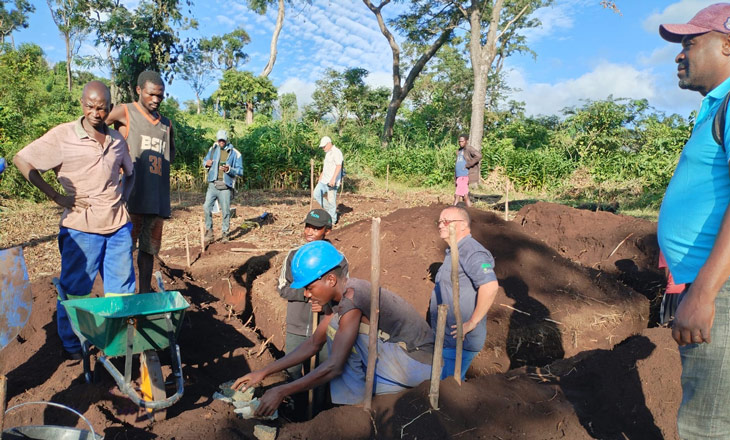
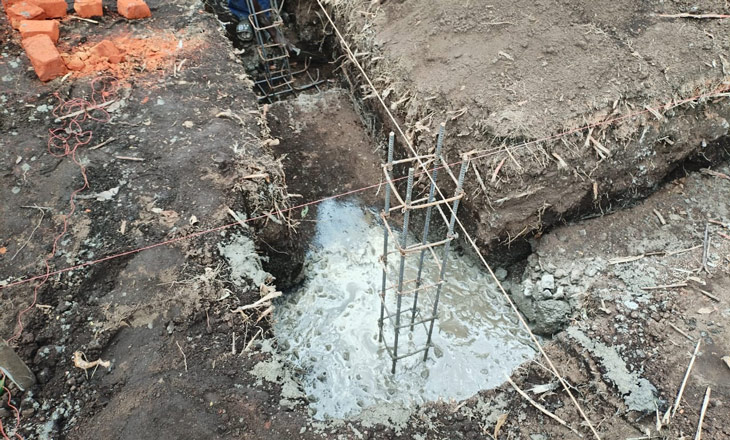
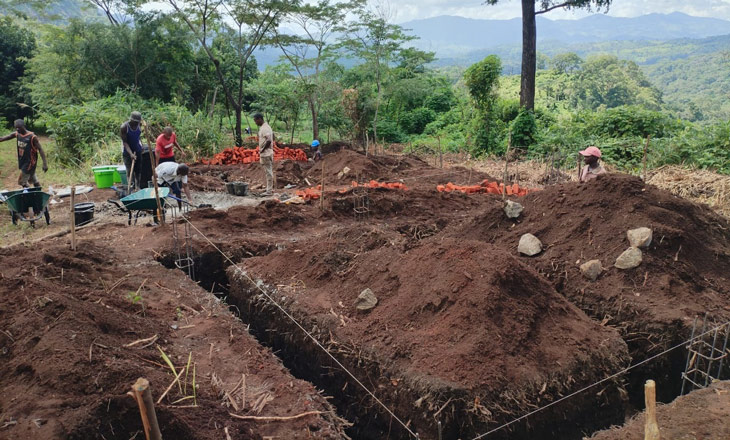
Mount Mabu has taken an important step towards strengthening community-based conservation with the laying of the foundation stone for the construction of a camp to support the management of the area, marking the beginning of a new phase in consolidating operational conditions on the ground.
Published at 04/05/2026
Mount Mabu: Groundbreaking Ceremony Launched for the Construction of a Camp to Support Conservation and Community Development
Held on April 17 of the current year, the groundbreaking ceremony was led by the Coordinator of the Mount Mabu Conservation and Community Development Support Project, António Serra, and the President of CONSERVAMABU. The event was preceded by a traditional ceremony led by the community leader of Nangaze, symbolizing the involvement of local communities in management processes.
Following a planning period, during which the architectural design and the camp’s master plan were developed, the project now moves into its initial construction phase with the active involvement of community members. This stage includes the construction of four type-1 houses, intended to accommodate technical staff, as well as a kitchen with a dining area, creating basic conditions for on-site presence and operations.
The construction of the camp represents a decisive step in strengthening the operational presence in Mount Mabu, improving logistical conditions for the management and conservation of this important ecosystem. In the medium term, it is also expected to foster the development of technical-scientific tourism and beyond. The expansion of infrastructure is planned as additional resources are mobilized.
This initiative is part of the PROMOVE Biodiversity Programme, funded by the European Union and implemented by the Foundation for the Conservation of Biodiversity (BIOFUND), in coordination with the National Administration for Conservation Areas (ANAC). The programme aims to promote biodiversity conservation and the sustainable development of local communities in three beneficiary conservation areas: Gilé National Park (PNAG), the Primeiras and Segundas Environmental Protection Area (APAIPS), and Mount Mabu, where activities are implemented by the WWF–ReGeCom–RADEZA Consortium.
In addition to its conservation impact, the initiative directly contributes to boosting the local economy by promoting income-generating opportunities and strengthening community involvement in the sustainable management of natural resources. The camp also establishes the basic conditions for developing Mount Mabu’s tourism potential by supporting future ecotourism activities, which may generate additional economic benefits for local communities.
With this progress, Mount Mabu strengthens its position as an example of community-based conservation, where biodiversity conservation goes hand in hand with local development.