
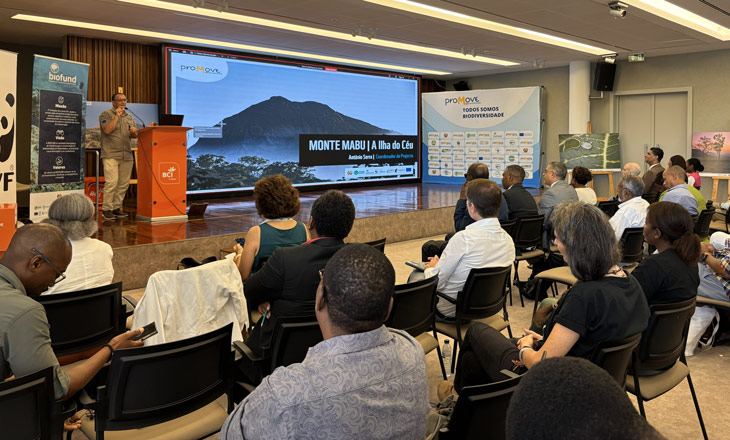
Under the theme “Conservation of Mount Mabu: More Water and Sustainable Development”, the Foundation for the Conservation of Biodiversity (BIOFUND), in coordination with the World Wildlife Fund (WWF) and the European Union, held an event on December 11 at the BCI Headquarters Auditorium dedicated to presenting the latest scientific and socio-economic findings on Mount Mabu, one of the most important mid-altitude tropical forests in Southern Africa.
Published at 15/12/2025
Mount Mabu Highlighted as a Strategic Ecosystem for Sustainable Development
-
© BIOFUND
-

© BIOFUND
-
© BIOFUND
-
© BIOFUND
-
© BIOFUND
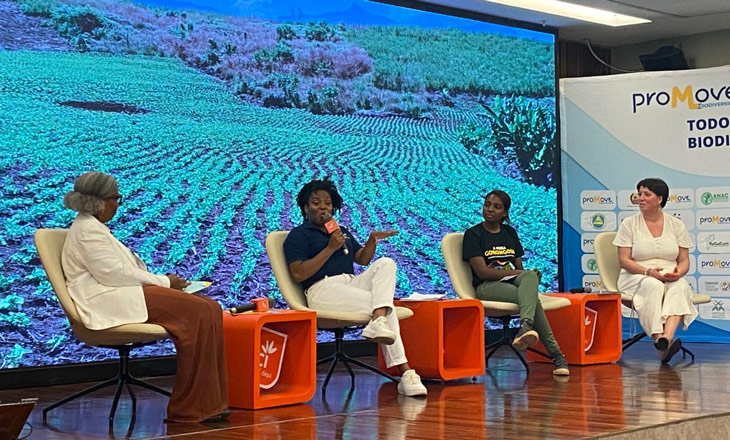
The meeting highlighted groundbreaking scientific discoveries, the hydrological potential of the region, and opportunities for sustainable businesses, including clean energy, responsible water bottling, irrigation, and nature-based tourism.
In the opening remarks, Hélder Muteia, representative of the Chairman of BIOFUND’s Board of Directors, stated: “Mount Mabu is more than a place of extraordinary beauty; it is a source of life, a reservoir of knowledge, and a symbol of the opportunities that arise when science, conservation, and development unite for the common good.” Meanwhile, Aude Guignard, representative of the European Union, emphasized the ecological qualities of Mount Mabu and the need to protect it: “Protecting this ecosystem is not just an environmental necessity; it is a sound investment,” she said.
Known as the “Sky Island”, Mount Mabu rises to 1,700 meters in the heart of Zambézia, encompassing about 9,000 hectares of the largest preserved mid-altitude tropical forest in Southern Africa. Through the support of the PROMOVE Biodiversity program, funded by the European Union, two scientific expeditions conducted between 2023 and 2024 identified more than a dozen endemic species, some completely new to science, revealing that Mabu still holds untold chapters of natural history.
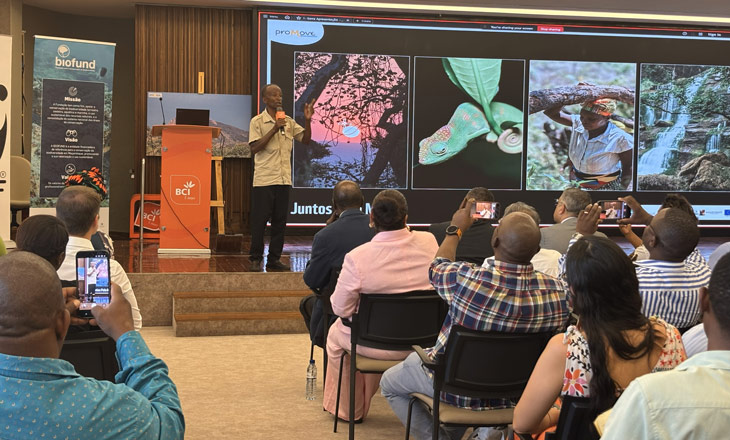
The WWF-ReGeCom-RADEZA consortium presented a video on Mabu and relevant results, such as the creation of 11 community committees that led to the formation of CONSERVAMABU, responsible for managing Mount Mabu’s natural resources with community involvement. Other achievements included the demarcation of the proposed area for the creation of a community conservation area, submission of the proposal for its declaration, two scientific expeditions, and the implementation of value chains such as sustainable agriculture and beekeeping.
Communities are part of the decisions: The Administrator of Lugela District highlighted the desire of the communities and the district to declare Mount Mabu as a Community Conservation Area and launched the slogan: “If we take care of Mabu, Mabu will take care of us.” Success stories presented by CONSERVAMABU demonstrated strong community engagement in conservation and sustainable financing, with the commitment: “We are ready to work by mobilizing communities not to hunt, not to carry out uncontrolled burning, and to conserve our forest.”
During the event, the National Irrigation Institute, in collaboration with Eduardo Mondlane University (UEM), presented findings on the region’s hydrological potential. A panel discussion on financing opportunities was held, and the feasibility analysis of value chains implemented in Mabu was presented, highlighting that the combination of agricultural by-products and beekeeping is the most promising. Experiences from value chains implemented in Gorongosa and OWAMI’s activities promoting sustainable agriculture were shared. Among the limitations, the difficulty of accessing Mount Mabu was noted, which may restrict ecotourism activities and the flow of agricultural products.
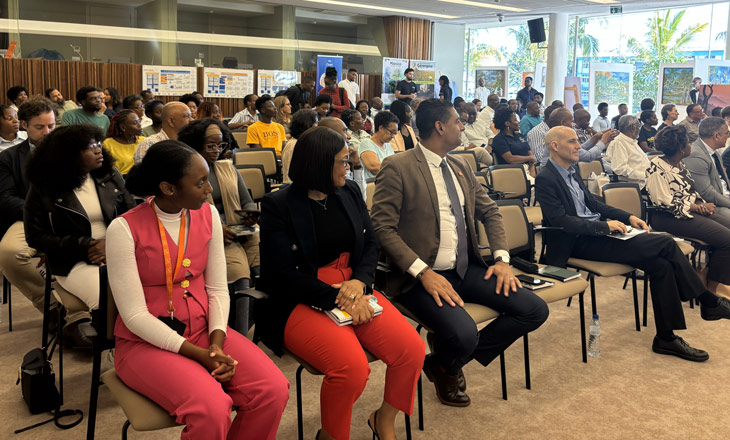
Held on December 11, a date that marks International Mountain Day, the event brought together 96 participants in person and 17 online, representing institutions such as the European Union, World Bank, IUCN, UEM, INIR, FUNAE, Maliasili, Água Vumba, Greenlight, Ara-Sul, Red Cross, German Embassy, KFW, FCDO-UK, WWF, ReGeCom, RADEZA, WCS, Enabel, FNDS, Gorongosa National Park, ABIODES, BCI, MozaBanco, OWAMI, Marmo, FAO, among others. The initiative aimed to draw the attention of various stakeholders to ensure the continuity of activities carried out in Mabu under the PROMOVE Biodiversity program, funded by the European Union and managed by BIOFUND and the National Administration of Conservation Areas (ANAC).
This program includes different project implementers in the provinces of Zambezia and Nampula, among which the WWF-ReGeCom-RADEZA consortium stands out, responsible for implementing the Mount Mabu Conservation Support Project.
