




Contextualization
The BRIDGE Project is a joint initiative of the Latin American and Caribbean Network of Environmental Funds (RedLAC) and the Consortium of African Environmental Funds (CAFÉ), managed by the Forever Costa Rica Association (FCRA) and funded by the French Facility for Global Environment (FFEM) and the MAVA Foundation.
Its purpose is to strengthen the capacities of Conservation Trust Funds (CTFs) to act as catalysts for private financing in support of biodiversity conservation, creating new bridges between the conservation sector and the private sector.
CTFs, such as BIOFUND in Mozambique, are well positioned to lead this agenda, as they engage with government, the private sector, civil society, academia, and local communities around sustainable solutions and innovative financial mechanisms.
Project Objectives
The main objective of BRIDGE is to increase the capacity of CTFs to mobilize private resources and integrate sustainable financial mechanisms into their operations, with a direct impact on conservation and community well-being.
The specific objectives include:
- Strengthening the institutional capacities of CTFs to plan, negotiate, and manage partnerships with the private sector;
- Promoting financial innovation through instruments such as impact investment, blended finance, biodiversity offsets, and carbon credits;
- Facilitating the exchange of regional experiences among environmental funds from Africa, Latin America, and the Caribbean;
- Generating systematized and replicable knowledge through reports, case studies, and the formation of learning networks;
- Reducing dependence on traditional donors, promoting long-term financial sustainability.
Project Components
Component 1: Private Sector Innovation Fund — technical and financial support for CTFs to test new financial mechanisms and partnerships with the private sector;
Component 2: Exchange and Training on Financing with the Private Sector — promotion of mentorships and technical exchanges between experienced and emerging CTFs;
Component 3: Knowledge Management and Dissemination — production of case studies, lessons learned, and regional application tools to promote scalability and replication.
Actions Developed Under the BRIDGE Project
BIOFUND’s Role in BRIDGE
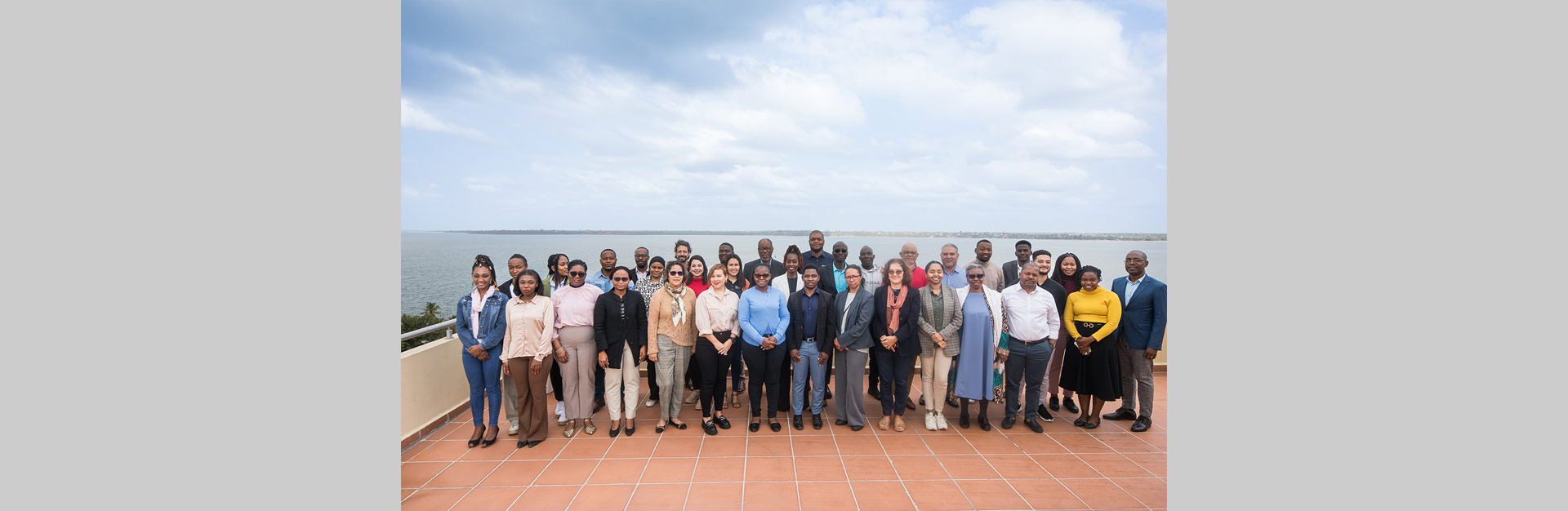
Under Component 2, BIOFUND actively participated in the BRIDGE Project, leading and integrating mentorships that promoted innovation, knowledge sharing, and institutional strengthening among Conservation Trust Funds from Africa, Latin America, and the Caribbean.
BIOFUND:
- Led the Fundraising with the Private Sector mentorship, involving seven CTFs;
- Participated as a mentee in two other initiatives focused on biodiversity offset mechanisms and impact investment.
These mentorships strengthened resource mobilization capacities, partnership management, and the development of innovative financial instruments.
Fundraising with the Private Sector – A Transformative Mentorship
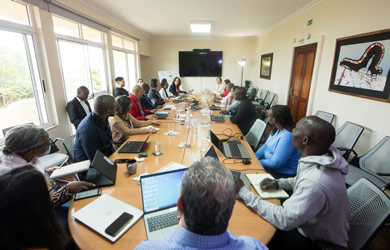
As the main mentor, BIOFUND conducted an eight-month programme that connected teams from seven countries and promoted skills development in:
- fundraising strategies and relations with the private sector;
- strategic planning and goal setting;
- use of innovative financial mechanisms;
- creation and improvement of resource mobilization strategies for CTFs.
The results of this experience were presented on international platforms, reinforcing cooperation among environmental funds and contributing to the dissemination of best practices in conservation financing.
Results and Impact
Each participating environmental fund developed or updated its own fundraising strategy, incorporating innovative practices adapted to its local reality. Before the mentorship, 70% of the CTFs did not have a formal fundraising strategy. After the virtual sessions, all seven funds presented structured plans with clear, long-term goals.
Among the results achieved:
New donors and partnerships established in countries such as Malawi and Belize;
Creation of internal fundraising teams, strengthening institutional governance;
Increased international visibility, with active participation in regional and international events;
Adoption of innovative financing mechanisms, promoting long-term sustainability.
Financing
For each mentorship programme

