
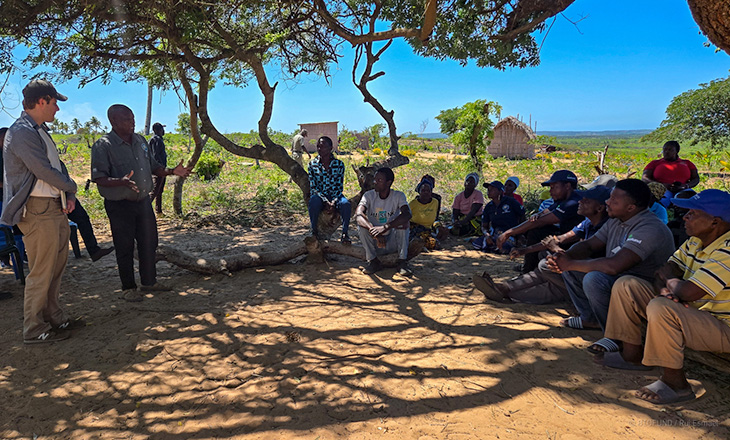
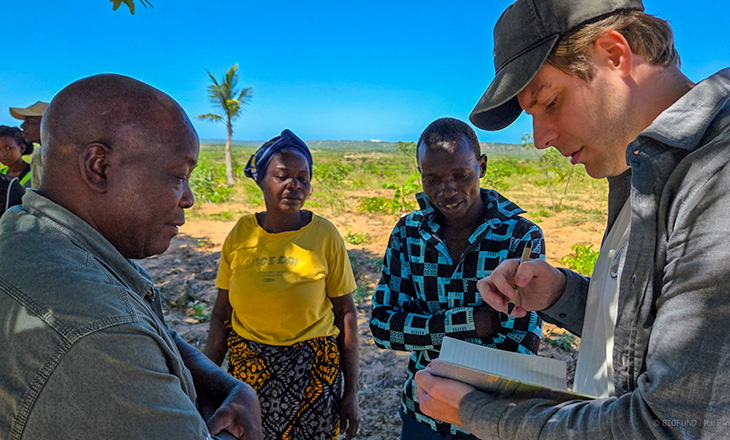
Swedish development cooperation representative reviews infrastructure investments and learns about results linking community development to biodiversity conservation.
Published at 30/10/2026
SIDA visit to Pomene highlights the impact of access to water on relations between communities and the Reserve
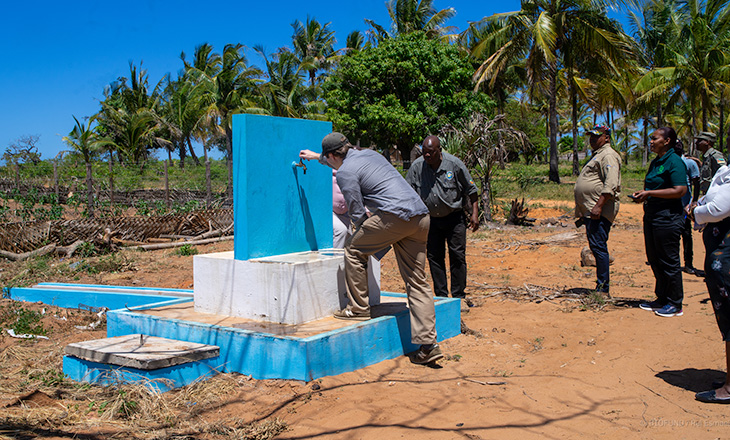
Casper Falk Wollberg, Programme Officer representing the Swedish International Development Cooperation Agency (SIDA), visited Pomene National Reserve, in Inhambane Province, on 26 October 2026, to monitor investments funded by the Government of Sweden through the Biodiversity Conservation Programme, coordinated by the Foundation for the Conservation of Biodiversity (BIOFUND), in partnership with the National Administration for Conservation Areas (ANAC). The visit provided an opportunity to assess the benefits of the water supply system in Nhaushua community and the progress made in improving the Reserve’s infrastructure, with particular emphasis on reports of improved relations between the community and conservation rangers.
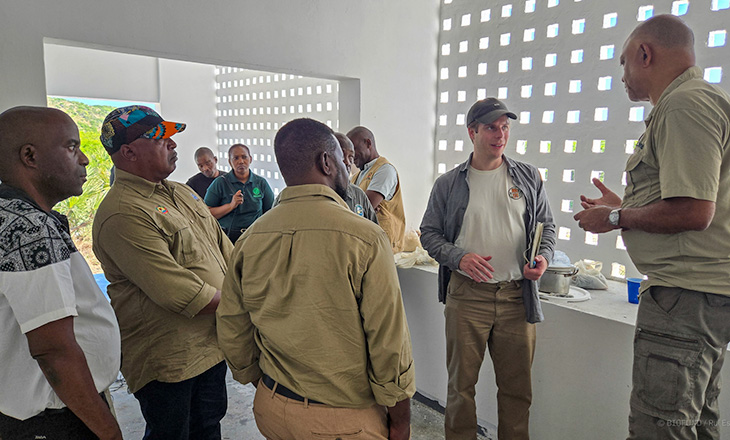
During the field visit, Casper Falk Wollberg visited the Nhaushua multifunctional water supply system, where he spoke with community members about the changes brought about by the infrastructure. The visit also included an assessment of investments in the Reserve’s administrative facilities, aimed at improving operational conditions and the working environment for conservation teams.
The field visit was also attended by the Administrator of Massinga District, Abílio Machado; the Administrator of Pomene National Reserve, Abílio Tamele; and BIOFUND’s Biodiversity Conservation Programme Coordinator, Samiro Magane, as well as representatives of the National Administration for Conservation Areas (ANAC), the Massinga District Planning and Infrastructure Services (SDPI), and technical staff from the Reserve. Their participation provided an opportunity to assess the results of the investments on the ground and discuss the challenges associated with their operation and long-term sustainability.
Water transforming community lives
One of the main achievements of the Biodiversity Conservation Programme in the buffer zone of Pomene National Reserve was the construction of four multifunctional water supply systems in the communities of Nhaushua, Minerva, Muchungo and Pomene.
Completed in 2026, these systems provide water for human consumption, livestock watering and agricultural irrigation. The intervention was designed to address community needs and strengthen their resilience to climate change.
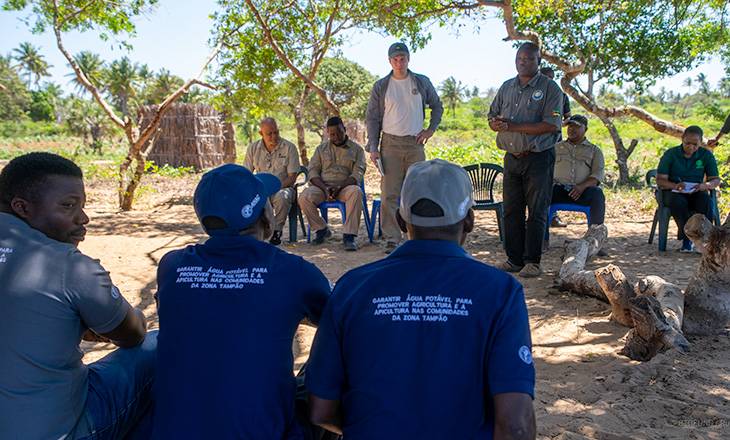
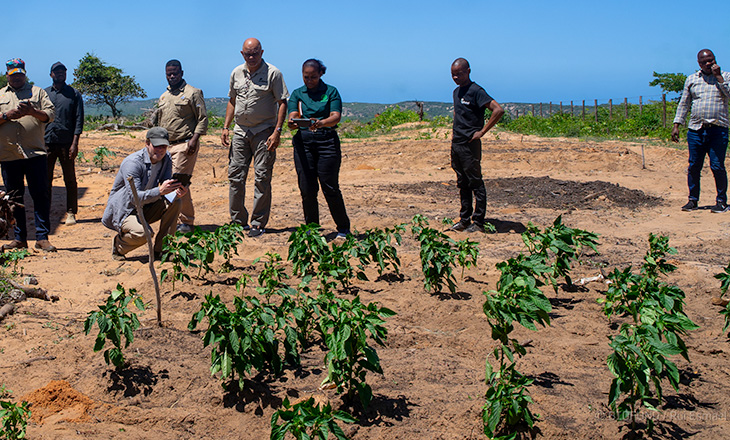
In Nhaushua, Casper heard first-hand accounts of the benefits of the investment, particularly the reduction in the time and effort required to collect water and the opportunity to develop agricultural activities near the water supply system.
Across the four communities, the Programme supported the establishment of approximately 1,120 horticultural growing beds, intended for household consumption and the sale of produce. In Nhaushua, the first vegetable harvest has already been recorded, particularly lettuce.
“My visit to Pomene showed me the importance of resilient infrastructure in such a remote area. Conversations with community members made it clear that the water system has brought tangible benefits by facilitating access to water and creating opportunities for agricultural production. It was particularly meaningful to hear that the investment had also helped improve relations between the community and the Reserve’s rangers,” said Casper.
From improved living conditions to stronger community support for conservation
Beyond the direct benefits of water supply, the visit highlighted another important dimension of community investments: their contribution to more positive relations between local residents and the Reserve’s administration.
During the visit, one of the rangers shared with Casper his observations of changes in community attitudes. According to his account, there had previously been some hostility towards the presence of rangers, but following the installation of the water supply system, relations with a large part of the community had become more positive.
For Casper, this experience demonstrated the importance of involving communities in conservation investments and ensuring that the benefits respond to their needs.
The SIDA representative considered community engagement from the earliest stages of projects to be a fundamental lesson for future interventions, as their sustainability depends not only on the infrastructure built, but also on the trust and support of local populations.
The Programme sought to strengthen this dimension through the establishment and training of four community water management subcommittees, comprising 12 members responsible for supporting the operation, maintenance and local management of the systems.
Improved conditions for Reserve management
The visit also provided an opportunity to assess investments in the administrative and operational infrastructure of Pomene National Reserve.
Programme support included the construction of a warehouse and rehabilitation works on essential facilities, including rangers’ dormitories, ablution facilities, the dining hall and the machinery building.
These works aim to improve the working and living conditions of the teams responsible for managing and protecting the Reserve.
The Programme also supported the installation of an autonomous hybrid off-grid photovoltaic system to improve the reliability of the electricity supply and reduce dependence on fossil fuels, as well as improvements to the water supply system at the Reserve’s main camp.
Casper expressed a positive assessment of the progress observed and the priorities established for the investments, highlighting the importance of providing suitable conditions for conservation teams to carry out their duties effectively.
Community engagement and tourism as priorities for the future
In his assessment, Casper highlighted two key aspects for consolidating the results achieved: maintaining trust and harmonious coexistence with local communities, and strengthening the Reserve’s potential to attract visitors.
The SIDA representative acknowledged that challenges remain and require dialogue and appropriate solutions, but considered that the investments made had laid an important foundation for the Reserve’s future.
Beyond improvements to infrastructure, he emphasised that enhancing biodiversity conservation and developing tourism could, in the long term, contribute to strengthening the sustainability of the protected area.
“One of the main lessons from this visit is the importance of involving local communities from the very beginning of interventions. The sustainability of investments depends not only on infrastructure, but also on the trust and support of the people living alongside the Reserve. I believe an important foundation has been laid for further improvements in conservation and relations with local communities,” Casper emphasised.
Casper Falk Wollberg’s visit therefore provided an opportunity to assess the tangible results of Swedish support for biodiversity conservation in Mozambique and gather experiences and lessons that may help guide future interventions.
The Biodiversity Conservation Programme, funded by the Government of Sweden and implemented by BIOFUND, aims to strengthen the management of Conservation Areas, promote the sustainable use of natural resources, and improve the climate change adaptation capacity and resilience of Mozambican communities and institutions.

