
CCIP will support community management, livelihoods and the training of conservation professionals across four priority landscapes during 2026–2028.
Published at 15/09/2026
BIOFUND and the United Kingdom sign agreement to strengthen community conservation in Mozambique
-
© BIOFUND / Rui Esmael
-
© BIOFUND / Rui Esmael
-
© BIOFUND / Rui Esmael
-
© BIOFUND / Rui Esmael
-
© BIOFUND / Rui Esmael
-
© BIOFUND / Rui Esmael
-
© BIOFUND / Rui Esmael
-
© BIOFUND / Rui Esmael
-
© BIOFUND / Rui Esmael
-
© BIOFUND / Rui Esmael
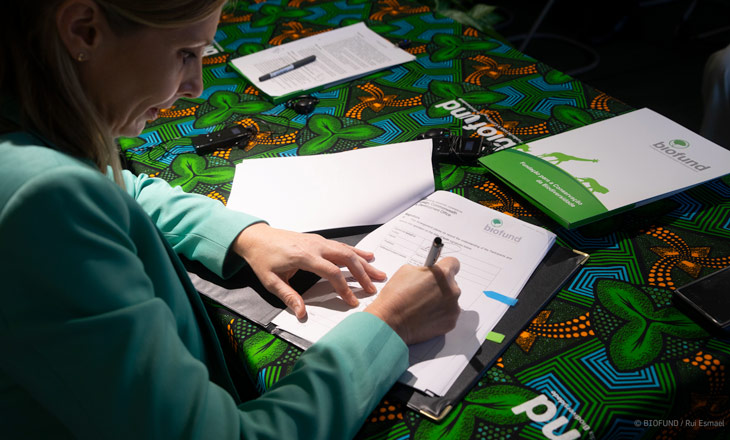
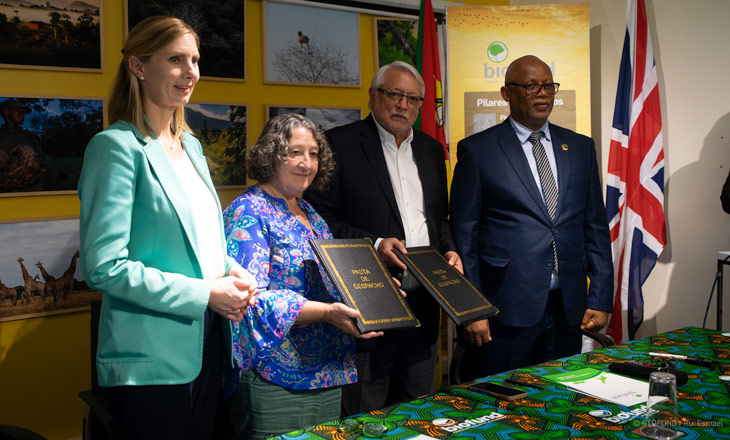
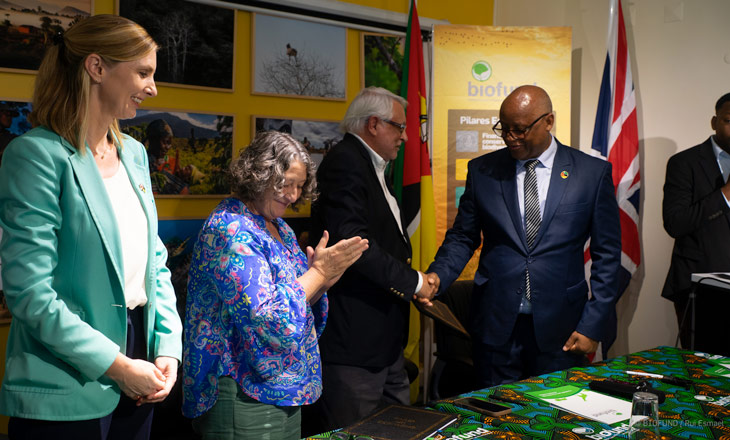
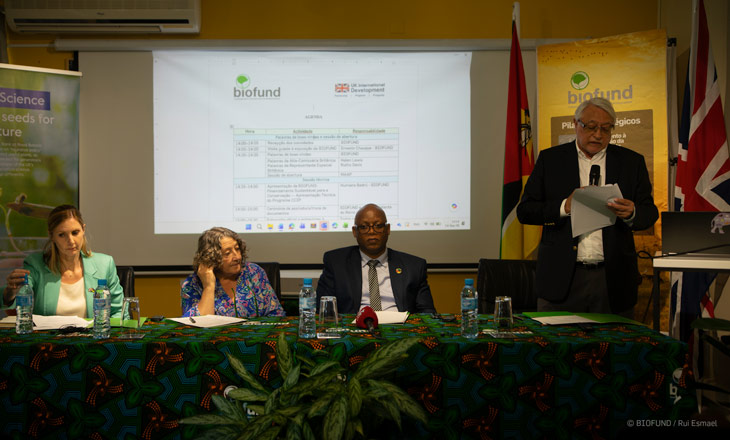
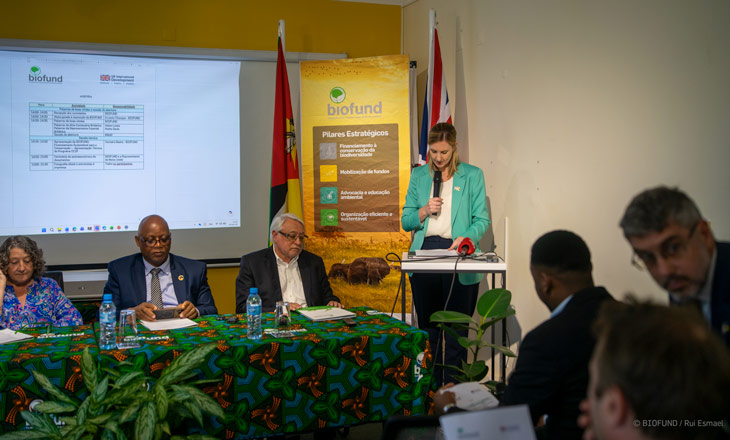
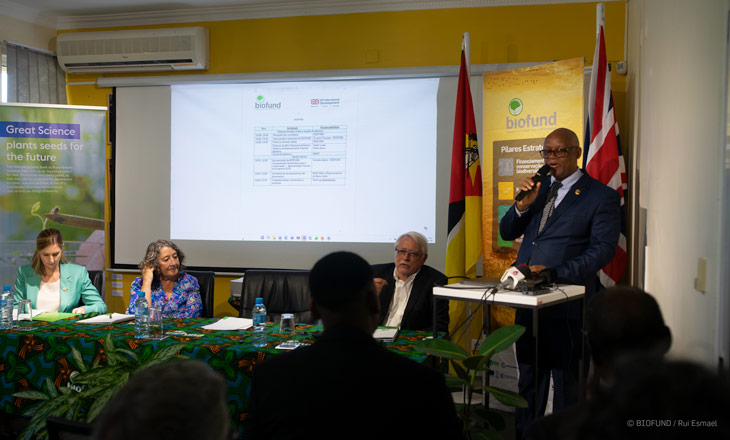
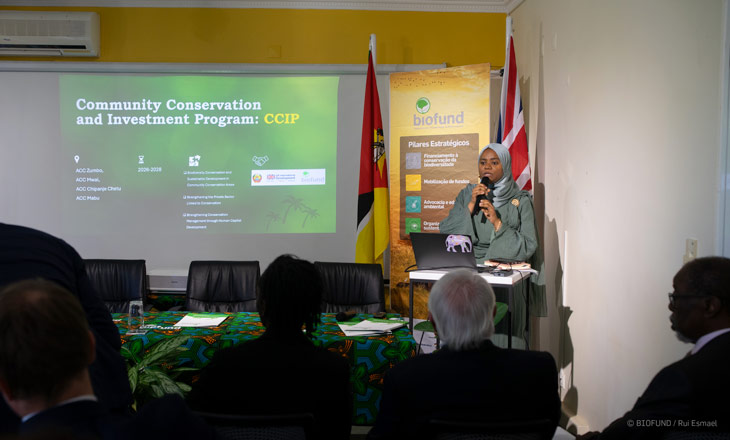
The Foundation for the Conservation of Biodiversity (BIOFUND) and the UK Government, through the Foreign, Commonwealth & Development Office (FCDO), signed a grant agreement on 14 September 2026 in Maputo as part of the launch of the Community Conservation and Investment Programme (CCIP). The partnership aims to strengthen biodiversity conservation and create economic opportunities for communities that depend on natural resources.
Coordinated by BIOFUND in partnership with the National Administration for Conservation Areas (ANAC) and national, local and community organisations, the programme covers Chipanje Chetu in Niassa, Mount Mabu in Zambézia, Zumbo in Tete and Mwai in Maputo Province.
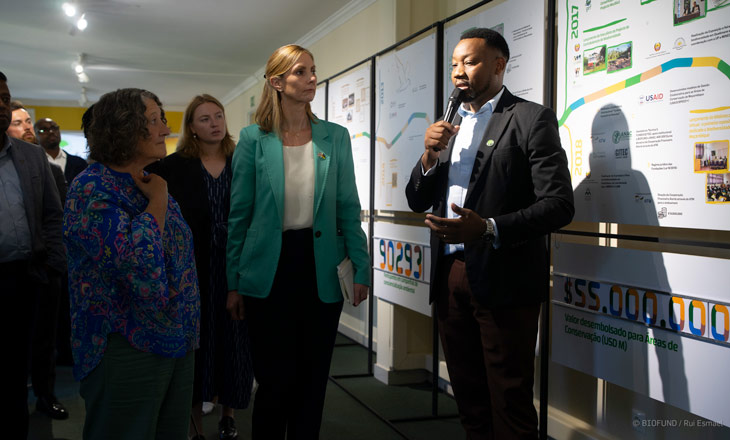
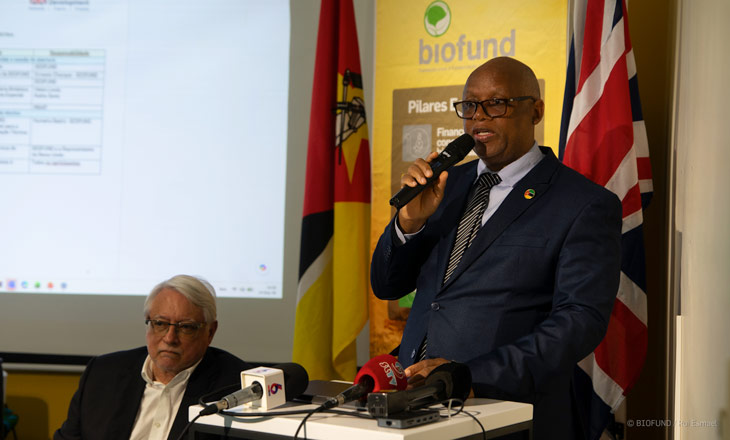
The ceremony took place in BIOFUND’s exhibition room, with the participation of the Secretary of State for Land and Environment, Gustavo Sobrinho Djedje, the British High Commissioner to Mozambique, Helen Lewis, and the UK Special Representative for Nature, Ruth Davis, Vice-Chair of BIOFUND’s Board of Directors, Adamo Valy, alongside community representatives and conservation partners.
Benefits for communities
CCIP plans to support activities such as sustainable agriculture, beekeeping and nature-tourism opportunities, according to the conditions in each landscape. The programme will also strengthen community organisations, financial management and accountability, increasing local capacity to make decisions about conservation resources and benefits.
Preventing human–wildlife conflict is another priority, with monitoring, early-warning and agricultural protection measures tailored to each context. Training for conservation professionals and young people will be supported through the Mozambique Conservation Leadership Programme (PLCM).
In his opening remarks, the Vice-Chair of BIOFUND’s Board of Directors said that “conservation only endures when communities living side by side with wildlife feel in practice that they are the true owners of this heritage”. The Secretary of State for Land and Environment reinforced the same direction: “The Government’s main concern is to ensure that all investments translate into and are reflected in real benefits for communities.”
Nature and climate resilience
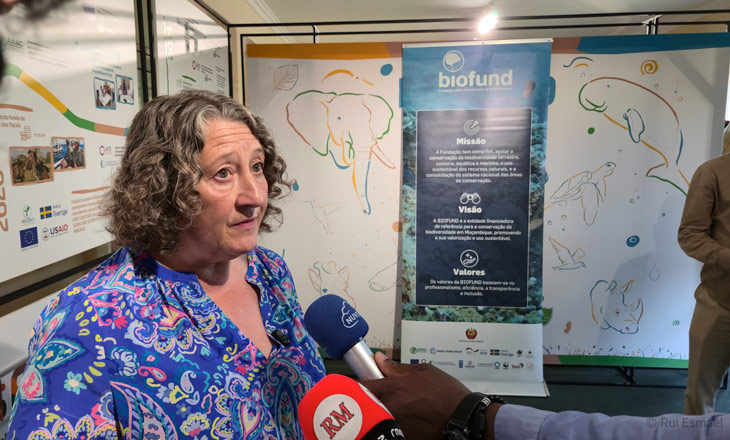
Ruth Davis highlighted the human dimension of the partnership and, speaking to the press, identified as one priority the need to “train the next generation of young people to become conservationists”. On the impacts of climate change, she stressed that “it is very important that we continue with partnerships that build resilience”, also referring to the importance of early-warning systems and adaptation measures.
Helen Lewis presented the partnership as an expression of a shared vision of nature’s role in livelihoods, resilience and sustainable economic growth. In her remarks, she summed up this perspective by saying that “nature is not only something that should be protected”.
Continuity and capacity for the future
The programme builds on previous investments by BIOFUND and its partners: PROMOVE Biodiversidade at Mount Mabu; MozNorte in Chipanje Chetu; MozRural in Zumbo; and support from the Swedish-funded Biodiversity Conservation Programme in Mwai. The aim is to consolidate results, extend their reach and strengthen the capacity of community institutions.
CCIP’s vision brings together community conservation, human capital development and, as a future possibility, impact investment and a contribution to BIOFUND’s endowment fund. This latter component is not included in the initial agreement signed and remains subject to specific FCDO approval.
Through this partnership, BIOFUND and the United Kingdom seek to strengthen community institutions and economic activities that can continue to generate benefits for people and biodiversity beyond the funding period.