
From strengthening the management of conservation areas to the experiences of communities in Mabu, Gilé and the Primeiras and Segundas Islands, the seminar highlighted what has changed, what has been learned and what needs to continue.
Published at 17/09/2026
PROMOVE Biodiversity leaves a legacy of results, strengthened capacities and opportunities for conservation in Mozambique
-
© BIOFUND / Rui Esmael
-
© BIOFUND / Natercia Parruque
-
© BIOFUND / Natercia Parruque
-
© BIOFUND / Natercia Parruque
-
© BIOFUND / Natercia Parruque
-
© BIOFUND / Rui Esmael
-
© BIOFUND / Rui Esmael
-
© BIOFUND / Rui Esmael
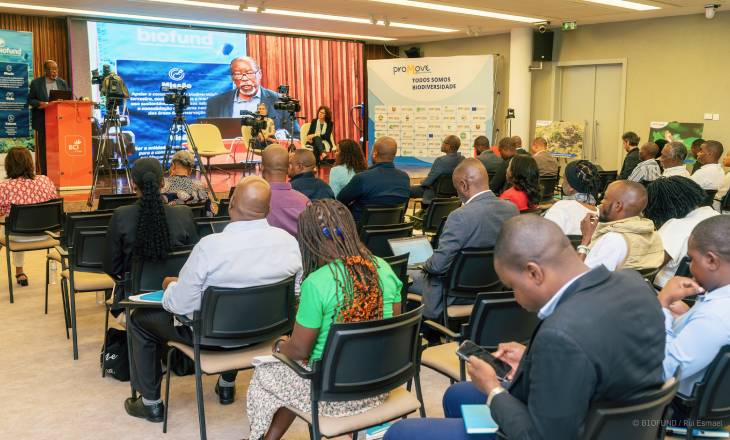
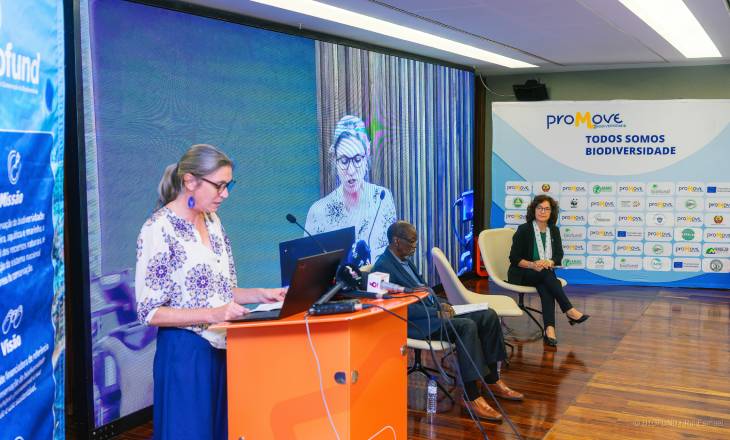
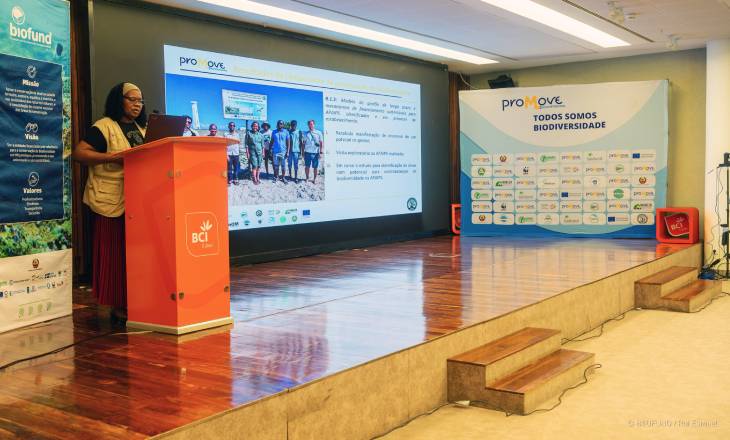
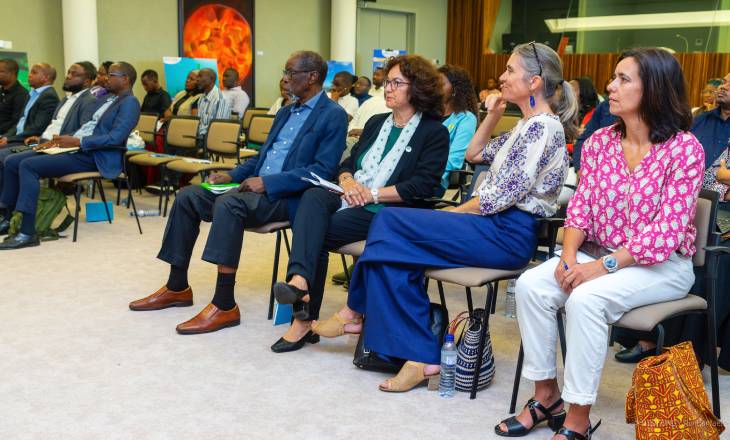
The results, impacts and key lessons of the PROMOVE Biodiversity Programme were presented on Tuesday, 15 September 2026, at the BCI Auditorium in Maputo, during a seminar that brought together representatives of the Government, the European Union, conservation institutions, communities, partners, the private sector and academia. More than taking stock of the programme, the event sought to address a central question: what remains after the programme ends, and how can the results achieved be transformed into lasting processes?
Implemented between 2019 and 2026, with funding from the European Union and managed by the Foundation for the Conservation of Biodiversity (BIOFUND) and the National Administration for Conservation Areas (ANAC), PROMOVE Biodiversity was implemented in the Primeiras and Segundas Environmental Protection Area (APAIPS), Gilé National Park (PNAG) and Mount Mabu, with interventions spanning the provinces of Nampula and Zambézia provinces. The programme combined biodiversity conservation, community development, institutional strengthening and applied research.
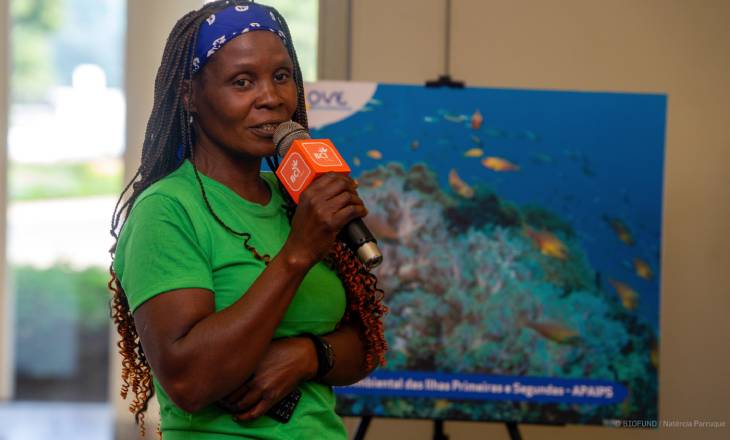
The figures help illustrate the scale of the work, but it was the experiences shared during the seminar that gave a human dimension to the results. Hortência Manuel, Vice-President of CONSERVAMABU, described how training in conservation agriculture has translated into skills that can now be shared within the community: “I learned a lot, to the point that I can also train other members of my community”.
At the opening of the seminar, Anne-Ael Pohu, representative of the European Union, highlighted one of the programme’s key lessons: “Conservation and local development need to go hand in hand.” BIOFUND Executive Director Luís Bernardo Honwana highlighted the programme’s broader legacy: “More than numbers, these results represent strengthened capacities, knowledge generated, structures established and communities engaged.”
Results that strengthen conservation and community development
Throughout the seminar, progress in the management and conservation of the three landscapes was presented. In PNAG, key achievements included the translocation of 200 buffalo, the technical validation of a ten-year management plan, and strengthened law enforcement and ecological monitoring. In APAIPS, the programme supported the strengthening of enforcement capacity, infrastructure and operational resources. On Mount Mabu, its designation as a Community Conservation Area created an institutional foundation for linking biodiversity protection with community-led management. Across the interventions, more than 5,200 people were trained in production technologies and sustainable livelihoods.
In Mabu, the new Community Conservation Area is the result of a process of community mobilization, facilitator training and local organization. Diomendes Baptista, President of CONSERVAMABU, summed up the significance of this milestone: “Today, we have our area officially declared and protected”.
The designation, however, does not mark the end of the process. Alima Taju, from WWF, stressed the need to strengthen CONSERVAMABU and ensure that it has the capacity to manage the area effectively: “Our work did not end with the creation of this area; it has only just begun.” Sustaining these gains will depend on capable community institutions, technical and financial support, and stable links to markets.
On the coast, fish processing and preservation also matter
In APAIPS, strengthened management included enforcement, equipment and infrastructure. According to Administrator Ricardina Matusse, 49 rangers, including 12 community agents, were trained and equipped. The expansion of the office and the acquisition of a boat were also presented as part of efforts to strengthen the area’s operational capacity.
Community engagement was at the heart of these interventions. “We cannot do conservation without involving communities,” said Ricardina Matusse. In fishing communities, the programme supported fish processing and preservation through salting tanks, cold-storage equipment and the rehabilitation of a first-sale fish market in Moma.
In Gilé, wildlife recovery goes hand in hand with community engagement
In PNAG, ecological recovery and strengthened management were presented alongside community-based initiatives. In addition to the translocation of 200 buffalo, Administrator João Juvêncio Muxanga highlighted the SCâmbio programme, through which community members hand over hunting equipment in exchange for agricultural inputs, creating a concrete alternative to pressure on wildlife.
For the Nokalano Association, simple infrastructure can make a significant difference to how an organization works. “We used to meet outside the office, under a mango tree, in the shade, and whenever it rained, we could not hold our meetings,” said its President, Tomás Domingos Coraz. The headquarters was still under construction at the time of the seminar, but it is expected to provide better conditions for meetings and activity monitoring.
These experiences reinforced one of the initiative’s cross-cutting themes: creating sustainable livelihoods is not enough without technical assistance, producer organization, access to financing, markets and information. The seminar highlighted the need to better measure how much the supported activities contribute to household incomes and to plan, from the outset, how support can be maintained after funding ends.
Science helps guide the next steps
Applied research was another central component of PROMOVE Biodiversity. In the opening presentation, 22 species new to science and 17 perennial watercourses were reported on Mount Mabu. In APAIPS, studies on mangroves and seagrasses, as well as research on Marine Community Conservation Areas, generated information to guide management, although some findings remain preliminary and require further monitoring.
In Gilé, Semo Mogeia, from UniLúrio, presented findings on the relationship between herbivores, vegetation and fire. Natasha Ribeiro, from Eduardo Mondlane University, linked the discussion to fire risk and the influence of temperature and rainfall. “Monitoring is important precisely so that we can understand how to deal with this uncertainty,” she stressed. The next step is to ensure that the knowledge generated informs management decisions and is shared with those who live and work in these landscapes.
From results to legacy: markets, financing and continuity
Market linkages were central to the discussion. Heinrich, representing Agrimel, presented the company’s experience in purchasing and processing honey from Mabu: “We have created a brand that identifies the honey as originating from Mabu”.
The seminar continued with the reflection initiated during the 5th and final session of the National Oversight Committee, held on 14 September, which assessed results, challenges and prospects for sustainability. On that occasion, ANAC reaffirmed its commitment to capitalizing on the programme’s legacy and integrating its results into national conservation processes, as a basis for new partnerships and the mobilization of funding.
At the closing of the seminar, Alexandra Jorge, BIOFUND’s Director of Programmes, highlighted the need for stronger coordination among institutions and people: “We need to capitalize on what has been built and learned, working in an integrated way across Ministries, institutions and people, and we need to communicate more and more.”
As PROMOVE Biodiversity reaches the end of its implementation period, the challenge is to preserve and build on what has been achieved: local capacities, community institutions, scientific knowledge, infrastructure, relationships with the private sector and financing mechanisms. This continuity will be essential to turning the results presented at the seminar into lasting benefits for communities and for Mozambique’s biodiversity, while creating the conditions for the knowledge Hortência is already sharing within her community to continue to grow.
Find out more about the results of PROMOVE Biodiversity HERE!