
Supervision mission in Tete included visits to initiatives supporting the management of Mágoè National Park, human-wildlife conflict mitigation and community development, and culminated in the inauguration of the Macacate Water Supply System.
Published at 29/10/2026
MozRural strengthens biodiversity conservation and improves living conditions for communities in Mágoè
-
© Natércia Parruque - BIOFUND
-
© Natércia Parruque - BIOFUND
-
© Natércia Parruque - BIOFUND
-
© Natércia Parruque - BIOFUND
-
© Natércia Parruque - BIOFUND
-
© Natércia Parruque - BIOFUND
-
© Natércia Parruque - BIOFUND
-
© Natércia Parruque - BIOFUND
-
© Natércia Parruque - BIOFUND
-
© Natércia Parruque - BIOFUND
-
© Natércia Parruque - BIOFUND
On 26 and 27 October 2026, a supervision mission for the Sustainable Rural Economy Programme (MozRural) took place in Tete Province. The mission focused on monitoring initiatives supported in Mágoè National Park and surrounding communities, with the aim of strengthening conservation area management, biodiversity conservation and local communities’ living conditions.
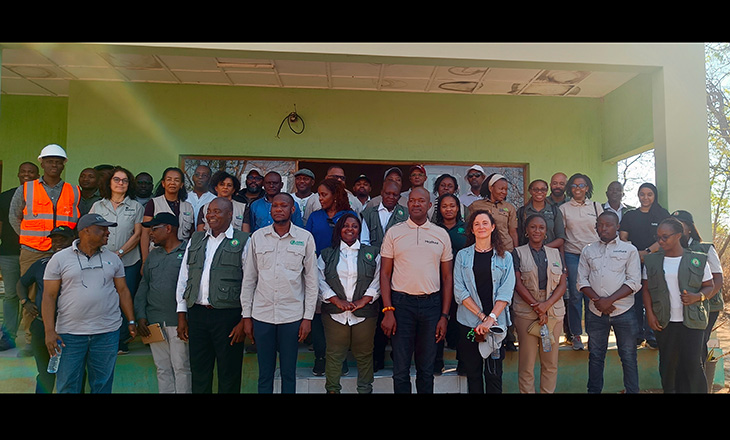
The mission brought together representatives of the Foundation for the Conservation of Biodiversity (BIOFUND), which serves as the fiduciary agency for the programme’s conservation component, the World Bank, the National Administration of Conservation Areas (ANAC), the National Fund for Sustainable Development (FNDS), Mágoè National Park (PNM) and the United Nations Office for Project Services (UNOPS).
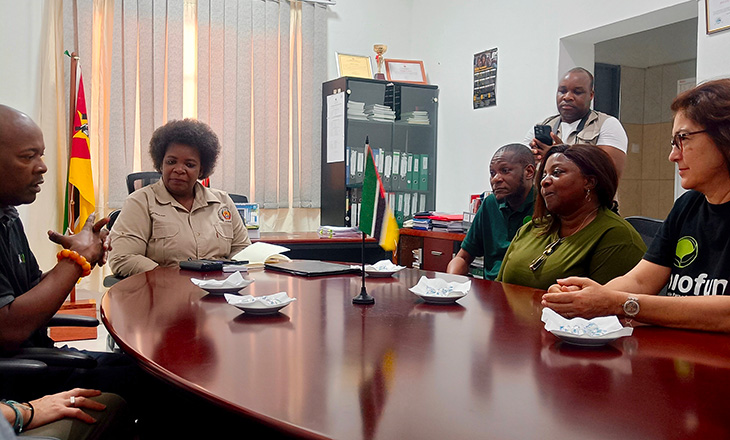
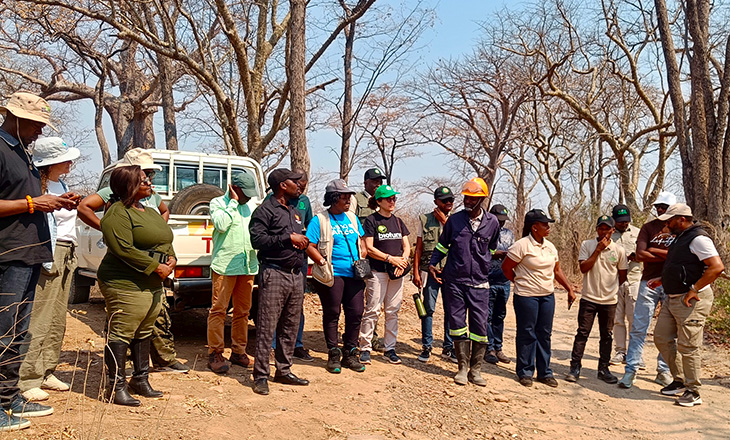
Over the two days, the delegation paid courtesy visits to provincial and district authorities in Tete and visited several initiatives, including the operations room at Mágoè National Park, water supply systems and boreholes, a firebreak marking the boundaries of the park and its buffer zone, and an electric fence protecting agricultural fields.
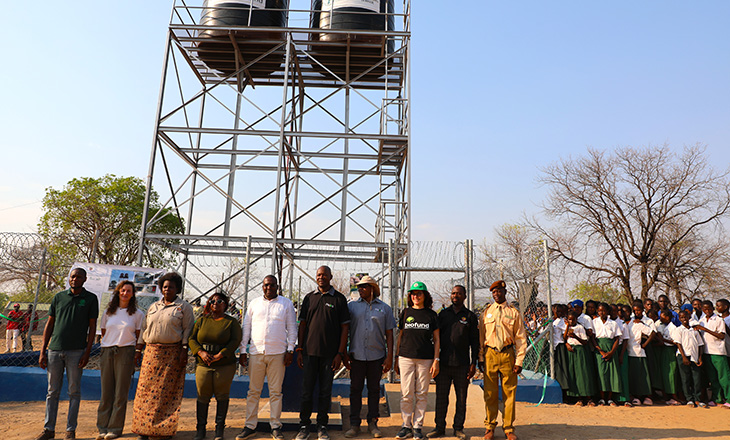
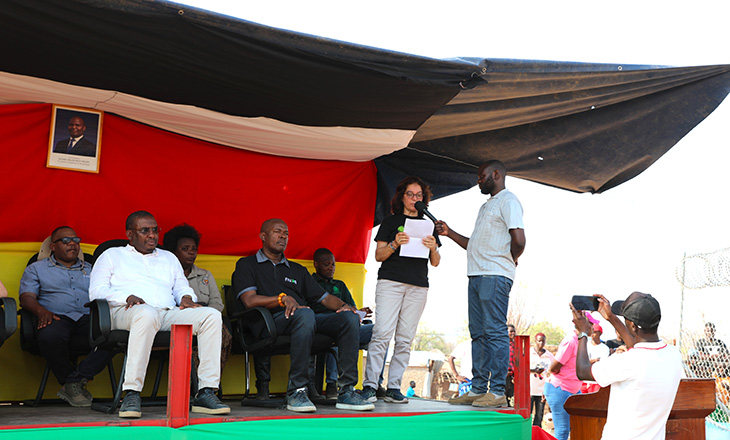
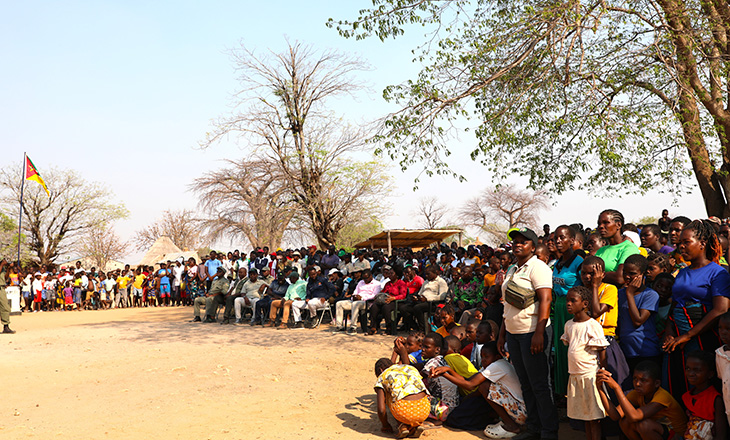
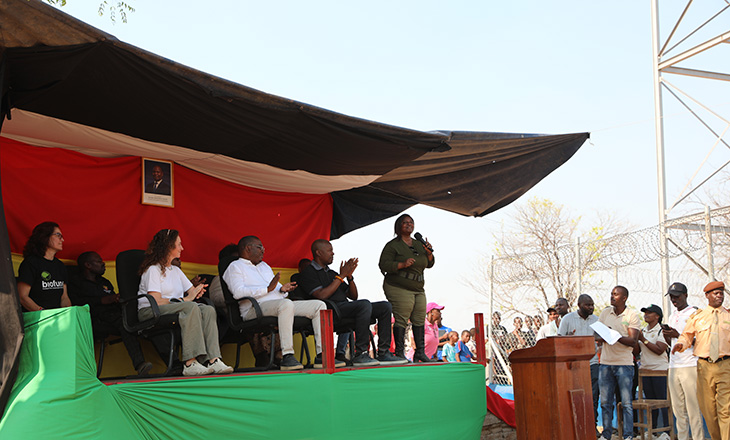
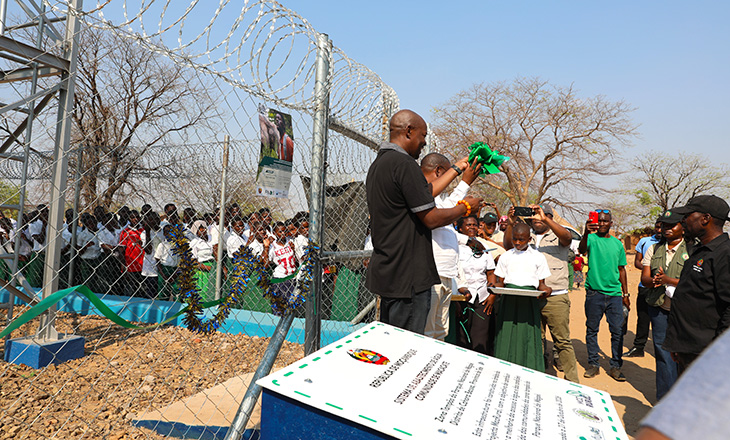
One of the mission’s key moments was the inauguration of the Macacate Water Supply System in Cahora Bassa District, marking an important step towards improving access to water and highlighting the role of such infrastructure in mitigating human-wildlife conflict (HWC).
Communities in Macacate gain access to a water supply system
The Macacate Water Supply System is expected to directly benefit approximately 2,000 people, with the capacity to serve up to around 6,000 residents. It will improve access to this essential resource and reduce the need to travel long distances to collect water.
The infrastructure comprises a management building equipped with solar panels to provide electricity, a nine-metre-high water tower and four public water points with a total of eight taps. In addition to improving access to water, the system is expected to support better hygiene, health and family well-being, while freeing up time for children’s education and productive activities.
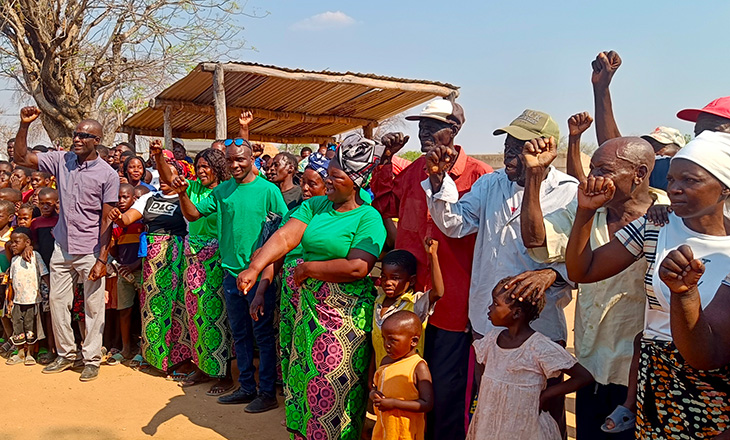
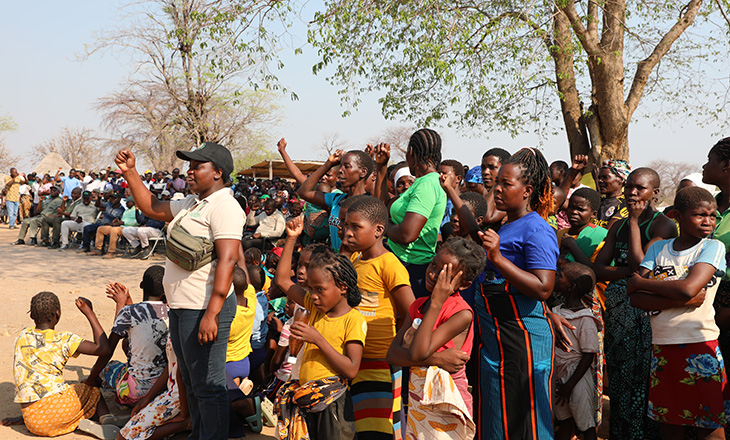
During the inauguration ceremony, the community leader of Macacate expressed the community’s gratitude for the investment, recalling the difficulties residents faced before the system was built.
“For many days, the community had been calling for help. Women had to walk several kilometres in search of water. Today, they no longer have to travel such long distances, and the community is very grateful for the water supply system.”
The intervention forms part of broader efforts to promote a more balanced relationship between communities and nature. Access to nearby water sources can reduce the need for people to travel to rivers and other locations where they may be exposed to encounters with wild animals, particularly crocodiles and hippos.
In her remarks, Juliana Mwitu, Administrator of Mágoè National Park, acknowledged the partners’ contribution to implementing initiatives in the park and surrounding communities.
“Thanks to the support of the World Bank through the MozRural project, and that of BIOFUND and FNDS, several other initiatives have also been supported, in addition to the water supply system.” She also called for the sustainable use of water and the protection of the infrastructure to ensure that the community continues to benefit from it.
Alexandra Jorge, BIOFUND’s Director of Programmes, highlighted the importance of this investment in improving community living conditions and reaffirmed the organisation’s commitment to initiatives that combine biodiversity conservation with sustainable development. She also noted that this was BIOFUND’s first experience facilitating the implementation of this type of infrastructure.
“The inauguration of this system therefore represents more than the provision of infrastructure: it is an opportunity to improve the daily lives of families in Macacate and lay the foundations for new development opportunities.”
Nilton Iombaiomba, representing ANAC, highlighted the system’s contribution to human-wildlife conflict mitigation and called for continued investment in initiatives that improve the well-being of communities living near Conservation Areas.
Ana Bucher, representing the World Bank, emphasised the importance of MozRural for rural economic development and biodiversity conservation, noting that “water is an important component of conservation and of improving the community’s living conditions.”
Mendes Cardoso Cindido, Administrator of Cahora Bassa District, who inaugurated the system, described the infrastructure as a significant step towards local development. It is expected to directly benefit approximately 2,000 people and has the capacity to serve up to 6,000 residents. “The water we celebrate today represents health, hope and opportunities,” he said, highlighting the shorter distances residents will need to travel to collect water.
Water access and other measures to mitigate human-wildlife conflict
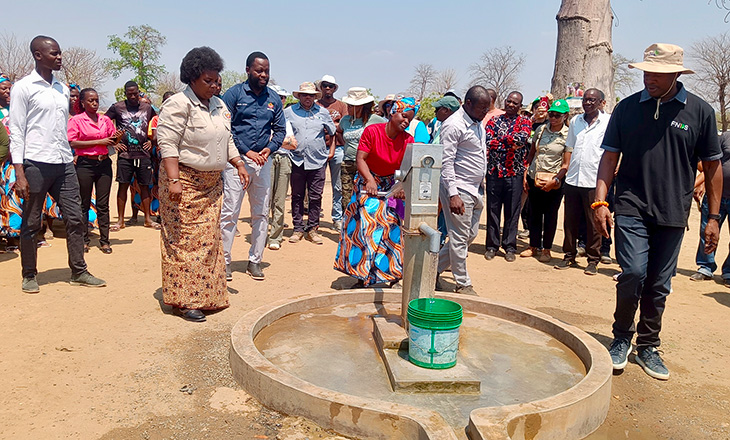
In addition to Macacate, the mission visited the water point in Cazewe, one of nine communities benefiting from a total of 12 water points installed by BIOFUND under the MozRural Programme. Before the infrastructure was installed, residents of Cazewe relied on the river to collect water, exposing themselves to risks associated with crocodiles and other wild animals.
The delegation also visited the operations room at Mágoè National Park, where the movements of elephants fitted with tracking collars can be monitored. Currently, 21 elephants are equipped with these devices, while the park’s elephant population is estimated at around 600. The information collected helps improve wildlife monitoring, support incident prevention and strengthen the park teams’ response capacity.
Another key initiative was the electric fence installed in Macacate to protect agricultural fields from elephant incursions. The infrastructure covers 31.6 hectares and benefits 21 families. The initiative is supported by the Mozambique Wildlife Alliance (MWA) under a long-term partnership with ANAC, and is complemented by the presence of an elephant herder who helps deter elephants and supports rapid response in high-risk situations.
For Carlitos Chacimba, a farmer benefiting from the initiative, the fence has significantly improved farming conditions and personal safety.
“In the past, we suffered from elephant incursions, but now, with the fence, we can grow our crops, sleep peacefully and live without these incursions.”
These measures form part of an integrated approach to human-wildlife conflict mitigation, aimed at reducing the impact of wildlife on community activities, safeguarding livelihoods and promoting coexistence between people and wildlife.
Community engagement and the value of natural heritage
The delegation also visited the ongoing firebreak-clearing works, which involve local communities through eco-jobs. These activities create income-generating opportunities while helping to mark the boundaries of Mágoè National Park and its buffer zone.
Of the 250 kilometres planned, 37.6 kilometres have already been cleared, involving 60 workers from four communities. The work is ongoing and currently extends to a further 14 communities, with a total of 147 workers hired. The target is to complete 150 kilometres of firebreak, thereby strengthening community involvement in the management of the Conservation Area.
According to the local administrative leader, the work was preceded by community consultations to clarify questions about the boundaries of the park and its buffer zone.
“We were very happy because the community received a payment of 10,000 meticais for the work carried out, and people can now identify the boundaries of the buffer zone and the park. Areas containing fossilised stones were also identified, and these must be preserved.”
An integrated approach to conservation and sustainable development
The initiatives observed during the mission demonstrate the importance of linking biodiversity conservation with practical responses to the needs of communities living within and around Conservation Areas.
Improved access to water, protection of agricultural fields, wildlife monitoring and the creation of income-generating opportunities all contribute to strengthening the management of Mágoè National Park, reducing community vulnerability and promoting a more balanced relationship between people and nature.
Funded by the World Bank, the MozRural Programme supports interventions aimed at sustainable rural development and biodiversity conservation. In Mágoè National Park, BIOFUND, acting as the programme’s fiduciary agency, has contributed to initiatives focused on human-wildlife conflict mitigation, stronger Conservation Area management and community development.
The supervision mission reaffirmed the importance of collaboration between the Government of Mozambique, the World Bank, ANAC, FNDS, BIOFUND, ProAzul, local and private-sector stakeholders, district administrations, Mágoè National Park and local communities in ensuring the sustainability of these investments and the continuation of the benefits achieved.

