
When Ahamada Muluco first arrived at Mount Mabu, he had no idea what awaited him.
Published at 21/10/2026
From Construction to Conservation: Ahamada Muluco’s Journey to the Heart of Mount Mabu
-
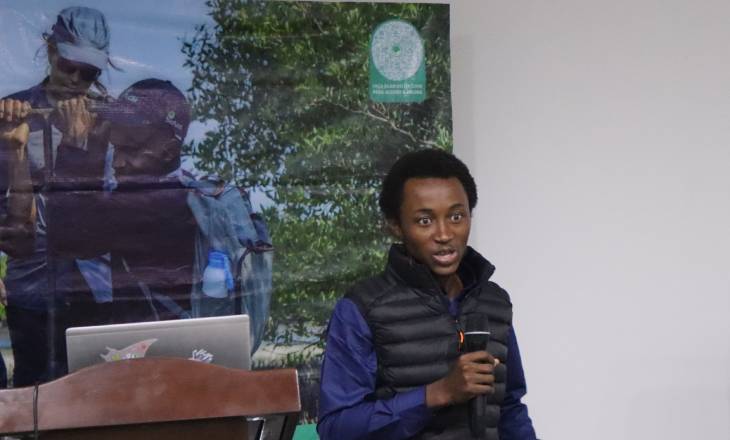
© Raju Manuel Artur
-
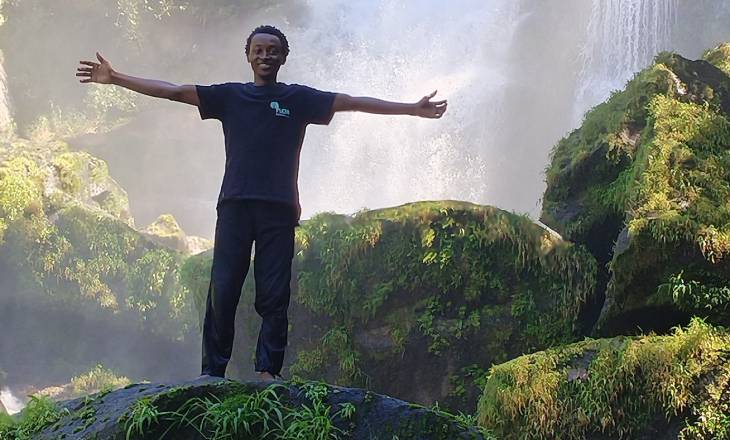
© Raju Manuel Artur
-
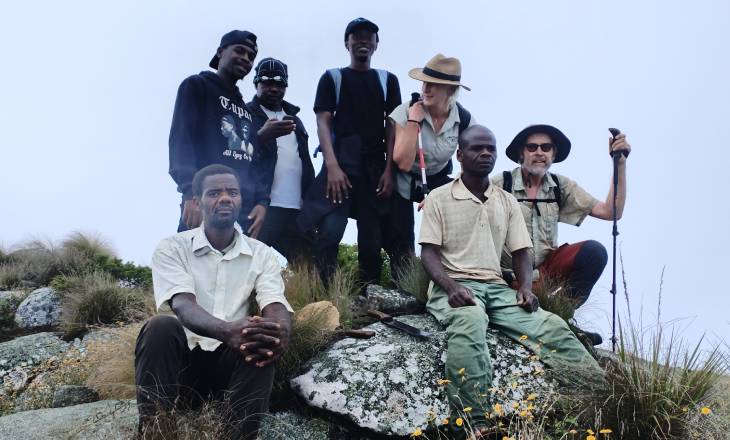
© Raju Manuel Artur
-
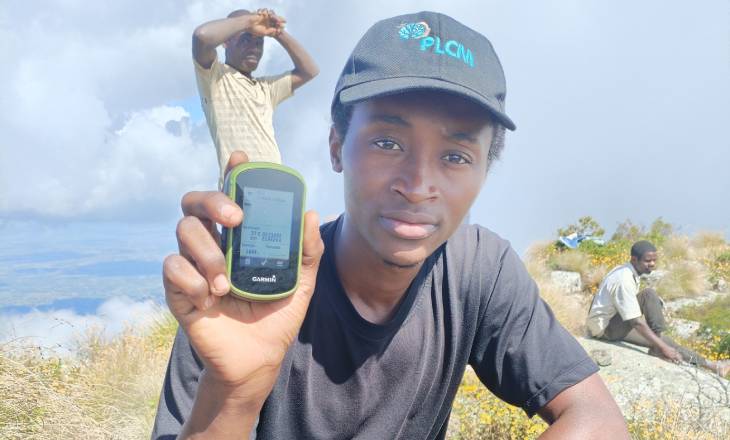
© Raju Manuel Artur
-
© Raju Manuel Artur
-
© Raju Manuel Artur
He grew up in Moma District, in Nampula Province, surrounded by cashew trees, mango trees and the familiar landscapes of his childhood. But he had never set foot in a forest quite like this one.
His first reaction was one of amazement. “When I first came here, I was simply amazed.”
All around him stretched a dense forest criss-crossed by streams, towering trees and trails that, in many places, could only be traversed on foot. It was a world very different from the one he knew.
And yet, Ahamada had not come to Mount Mabu to study trees, birds or butterflies. He is a construction technician. His story begins here, illustrating how biodiversity conservation takes far more than biologists alone.
An opportunity that began in Moma
Ahamada’s story began several years earlier, hundreds of kilometres away from Mount Mabu. He completed Grade 12 in 2022. He remembers himself as a dedicated student who took part in study groups and helped classmates with subjects he knew well.
When an opportunity to apply for a scholarship arose, he stood out as a candidate. In January 2023, young people from Angoche, Larde and Moma began vocational training at the ADPP Polytechnic Institute in Nacala through scholarships funded by the MozNorte Project and supported by BIOFUND through the Mozambique Conservation Leadership Programme (PLCM). Ahamada chose Construction and completed his training in 2025.
At the end of his course, he learned about the eighth edition of the PLCM Pre-professional Internship Programme. He applied and was selected. Following an induction at Maputo National Park, he began a new chapter of his life, taking up a placement with WWF at Mount Mabu. Little did he know how profoundly this experience would change his relationship with nature.
One journey, four sources of support
By this stage, Ahamada’s journey had become more than a single opportunity. Different investments from different partners, made at successive stages, had come together to create a pathway from vocational training to employment in the conservation sector, and from his first professional experience to the prospect of continuing to work in the field.
The journey began with the MozNorte Project, funded by the World Bank, which supported the scholarship that enabled Ahamada to train as a construction technician. The Government of Sweden, through the Swedish International Development Cooperation Agency (Sida), subsequently funded the first phase of his internship under the PLCM. With this phase completed, the internship is expected to continue with support from the Government of the United Kingdom, through the Foreign, Commonwealth & Development Office (FCDO), under the Community Conservation and Investment Programme (CCIP).
Meanwhile, at Mount Mabu, the activities Ahamada undertakes during his internship form part of the PROMOVE Biodiversity Programme, funded by the European Union. In this way, training, professional experience, continuity and fieldwork come together in a single journey.
These four sources of support did not fund the same initiative. Rather, each supported a different stage of the same journey. Ahamada’s story illustrates how complementary programmes and partnerships can transform a scholarship into practical skills that contribute to biodiversity conservation.
| Stage of the journey | Support / Funder | What it made possible |
| Vocational training | MozNorte / World Bank | A scholarship for the Construction Technician course at the ADPP Polytechnic Institute in Nacala. |
| First internship phase | PLCM / Government of Sweden – Sida | Entry into the conservation sector through the eighth edition of the PLCM internship programme. |
| Second internship phase | CCIP / Government of the United Kingdom – FCDO | Continuation of the internship and further professional development. |
| Work at Mount Mabu | PROMOVE Biodiversity / European Union | Support for field activities undertaken as part of the internship at Mount Mabu. |
One opportunity did not end when another began. Each stage laid the groundwork for the next.
When building also means conserving
Today, one of the achievements Ahamada is most proud of is taking shape in the heart of Mount Mabu’s remarkable landscape.
“What I am most proud of is knowing that I am at the forefront, as a supervisor, of the construction of the first camp here at Mount Mabu.”
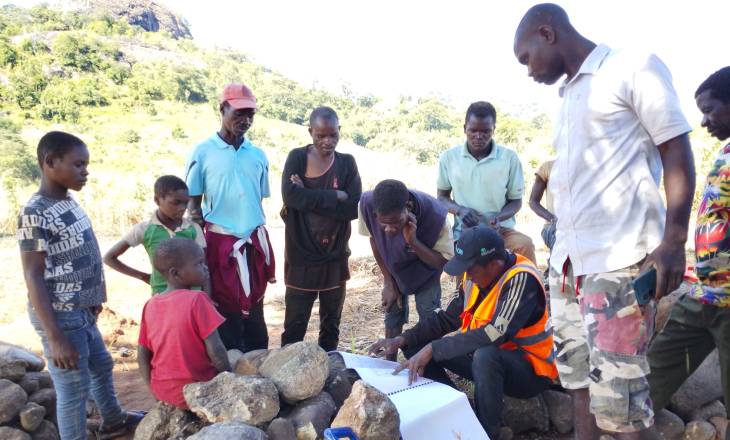
His training in construction has found a practical application in this setting. Ahamada oversees technical aspects of the camp’s construction and also helps monitor work at two schools in local communities, as he explained in the interview.
Suddenly, what he had learned in a classroom in Nacala had taken on a new meaning. Construction could help create suitable working conditions, support community infrastructure and contribute to the development of a landscape where conservation must go hand in hand with the needs of local people.
This connection takes on even greater significance at a historic moment for Mount Mabu. In August 2026, the Government of Mozambique officially approved the establishment of the Mount Mabu Community Conservation Area. Its establishment is the main expected outcome of the Mabu Biodiversity Conservation and Community Development Project, implemented under PROMOVE Biodiversity, funded by the European Union and implemented by BIOFUND in coordination with ANAC. Field activities are carried out by the WWF–ReGeCom–RADEZA consortium.
It is in this context that Ahamada is discovering that there are many ways to be a conservationist.
Discovering the forest on foot
There is, however, a side of Mount Mabu that no classroom could have taught him about. To understand it, he had to explore it on foot.
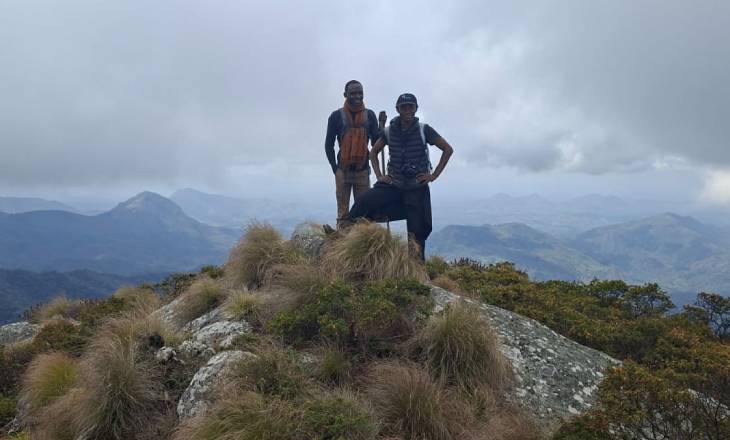
Ahamada has climbed to the summit of Mount Mabu twice. On his first ascent, he set off from the camp at around eight in the morning. The hike took several hours. Yet, in his memory, reaching the summit is only one part of the experience.
“As you walk, you come across some truly wonderful places.” He recalls the trees, streams, flowers and the sheer density of the forest. “There are some magnificent, beautiful trees.”
Then comes the moment when you reach the summit and the landscape opens up before you.
“You can see almost the entire landscape below. And it is magnificent.”
But there is another memory that Ahamada describes in even simpler terms: the feeling of breathing. “The air up there is incredibly pure. When you reach the top, you can feel that the air you are breathing is different.”
It may be difficult to measure the transformation that takes place in a moment like that. In Ahamada’s case, however, there is a way to understand it: by returning to his childhood.
The boy who used to cut mangroves
Long before he understood the meaning of biodiversity, natural resource management or community conservation, Ahamada used to play among the mangroves of Moma. Like many children who have not yet learned the value of this ecosystem, he would cut the trees down.
“When I was a little boy, I used to cut mangroves. I did not know what benefits they provided.” He used the wood to build little playhouses. He had no intention of destroying the environment. He simply did not understand its value.
Today, after his experience at Mount Mabu, he looks back on that memory in a completely different light.
“When I came to understand the benefits of conservation, I realised that many young people still need to understand the value of the environment.”
At the time of the interview, Ahamada had not yet returned to Moma since arriving at Mount Mabu. But he already knew what he wanted to do when he went back: speak to the people closest to him and share what he had learned.
“I will share what I have learned, especially with my family and those closest to me, so that they can understand the value of those mangroves.”
Knowledge is thus making a return journey: from Moma to Nacala; from Nacala to the PLCM; from the PLCM to Mount Mabu; and now, from Mabu back to Moma. But it returns transformed. Conservation is not just a profession. It is a responsibility.
Ahamada’s experience at Mount Mabu also challenges a common assumption: that conservation work is only for people who have studied Biology, Ecology or related disciplines.
Alongside his construction-related responsibilities, he has participated in beekeeping activities and attended training on community-based natural resource management. The eighth edition of the PLCM brought together young people from a range of educational backgrounds, highlighting the multidisciplinary nature of conservation.
“Conservation is a field that everyone should get involved in, regardless of their educational background. Conservation is not just for those who work in protected areas; it is for everyone.”
The statement carries particular weight coming from a young man who began this journey as a construction student.
Today, Ahamada oversees construction work in the heart of a protected landscape, learns from local communities, deepens his understanding of natural resources and sees the mangroves of his hometown through a very different lens from the one he had as a child.
The opportunity opened a door. But he chose to walk through it.
When asked what message he would share with other young Mozambicans, Ahamada does not begin by talking about employment, conservation or even Mount Mabu. Instead, he speaks about dedication and being ready to seize opportunities.
“The only message I would share with everyone is to stay dedicated. It does not matter what you studied, because you never know where tomorrow’s opportunity will come from.”
For Ahamada, that opportunity led him to one of Mozambique’s most remarkable forests and helped him discover that building a better future can also mean protecting what we cannot afford to lose.

