
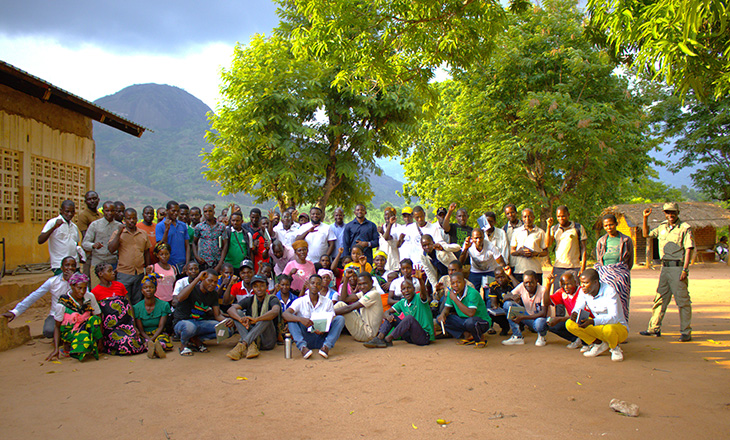
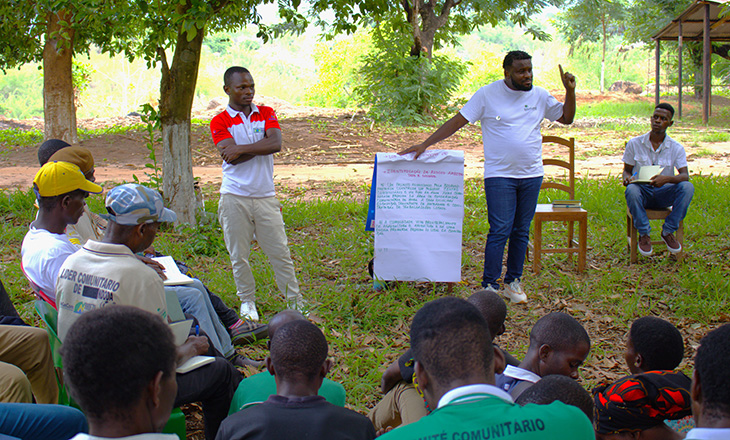
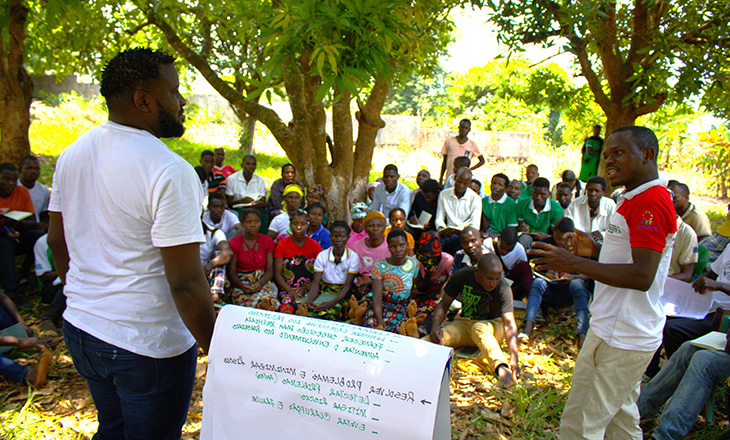
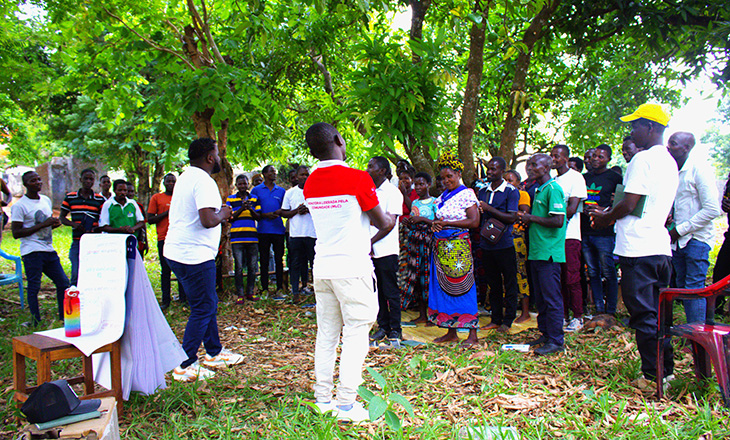
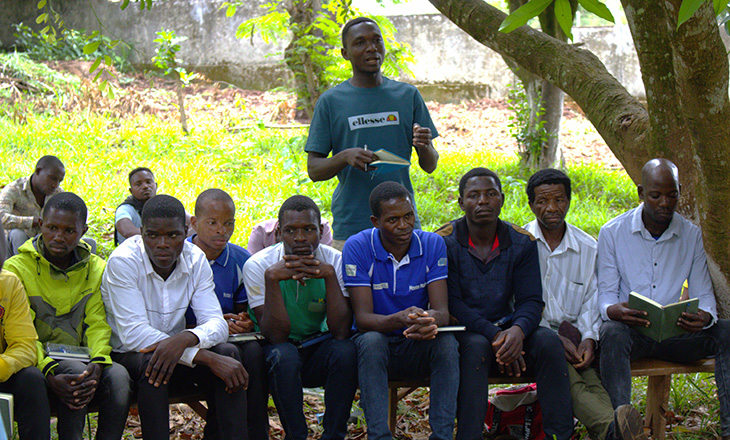
More than 75 representatives from local communities and institutions participated in a training on Environmental and Social Safeguards, held on 17 and 18 November 2026 at the Mabu Community Conservation Area, in Zambézia Province.
Published at 23/11/2026
Programa COMBO+ capacita membros das organizações da sociedade civil sobre a mitigação dos impactos de projectos de desenvolvimento na biodiversidade
-
© BIOFUND
-
© BIOFUND
-
© BIOFUND
-
© BIOFUND
-
© BIOFUND
The training was organized by CONSERVAMABU as part of the implementation of the Community Conservation and Investment Programme (CCIP), funded by the Government of the United Kingdom through the Foreign, Commonwealth & Development Office (FCDO). The programme is coordinated by the Foundation for the Conservation of Biodiversity (BIOFUND), in partnership with the National Administration of Conservation Areas (ANAC) and national, local and community-based organizations.
The training, which brought together approximately 59 men and 18 women, was the first dedicated initiative on Environmental and Social Safeguards to be conducted in the Monte Mabu landscape. It marked an important milestone in strengthening local capacities, empowering communities, and promoting a more responsible, inclusive and sustainable implementation of conservation and community development activities.
Strengthening community and institutional engagement
The training brought together representatives from the 11 communities across the Monte Mabu landscape: Límbuè, Ndoda, Nangaze, Namadoe, Nvava, Dabuada, Mocua, Mucuera, Mpemula, Ndavo and Seane. Participants also included members of the respective Community Committees, community facilitators, local leaders, heads of the Mabu Primeiro and Mpemula localities, representatives of the Tacuane and Muabanama administrative posts, CONSERVAMABU members, officers from the Police of the Republic of Mozambique in Tacuane, conservation technicians and other relevant institutional and community stakeholders.
Preventing risks and promoting social inclusion
Over the two days, participants strengthened their knowledge of how to identify, prevent, mitigate and manage environmental and social risks and impacts associated with the programme’s activities. The training also covered dialogue and grievance mechanisms, the prevention of Sexual Exploitation and Abuse and Sexual Harassment (SEA/SH), gender equality, social inclusion and adherence to the principles set out in the CCIP and BIOFUND Code of Conduct.
The sessions encouraged active participation from community representatives, who took the opportunity to raise concerns and discuss social challenges affecting their communities. These included early and forced marriages, violence against women and girls, and inequalities in the distribution of benefits generated by value chains supported by the programme.
Participants emphasized the importance of ensuring a fairer distribution of benefits between men and women and promoting greater female participation in community decision-making processes.
Dialogue and grievance mechanism receives particular attention
The Dialogue and Grievance Mechanism was one of the topics that attracted particular interest. Participants learned about the available channels for raising concerns and submitting complaints, the procedures for handling grievances, and the measures in place to ensure confidentiality, particularly when dealing with sensitive cases.
At the end of the training, participants acknowledged its relevance in addressing the practical needs of local communities and institutions. Community leaders, administrative authorities and other participants pledged to share the key messages from the training and contribute actively to the effective implementation of environmental and social safeguards in their respective communities.
The activity concluded with participants signing the Codes of Conduct, formalizing their collective commitment to ethical behavior, respect for human rights, the prevention of misconduct, the protection of communities and compliance with the environmental and social requirements applicable to the CCIP and BIOFUND.
Promoting inclusive and sustainable conservation
This training represents an important step towards strengthening a conservation approach that recognizes not only the importance of protecting biodiversity, but also the need to safeguard the rights, safety and well-being of the communities involved.
The training forms part of ongoing efforts to sustain conservation and community development initiatives in Monte Mabu. Through the PROMOVE Biodiversity Programme, funded by the European Union, important foundations were laid for community organization and the process that ultimately led to the declaration of the Mabu Community Conservation Area.
Through the CCIP, BIOFUND, in partnership with ANAC and national, local and community-based organisations, seeks to strengthen community-based management, promote sustainable livelihoods and build the capacity of conservation professionals across four priority landscapes in Mozambique: Chipanje Chetu, in Niassa Province; Monte Mabu, in Zambézia Province; Zumbo, in Tete Province; and Mwai, in Maputo Province. The programme will be implemented from 2026 to 2028.

