
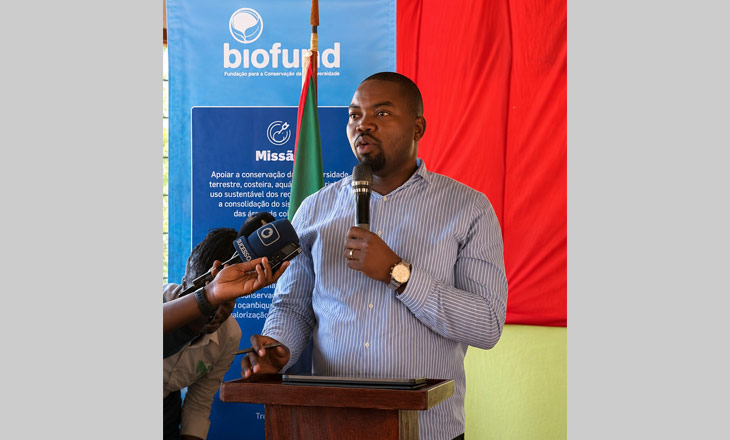
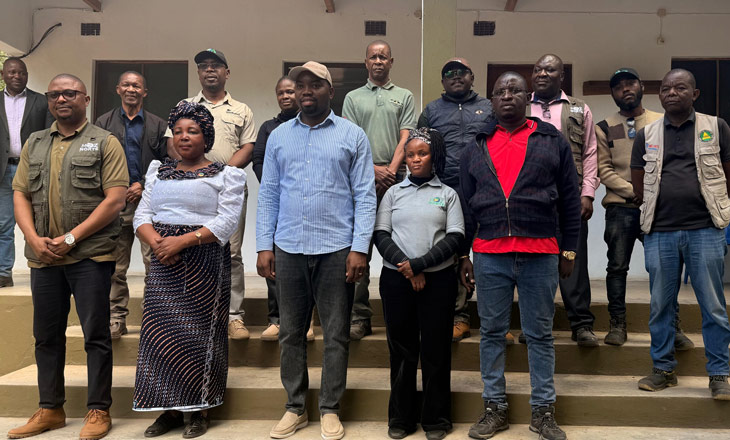
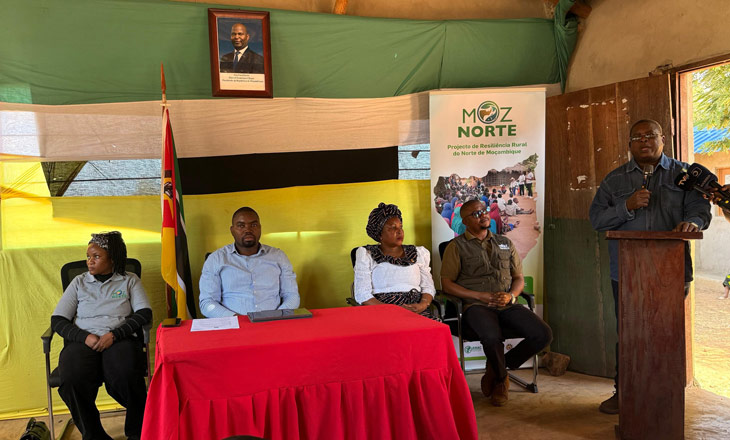
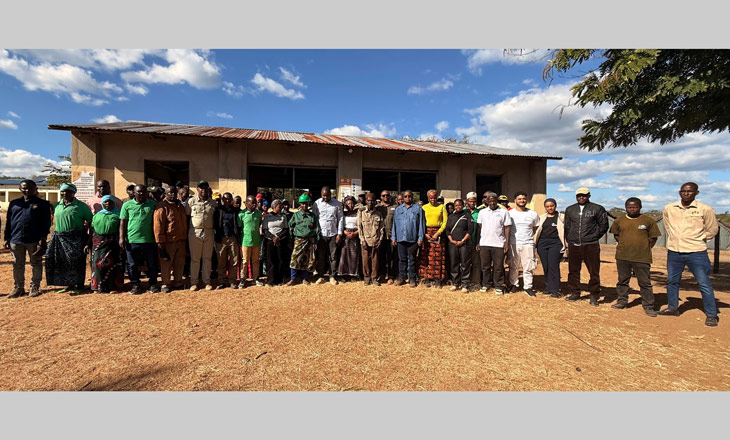
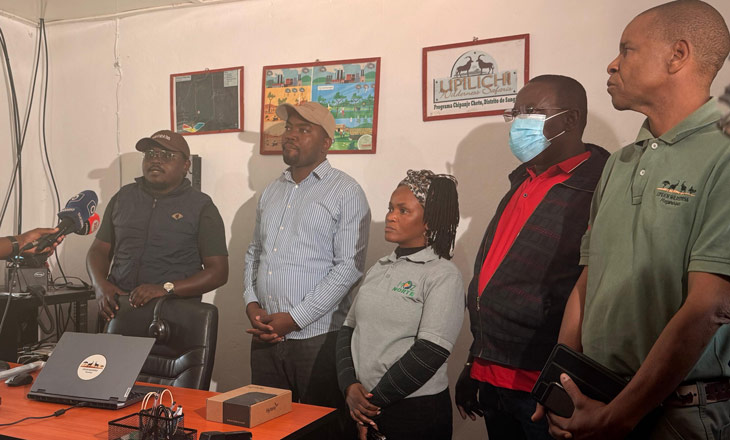
On 24 June 2026, the district of Sanga, in Niassa Province, hosted the closing ceremony of the MozNorte Project, implemented by Helvetas Mozambique with funding from the World Bank, through the Foundation for the Conservation of Biodiversity (BIOFUND). The event brought together government representatives, development partners and local communities to mark the key achievements accomplished during the project’s 23 months of implementation.
Published at 29/06/2026
MozNorte Project Closure Highlights Achievements of the Chipanje Chetu Community Programme in Niassa
The ceremony was chaired by the Secretary of State for Niassa Province, Silva Livone, who officially inaugurated the Radio Communication System Centre, an infrastructure designed to strengthen community communication, improve natural resource monitoring, and enhance responses to human-wildlife conflict. The system will enable more efficient communication among local communities, community rangers and other stakeholders involved in natural resource management.
Another important milestone was the official handover of the Community Land Use Plans to the communities participating in the Chipanje Chetu Community Programme, conducted by the National Directorate of Land and Territorial Development (DNTDT). These plans represent a significant step towards community land-use planning, reinforcing land tenure security and guiding the sustainable use of natural resources by beneficiary communities.
During the event, the project’s main achievements were presented. The project aimed to establish a responsible and transparent governance system, develop businesses based on the sustainable management of natural resources, improve natural resource management and monitoring, and create the conditions necessary for the establishment of a Community Conservation Area in accordance with national legislation.
Among the key results achieved were the strengthening of Natural Resource Management Committees and other community structures, the development of nine Community Land Use Plans, support for income-generating activities, including sustainable agriculture, beekeeping, aquaculture and livestock production as well as training young people to promote self-employment. The project also contributed to increasing the participation of women and youth in natural resource management, mitigating human-wildlife conflict, and promoting environmental education in schools and local communities.
On the occasion, the Chairperson of the Natural Resource Management Committee (COGECO) highlighted the positive impact of the project’s interventions on local communities.
“In the past, we faced many challenges in managing our natural resources and addressing community needs. Today, we have greater knowledge, better tools and stronger capacity to protect our resources while developing activities that generate benefits for our families.”
The interventions also improved access to safe drinking water through the rehabilitation of 15 community water sources, strengthened local governance mechanisms, and created sustainable economic opportunities for hundreds of households across the beneficiary communities.
In their remarks, representatives of Helvetas Mozambique, BIOFUND, and government authorities praised the commitment of the communities and project partners, emphasizing that the results achieved demonstrate the importance of an integrated approach that combines biodiversity conservation, local economic development, and community participation.
In officially closing the project, the Secretary of State for Niassa Province reaffirmed the importance of continuing conservation and community development efforts, encouraging local communities to make effective use of the knowledge, tools and capacities acquired to ensure the sustainable management of natural resources and the continuous improvement of their livelihoods.
The MozNorte Project leaves behind a legacy of strengthened capacities, consolidated community management instruments, and a solid foundation for the continuation of conservation and sustainable development initiatives within the Chipanje Chetu Community Area.