
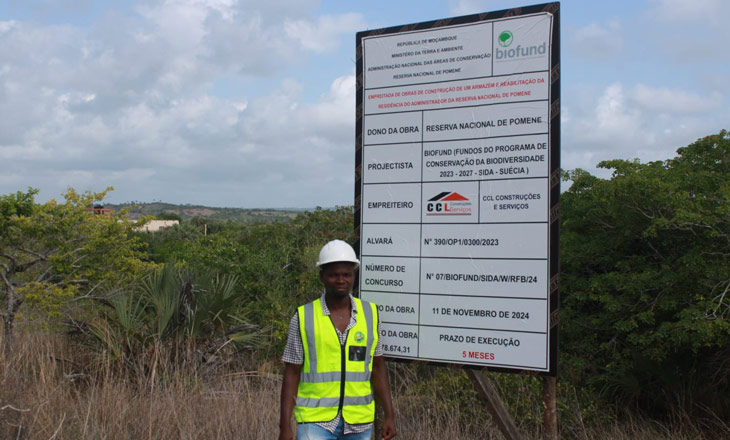
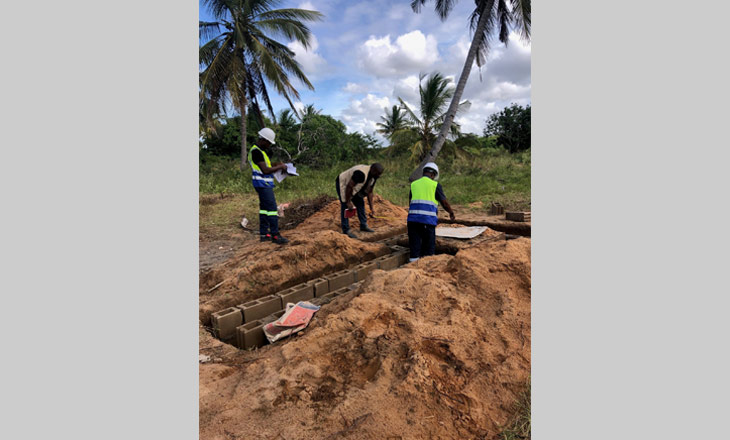
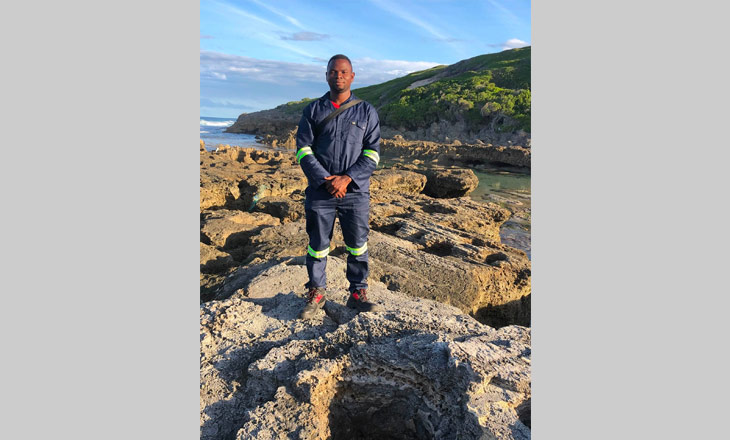
When he began his academic path, Adérito Henrique Chambi did not imagine that engineering would lead him to a Conservation Area. His childhood dream was to become an electrician, but an unexpected turn along the way revealed a new vocation.
Published at 14/08/2026
From Engineering to Conservation: How the PLCM is Training a New Generation of Professionals to Protect Mozambique's Biodiversity
Born in the district of Inharrime, in Inhambane province, Adérito enrolled in a vocational school where, for lack of places in the Electricity course, he was directed towards Civil Construction. What began as an alternative became a passion. He decided to stay on the course, deepened his knowledge and graduated in Rural Construction Engineering and Territorial Planning from Zambeze University.
In 2024, his career gained a new dimension when he joined the 7th edition of the Mozambique Conservation Leadership Programme (PLCM), an initiative of the Foundation for the Conservation of Biodiversity (BIOFUND), in partnership with the National Administration of Conservation Areas (ANAC) and the National Employment Institute (INEP), created to develop skills and provide professional opportunities for young Mozambicans interested in contributing to biodiversity conservation.
Placed at the Pomene National Reserve (RNP), Adérito had the opportunity to apply his technical knowledge in a context where conservation depends on multiple skills. He soon realized that the effective management of a Conservation Area requires far more than ecological knowledge, it also demands the ability to plan, build and maintain infrastructure, and to develop solutions suited to local realities.
“I arrived at the Reserve and realized there were many challenges. There were urgent projects and concrete needs. It was an opportunity to apply what I had learnt and to understand that engineering, too, can be at the service of conservation.”
During his internship, he contributed to significant improvements in the Reserve’s operational capacity. Among the main results achieved is the optimization of the photovoltaic system, through the replacement of acid batteries with gel batteries, increasing the efficiency and sustainability of the energy supply. His performance demonstrated the value of integrating professionals from different fields of knowledge into conservation institutions. For this reason, once the initial internship period was concluded, Adérito had the opportunity to continue his contribution at the Reserve.
It was during this period that he identified one of the most pressing challenges facing communities in the buffer zone: access to water.
Drawing on his engineering training, he developed a proposal for a multiple-use water supply system, initially designed for the communities of Muchungo and Nhaushua. The technical quality and social relevance of the proposal led to the initiative later being extended to all four communities of the RNP’s buffer zone. Through this initiative, Adérito showed that biodiversity conservation rests on an integrated approach, in which the protection of ecosystems is directly linked to the well‑being of local communities and to creating the conditions for a balanced and harmonious relationship between people and nature.
“The PLCM gave me an opportunity that changed the course of my career. I learnt to work in demanding environments, to lead, to communicate better and to find practical solutions to real conservation challenges.”
When the internship came to an end, the continuation of his contribution at the RNP was made possible through the innovative Post-Internship Support scheme. This position was funded by the Government of Sweden, through the Swedish International Development Cooperation Agency (SIDA), under the Biodiversity Conservation Programme coordinated by BIOFUND, for a period of two years.
Adérito’s path illustrates the impact of investing in young people as a strategy for biodiversity conservation. It also shows the importance of dedication and of making the most of opportunities. By creating opportunities for young professionals from different fields, the PLCM strengthens not only their careers but also the technical capacity of the institutions responsible for managing Conservation Areas.
Biodiversity conservation is a collective, multidisciplinary effort. Engineers, biologists, economists, lawyers, managers, communicators and technicians from various fields play complementary roles in building sustainable solutions to protect Mozambique’s natural heritage.
Since its launch in 2019, the PLCM has helped train a new generation of professionals committed to conservation, building bridges between academic institutions, Conservation Areas and employment opportunities.