
-
ASA Project / Unsupported conservation areas
-
ASA Project / Unsupported conservation areas
-
ASA Project / Unsupported conservation areas
-
ASA Project / Unsupported conservation areas

Period
2019 – Permanente

Beneficiaries
PNB, RNP, PNM, PNQ

Partners
ANAC

Annual Budget
USD 420,000.00
The ASA Project was established to support publicly managed Conservation Areas that, by 2019 (when the project began), had little or no external assistance. Hence its name “Áreas Sem Apoio” – Unsupported Areas (ASA). The project is financed exclusively through BIOFUND’s endowment returns and has an open-ended implementation period, covering Banhine and Mágoè National Parks and Pomene National Reserve. It is the first project to be fully funded (since inception) by BIOFUND’s endowment annual income, with an average annual budget of about USD 300,000.
The project ensures coverage of essential operating costs in the three beneficiary areas and provides provisional salary support for about 30 rangers and support staff at Mágoè National Park. Between 8 and 14 seasonal workers are hired annually for road maintenance, beach cleaning, and operational tasks in Pomene National Reserve.
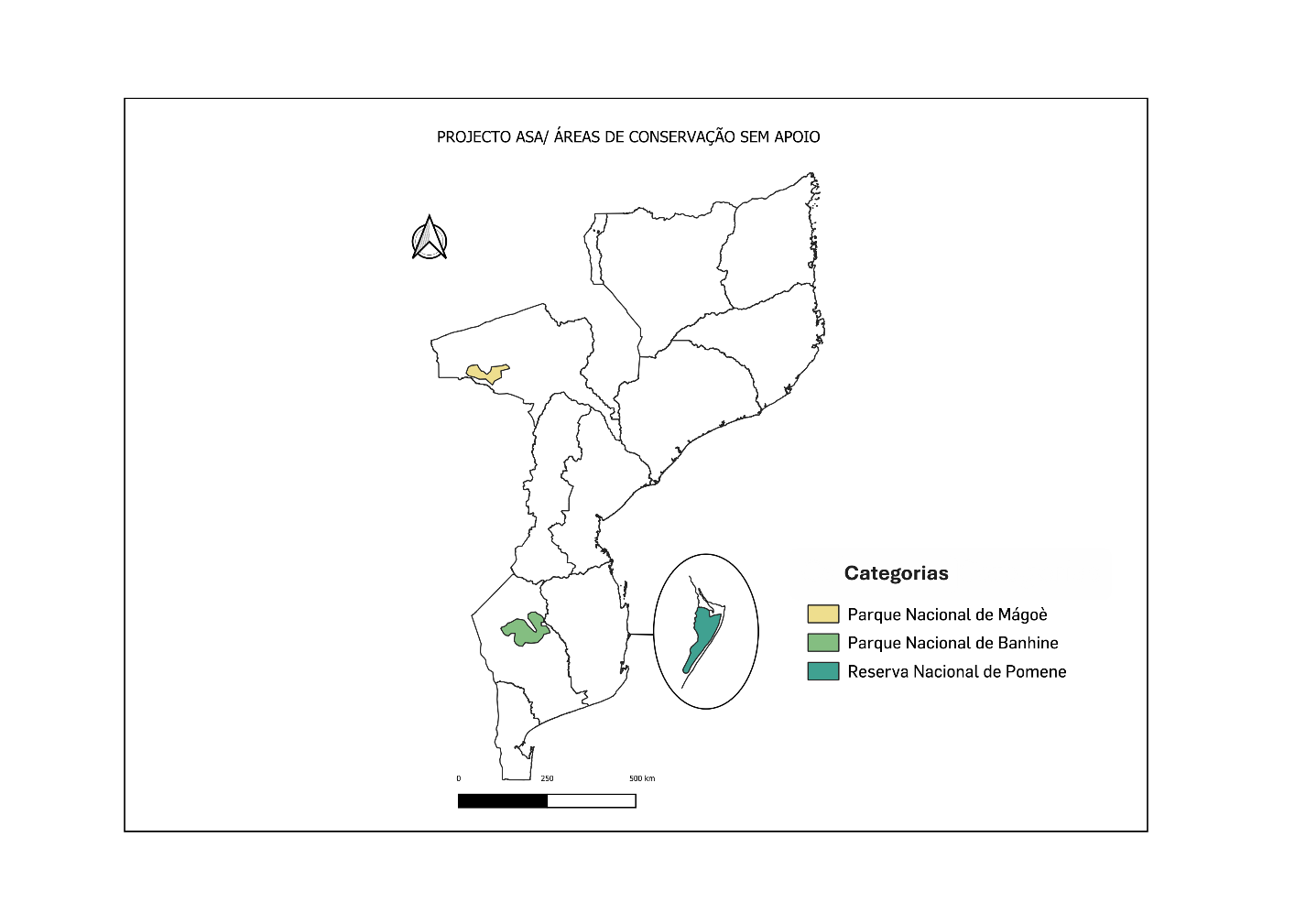
It also strengthened community governance by training 17 Natural Resource Management Committees (CGRNs) in the buffer zone of Banhine National Park. Conservation actions include fire control, mangrove replanting, and training of over 100 rangers, later integrated into the national system. Community awareness activities have already reached 5,783 community members, promoting the dissemination of results and goals from the Banhine National Park Management Plan 2022–2032.
These activities were co-financed with funds from the State Budget, Peace Parks Foundation, the BIO Emergency Fund Project, MozRural (World Bank funding), and PCB (SIDA funding), the latter three through BIOFUND.
Main Activities Carried Out in 2025
Coverage of operational expenses for the 4 conservation areas, including salaries, fuel, rations for rangers, seasonal work, maintenance of vehicles, equipment and infrastructure, travel and accommodation, communication, training, and community awareness.
In Parque Nacional de Mágoè, 33 jobs were ensured, corresponding to the same number of rangers.
A total of 51 seasonal workers were hired for various activities, including maintenance of infrastructure and equipment, cleaning of tourist areas, carpentry, and handicraft production. Of this total, 47 workers were allocated to PNM and 4 to PNQ.
Under the environmental education programmes in PNQ, 13 environmental clubs were established across five districts, namely Montepuez, Ancuabe, Metuge, Ibo, and Quissanga. In this context, 500 seedlings and 35 watering cans were also distributed to promote environmental education and reforestation practices. Additionally, 14 meetings were held to revitalise environmental and girls’ clubs, of which 7 involved school administrations under the Educa+ programme in PNM, and 7 took place in schools within RNP.
These activities were co-financed with funds from the State Budget, Peace Parks Foundation, the BIO Emergency Fund Project, MozRural (World Bank funding), and PCB (SIDA funding), the latter three through BIOFUND.